


Hey everybody and welcome to bonus episode number 140 of the Culips English Podcast. My name's Andrew. I'm your Canadian study buddy and host for this episode. I hope you're doing great. I hope you had a wonderful week and thank you for clicking play on this episode and tuning in to another bonus episode.
For all of you who are new here, let me quickly explain what this series is all about. I'm a Canadian but I live abroad in Seoul, South Korea. I tell you some each and every week to help you improve your English fluency and become a better, more fluent, clearer communicator. Those are our ultimate goals.
Well, everybody, in this episode I'm going to really try and keep it on the short side. And I have a good excuse and a good reason to keep this episode short for this week. And that is because usually I make these bonus episodes on the weekend before they're released. This is kind of my weekend project. I work on the bonus episode and then every Monday we release the bonus episode.
But this weekend, both Saturday and Sunday, I am busy. I'm all booked up. And so, I have to keep this episode short so that I can work on it during the week and get it ready for you for Monday. So, let me tell you all about my weekend plans. Just before I do that, I want to remind you there's an interactive transcript and vocabulary glossary available for this episode for free.
And if you're a Culips member, then we'll also throw in a comprehension quiz. Thanks to all the Culips members out there for your support. Guys, Culips wouldn't exist without you, so thank you so much.
And if you want to support Culips and the work that we do here helping to bring awesome English lessons for learners all around the world each and every week, then just visit our website Culips.com.
You can sign up and become a member. And you'll get so many awesome learning materials, study guides, bonuses, and extras like our Fluency Files series, which is member only, like our weekly speaking classes which are available only for members, and so much more. So, visit the website Culips.com, sign up, and become a member today. Thank you so much to all members out there.
All right, so my weekend plans. Let's get into it. I'm not really too stoked about this weekend because this weekend is the Seoul Marathon. The Seoul Marathon. Long-time Culips listeners will know that I'm a runner. That's what I enjoy doing for exercise. That's one of my hobbies.
And yeah, each year for the last several years I've been doing about two marathons per year plus some smaller runs as well, maybe some 10ks or some half marathons. So yeah, this is going to be my first marathon of 2025. I have to say the reason why I'm not stoked and looking forward to it is that I'm not in the greatest shape.
I haven't really prepared very well for this marathon over the last several months. The last marathon that I attempted, I actually DNF'd. I did not finish it. Was back in the fall in October of last year. And in that marathon, I got to around the halfway point and then my knee gave out on me. And I injured my knee and I had to stop the race. I was unable to finish.
So really, I sort of transitioned from that marathon into the spring marathon because usually I try to run one in the spring and one in the fall. So, after injuring myself in the fall marathon, well that took some time to recover before I was able to run again. I was out for several weeks where I couldn't really even run at all as I was getting some rehab and just healing again after that injury.
So, it was kind of a bad start. Like ideally in a perfect world, you'd want to finish your fall marathon and then just keep your training going into the spring. But I was unable to do that. I had to take several weeks off as my knee healed. But then finally my knee was better, and I was able to run again.
And then yeah, I guess around Christmas time in December, then I took a trip back to Canada for Christmas to see my family and I took a little break from running then. So, I had just started running for a couple of weeks and then I took a trip and took a week off.
And then when I came back to Korea after visiting Canada, immediately I got really sick, and I couldn't run, and I had to take some time off. And then as soon as I recovered from that illness and I got back into a running routine again, well then it was time to take a vacation. And my wife and I, we went to Hawaii and Japan for a couple of weeks.
And don’t worry guys, I know some of you are probably expecting to hear more about that travel and that trip. I promised that I would talk more about that in last week's bonus episode. I'll have to save that for next time because I am trying to be brief today, but we'll continue that story next week.
So, while I was in Hawaii, I did do two runs but that was it. In Japan I didn't do any running at all. So, over the two weeks that I was away I only ran twice. And then, spoiler alert, I'll get into this more maybe next week, I got super sick on that trip as well. So, when I came back to Korea, I was unable to run for another couple of weeks.
And that was bringing us toward the end of February, start of March. And the Seoul Marathon here is on March the 16th. So, when you're listening or watching this episode then it's probably already finished. But here I'm just a few days away from the marathon.
So really after recovering from my second bout of illness in a short amount of time, I've only had like two and a half weeks to get back into running again. And the thing that, at least for me, I maybe other runners out there maybe this doesn't happen to you, but for me when I take some time off and then I start running again, it feels like my fitness goes all the way back to zero.
Like it's so, so frustrating. Could you imagine like if you were studying English for years, and I've been running for years so it's kind of a similar analogy. You're studying English for years and then you took a break, and you didn't study for a month let's say.
And then you tried to speak English again and you went all the way back to zero and you had to relearn the language from the absolute basics like hello and ABCs, right? That would be super frustrating. That's what it feels like when I take some time off from running and then I start running again. It feels like I'm right back at the bottom.
So, getting back into things a couple of weeks ago, it was really, really frustrating. And and I was ramping up the number of kilometers that I ran each week, well then slowly my fitness started to get back in the right direction. Like it feels like you're starting back at zero but then very quickly your fitness does return.
So now, I'm just a few days away from the marathon. I feel OK. I think I can complete it. I have confidence that I can finish. A marathon is 42 kilometers so it's no joke. It's like a really long way, frustratingly long way, but I think I can finish. I think I'll be able to complete it.
But my ultimate goal, and I probably shared this in my new year's resolution episode from back at the start of the year. My ultimate goal with the marathon is to break a two hour and 55-minute record. So, my record right now as it stands at last year's Seoul Marathon, I had my personal best run ever in the marathon distance. And I completed it in two hours and 57 minutes and 38 seconds.
So, it's not too far. I don't have too much work to do, but I'm really not going to be able to do it this time, I think. Just because of the injury and being sick and travel, I didn't have a good training block leading up to this marathon. So as much as I would love to get out there and smash my PR, I think it would be stupid for me to try and attempt to do that.
So, for this weekend the marathon is just going to be a fun run. I'm going to go out there and try and enjoy it as much as I can. As much as you can enjoy the marathon distance. It's always a struggle I think no matter if you're one of the top athletes in the world or just an amateur like me. It's painful for everybody. That marathon distance is no joke. So yeah, it's going to be a fun run.
And I'll try and train harder in the next marathon block so that in the fall, whatever race I haven't decided yet, but whichever race that I do in the fall, I'm really going to try and focus and smash my PR in the fall. So that's good. So, the race is going to be happening, the marathon is going to be happening on Sunday.
But I'm also busy on Friday and Saturday as well because my good running buddy Jimmy is coming to town. And he'll be participating in the Seoul Marathon as well. So, we're going to do a lot of things together. He's got some plans and I'm going to hang out and accompany him to do some of those things. We're going to check out the marathon expo together as well before the race.
There's an expo and I've never been to a marathon expo before so we're going to check that out. And yeah, it should be cool. Hopefully there will be some interesting things to see and maybe some vendors who are giving out some free sample of products. Maybe like running gels or I don't know. I have no idea what to expect. It's at the Jamsil Stadium here in Seoul, so should be cool.
We're going to check out the expo on Saturday and then Sunday is race day. Jimmy is going to try and smash his PR. He's been training really hard. He's like the total opposite of me. He's had a really productive training session. I don't think he's missed any time due to travel or due to illness or anything like that. So, I'm going to be cheering him on.
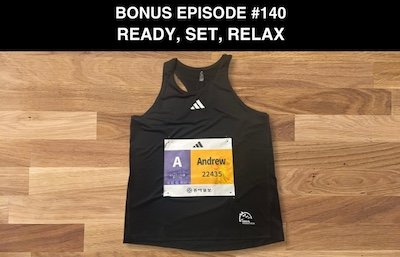
He's going to try and smash his personal record, beat his personal record. So yeah, I think maybe we'll start the race together. We're in the same starting area. So, there are different categories of runners based on your previous marathon completion times. So, Jimmy and I both have, I guess, kind of fast completion times so we're in the A group.
So, the elite professional runners they will go first and then next is our group. So, the A group runners will go. And then, you know, they stagger the runners maybe every five minutes. Then there's B group, C group, D group, and I don't know how far it goes back. But that way the streets won't be too congested.
Otherwise, you just have too many runners on the narrow Seoul streets at the same time. So, the starts are staggered, and Jimmy and I are both in the A group. So, I'm going to try and run with Jimmy for as long as I can, but I have a feeling he's going to finish the race much faster than I am. And I'm not trying to kill myself in this race. I'm just trying to complete the race.
So, I'm going to try and run with him and hopefully pump his tires up while he's running. And this is a kind of slang expression that we use a lot in Canada. “To pump [somebody's] tires” just means, can you imagine like you're putting air into a bicycle tire, right? And you have the bicycle pump and you're inflating the tire, right?
You're making it go bigger and bigger and bigger as you put more air into the tire. Well, when we pump somebody's tires, it just means compliment them and cheer them on. So, I'm going to try and pump Jimmy's tires while we're running there. I'm going to coach him a little bit.
And I am expecting that once we hit maybe the halfway point of the marathon, then probably I'll let Jimmy go and he'll be on his own to complete the race. And I'll probably just jog it. I'll probably take it slow. I don't want to injure myself. And then yeah, just complete the race. My wife said just have fun out there, just have a fun run.
And I'm going to try my best to do that. But for me, the fun part of running, the attractive part of running is breaking records, is going fast, is challenging myself. It's not the actual running part. I don't enjoy the running. The running is always painful. I enjoy the feeling when I finish a race. Like when I finish the marathon, I'll probably be very proud of myself and enjoy that.
And yeah, breaking a PR or going faster or going a long distance, those kinds of records, doing that to me feels great. But the actual running part, I don't really enjoy. So, I'm going to try and have a PMA, positive mental attitude, a positive outlook as I run this race. But yeah, it's usually not very enjoyable. Doing it is painful, but we'll see how it goes.
So anyways everyone, that's what I'm up to this weekend. The Seoul Marathon, it's a marathon weekend. And the weather, that's something I didn't talk about. I'll touch on the weather here quickly before I wrap things up. The weather is supposed to be nasty on Sunday. Saturday it looks great. It looks sunny and warm.
And then Sunday the weather is going to change and there's a high chance of rain. Actually, I think it's maybe a 30 percent chance of rain if I'm remembering correctly in the morning. So not a high chance, but there's a chance of rain. And then the temperature is supposed to just dip from Saturday to Sunday and it will be pretty chilly in the morning.
I think the high on Sunday is supposed to be six degrees Celsius. And the marathon starts at eight in the morning, so it'll probably be even cooler than that. So, it's going to be chilly and potentially rainy. And then I heard even Sunday evening it might snow. So, we're the middle of March here and we're talking about snow and chilly temperatures.
So yeah, that's another thing that's going to make it maybe not so fun. In addition to that, the air quality here in Seoul over the last week has been terrible. There's micro dust in the air, the air pollution. I love Korea but this is one thing that I hate about Korea is the unfortunate dirty air.
So hopefully maybe the cooler temperatures will bring in some fresh air and we won't have to deal with the polluted air. And yeah, we'll see how it goes.
But this is another thing that, you know, running a marathon and doing this hobby sometimes, I mean, I'm glad I'm not in this position this time because I'm not going to try and break a PR, but for many runners out there, I think many people will try to break their PR.
And so, you train for months, and months and you put your blood, sweat, and tears into getting ready. And then on the day of the race, you just never know what will happen with the weather. That's a variable that we have absolutely no control over.
So, you might be in the best shape of your life. You might be totally ready to go. Everything is perfect. And then it's really windy and rainy on race day and you just can't perform well in those conditions. And then you have a slower race and a slower result than you wanted to. So yeah, at the end of the day it's just random and there's so many things that we can't control.
And yeah, hopefully it'll be OK and all of the runners out there who are trying to break their PRs can do that. A couple of weeks ago there was the Tokyo Marathon and that's exactly what happened in Tokyo. It's well, sort of the opposite in fact, because the Tokyo Marathon was extremely warm.
And everybody was thinking that, I think it happens in late February or very early March, everybody is expecting kind of those perfect temperatures where it's not cold and not hot. It's in the Goldilocks zone, the perfect zone between being not too hot, not too cold. Usually that's what the temperature is like in Tokyo.
So many runners were expecting that, but then in reality it was super hot and super warm. And so, many people weren't able to perform to their best because they were like overheating during that race. So yeah, it kind of is funny. In the end it all boils down to the weather. That's one of the reasons why it's a good idea to run in all kinds of weather.
Sometimes my wife says I'm crazy because I go out and run in the rain or the snow or the wind. And that's very unpleasant most of the time, but that's why runners do that is because who knows on race day you might have to run in those conditions. So anyways, we'll see about the weather, and I'll try to have a positive mental attitude. I'll try to keep things positive and have a fun run.
But everybody, I think I've been blabbing on long enough about the marathon. If you listened all the way to the end, thank you for completing this English study session with me.
Of course, check out the transcript, check out the vocabulary glossary. I'll break down and teach you about some of the key expressions and vocabulary that I used in this episode that I think you need to add to your vocabulary to become a better communicator and to become a better English listener as well. So, check out those free tools. The links in the description.
And before I let you go, I need to share this week's completion code with you. So, for our completion code for this week, let's just go with the word: fun. Fun. Because I'm going to try and have a fun run here on Sunday.
And I'll give you a little update after the race is finished to let you know how it went and if I actually did have fun or not on our Discord and maybe on our social media as well or even in an upcoming Culips episode. I'll talk about it. But yeah, let's go with the word fun for this week's completion code. So, you have a homework assignment now.
What I'd like you to do is leave a comment with that word “fun” either on our Discord server or our social media, our YouTube page. And that will signal to me and signal to our entire community that you completed this episode. So go, go, go. You have your homework assignments and I'm looking forward to reading your example sentences with this completion code “fun.”
All right, I'm going to wrap things up here now everyone. Thank you again for tuning in. Please take care, have an awesome week of English studying up ahead, and I'll catch you in the next Culips episode. Until then, bye bye.
