


I just tell you some stories from my everyday life as a Canadian guy living abroad in Seoul, South Korea. And I hope that by listening to these stories you will be able to improve your English fluency and build your vocabulary, improve your knowledge of the culture of English-speaking people and so much more.
So, if this sounds like something that you’d like to achieve then I’m here to help you and I think you will enjoy this series. Now in today’s episode I’m gonna tell you the thrilling conclusion to my hiking story. In the last bonus episode, I told you all about this chaotic morning that I had with my best friend. He came to Seoul to visit me here and we went on a hike.
And getting ready for that hike was an adventure in itself but eventually we did do the hike and I’m gonna tell you all about that adventure. Really, we had two adventures that day the pre-hike adventure and the hike adventure. I’m gonna tell you all about the hike adventure in this week’s episode.
To accompany this episode there is a free, amazing! It’s totally 100% free interactive transcript and vocabulary glossary. So, some of the difficult vocabulary and idioms and expressions that you’ll hear me use when I’m telling you my story, I’ll break those down for you and explain them in the vocabulary glossary.
So, it’s a great way to study and, you know, know about some of the vocabulary that I think you should know as an English teacher. What do I think is important for English learners to know? I’m going to explain that in the vocabulary glossary. So definitely check out those resources. Free for everyone and the link to get them is in the description for this episode.
But also, we have a special gift for our Culips members. If you’re a Culips member, then we’ll also give you a comprehension quiz just as a way to say thanks to our members for their support. Guys we love you. Thank you to all the Culips members out there who are improving their English with us and who are supporting the work that we do here at Culips.
We really, really do appreciate it. Speaking of Culips membership, if you’re curious about what the fuss is all about with Culips membership then I would encourage you to check out our website Culips.com. Really what we try to do with our members is just give them as many awesome learning tools and resources as we can to help them hit the next level with their English.
To improve their fluency and to hit their goals with their English studies. So, this includes things like helpful study guides for all of our episodes, interactive transcripts, our member-only series The Fluency Files, we have ad-free audio, we have weekly speaking classes, actually multiple weekly speaking classes.
And it’s just an amazing set of tools and resources you get when you’re a Culips member and it’s all for an affordable price. So, if you’d like to sign up and hit the next level with your English with Culips and also support the work that we do here then just check out our website Culips.com. You can sign up today and get started.
Alright well I think those are all of the announcements out of the way for now. I can’t really think of any other things that I should tell you, any other urgent news.
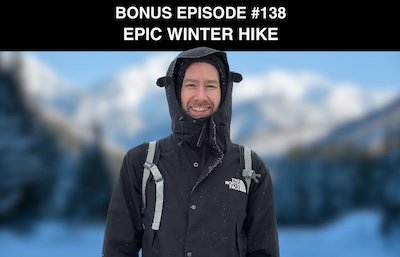
So why don’t we get started with this week’s story everyone. My hiking adventure in the mountains of South Korea in a small town in Gangwon province called Taebaek with my best friend Luke. What an amazing time it was. So, let’s get to that story now. Here we go. Enjoy.
If you haven’t heard the last bonus episode, then please go back, and take a listen to it before you continue with this week’s story because this is really part two of two and you need to listen to the previous bonus episode to sort of know the background. But just a quick summary and recap of what I talked about in that last bonus episode.
Essentially, my best friend Luke, he’s been my buddy for over 30 years, he came and visited me here in Seoul and he said he wanted to go on a hike. So, I quickly planned this kind of spur-of-the-moment hiking trip, and we went to a place called Taebaek which is in Gangwon province here in South Korea.
It’s one of the, I think it actually is the highest city in South Korea and also the smallest city in South Korea. So, it’s way up in the mountains and there’s this beautiful mountain there called Taebaek Mountain. And the word for mountain in the Korean language is “San.” So maybe you’ll hear me call it Taebaeksan sometimes and that just means Taebaek Mountain.
OK, mini-Korean lesson embedded in the English lesson here. So, we had this like chaotic morning. I talked about it in the last bonus episode. We had to rush to the bus terminal to catch our bus to go to Taebaek. From Seoul to Taebaek, it’s about a three hour-ish bus ride, a little bit over three hours. And we got up early in the morning to grab the bus.
We finally got on the bus and when we were riding the bus to go to Taebaek we both just passed out. Now this bus to Taebaek, it makes two stops. The first stop is in some small village, actually I don’t even know the name of it. It’s a little bit outside of Taebaek, maybe about 20 or 25 minutes away.
And when we stopped at that location then most of the people on the bus, and the bus was sold out, it was a packed bus, full bus, probably 40-45 people on the bus. When we stopped there most of the people got off the bus.
I think there were only four passengers including Luke and including me after that stop and so the bus really cleared out and that kind of woke Luke and me up at that point. So, most of the people got off the bus and then we took off from that spot to go to our final destination in Taebaek. But we were both kind of groggy. You know, you wake up and you’re like, what’s going on?
You see all the people getting off. Thankfully I knew that we were making two stops or else that might have been a little bit confusing, and we may have accidentally got off the bus at that point but thankfully I already knew that that was going to happen, so we didn’t accidentally get off at that spot or anything. But we are a little bit groggy.
And “groggy” means that feeling when you just wake up and you’re not quite with it yet. You know, it’s like your consciousness is like 30% online and still 70% offline. You’re still sort of mostly sleeping. That’s that groggy feeling.
So, we were both a little bit groggy and as soon as the bus took off again, I think we both fell right back asleep, but our sleep was interrupted because suddenly there was this phone ringing, a phone ringing sound. And you know what a smartphone ring sounds like these days?
I don’t know if I can imitate it and I can’t really remember even what it was, but it was like a melody, a jingle, right? Something that’s annoying that’s gonna get your attention so that you can hear it. So shortly after the bus took off to go to the final destination of Taebaek, this phone jingle started going off and the jingle was annoying, and nobody was answering the phone.
It just kept ringing and ringing and ringing and then suddenly we clued in. Like, oh it must have been somebody’s phone that was on the bus, and they got off the bus and they forgot their phone. So, this phone just kept ringing and ringing and ringing and then finally some passenger, one of the other passengers, got up and started looking for the phone.
We were sitting in the back of the bus and this phone was ringing more from the front of the bus. And so this woman got up and she was looking for the phone and then the bus driver was yelling at her like sit down you can’t be standing on the bus and walking around on the bus just let it ring.
And so, she sat down, and the bus driver was like I’ll find it once we get to Taebaek we’re almost there. But the phone just kept ringing and ringing and ringing really annoyingly.
I guess the owner of the phone was pretty desperate wanted to get his phone back or her phone back as soon as possible and so the phone just kept ringing and ringing and ringing and that was like at the end of our sleep.
The grogginess wore off at that point you could imagine with the bus driver yelling at the passenger and the passenger rummaging around and the phone ringing and ringing and ringing. Wow, OK, rude awakening. OK, our peaceful sleep on the bus was finished.
Anyways we finally got to Taebaek, and we arrived I think just before 9 in the morning somewhere around 9 in the morning, I can’t exactly remember. And as soon as we arrived our first goal was to store our bags somewhere. We had backpacks with us and of course in our backpack we had some supplies for hiking.
We had also our clothes for after hiking and for the next day and I think just some other little things. We probably had our cameras maybe our headphones just some stuff that we didn’t really need to bring up the mountain with us, right. You don’t need to bring your clothes for the next day up the mountain with you. You don’t need to bring your headphones up the mountain with you.
So, we wanted to find a locker where we could just bring our essentials and then we could store our other items that we didn’t really need until later in the day. And so, Luke was like “There’ll be a locker in the bus terminal, right?” And I was like, “Hmm maybe.” I wasn’t so certain. And we arrived at the bus terminal and it’s a pretty old bus terminal here in Taebaek.
Guys you got to know that this is like way out in the countryside away from the modernness of Seoul. Seoul is a very modern high-tech city, cutting-edge city. But once you get outside of Seoul things are I guess like they are in the country in most parts of the world, right? The pace of life is a little bit slower. Things change a little bit slower.
It’s not as modern and so of course in that bus terminal there were no storage lockers. Also, it’s a small place. I don’t think there are a lot of tourists who are visiting Taebaek, especially not international tourists or tourists from different countries. Probably a lot of domestic tourism, Korean people going there to do the same thing that we did to go to the Taebaeksan hike.
But not too many international visitors. So, unfortunately, there were no lockers in the bus terminal, but the good news is there’s also a train station just right across the road from the bus terminal. So, I said let’s go over to the train station. I had a feeling that we’d have better luck in the train station to try and find some storage lockers.
So, we walked over to the train station and we took a look and no lockers there. So, at this point I was kind of like I think we’re just gonna have to carry our full bags up the mountain. Of course, we only packed for one day. We’re gonna do the hike spend the night in Taebaek and then go back to Seoul the next day. So, it’s not like we had tons and tons of things with us.
But still at the same time we didn’t want to have to hoof it up the mountain with those extra items. So, we had to go back to the bus terminal because we had to catch a bus from the terminal up to the mountain at the start of the hiking trail. And as we left the train station, we noticed there was a small tourism information office.
And so, I said to Luke, “Hey let’s go in there” because I actually didn’t know which bus, we had to take to get to Taebaek mountain. So, I wanted to ask there what bus we need to take and also maybe they would have a locker. Like that would kind of make sense that there might be a small storage locker in the information office.
So, we stopped in the office and there was just this wonderful lady working there. She was so kind, and friendly, and nice. And if you are the boss of the Taebaek tourism information office please give your employee a raise because she is just amazing. It was great to talk with her. She was so friendly and gave us information about the area and told us how to get to the mountain.
We spoke in Korean as well which I really love because it’s not so often that I get to travel like this in the country without my wife. And when I travel with my wife who is Korean, like a lot of times in this kind of situation people just naturally speak to her and kind of just assume that I can’t really speak Korean at all. And I kind of get ignored to an extent.
But in this kind of situation where it’s me and Luke and we’re both Canadian and very visibly foreigners, well then there’s no option but to speak with us. And so, we had a nice conversation and I just love that it had been a little while where I got to have a nice kind of small talk conversation with somebody in Korean. So that was cool.
And the really nice thing I asked her like do you guys have any lockers? Is there any place where we can store our bags? And she told us that the train station used to have lockers but for some reason they just removed the lockers and that was a little bit unfortunate. But she offered to watch our bags for us. She said if you trust me then you can put your bags here.
And she had this place which was like a direct line of sight from the CCTV security camera. So, she’s like I’ll put your bags here. They’ll be in direct view of the security camera so that if something happens to, we can just watch. And you know of course I 100% trusted her. And Taebaek’s a small sleepy town.
I didn’t think that too many people would be going through that tourism office anyways. And especially to mess with a couple of bags. And like I said we just mostly had our clothes in there to wear for the next day and after the hike anyway. So, it’s not like there were really really valuable things in our bags.
But she was kind enough to offer to watch them for us. To keep an eye on our bags for us. And that’s a great idiomatic expression, “To keep an eye on [something].” Please add that one to your vocabulary if you don’t know that one already. “To keep an eye on [something]” just means to watch something for someone.
So maybe if you had a dog and you were going away for the weekend, maybe you could ask your neighbor to keep an eye on your dog. To come and watch your dog and to take care of your dog while you were away on that weekend trip. Something like that. That’s how we can use this expression.
So, the tourism information office lady she offered to keep an eye on our bags for us and she just said make sure you’re back by 6 p.m. because that’s when I’m clocking out and going home. To clock out is like an old expression but it just means to finish your shift at work, right? Back in the day people had punch cards.
I mean this is even before my time, so this is really back in the day. But I know I’ve seen this on movies and TV before. You’d have this punch card, this card that you would put into a kind of machine that would make a punch and say that you started work at this time and finished work at a certain time and we would call that clock in and clock out.
So, we still use this expression today to clock in to clock out even though we don’t use the punch cards anymore. But the lady at the tourism information office, she was gonna clock out at 6 p.m., so we had to return back to that office to get our bags by 6 p.m. But she was kind enough to watch our bags for us. So that was great.
After that we went across the road again to a little convenience store and we stocked up on some supplies. I think we got some water, we got some chocolate bars, some bread, and we also bought cup noodles. “Cup ramyeon” is what they say in Korean here. And that’s just like those instant noodles that are so delicious.
And Korean people a lot of the time when they go hiking they’ll stop either at the top of the mountain or halfway up the mountain to have a little snack. And they bring the cup noodles and it’s just a wonderful snack to have especially on a cold winter’s day because we were doing this hike in January.
So, we got our cup noodles, our instant noodles, and I also filled up my water bottle with some hot water so I could actually make the instant noodles at the top of the mountain because I didn’t think there would be a hot water machine up there. As high-tech as South Korea is, I didn’t expect to see a hot water machine at the top of the mountain.
So anyways we are all geared up, we had all the supplies we needed, we dropped our bags off, we were ready to go. We went over to the bus terminal, it was perfect timing, we only had to wait a couple of minutes and then we were on the bus to get to the trailhead at the start of the mountain.
And when we arrived it was a winter wonderland. It was absolutely beautiful. Taebaeksan is a national park so it’s a really well-developed, well-kept park. And the trails are really clean. It’s a nice area up there and blanketed by snow just makes it even more beautiful. It was just a really, really nice scenic spot in the forest with, yeah, deep snow everywhere covering the trees.
Just gorgeous and quiet. I don’t know if you’ve ever been outside in the forest in the snow but it’s a quietness like you can’t find anywhere else. Just so peaceful, so quiet and really really amazing to be in that kind of environment. So, we were planning to do a loop. The trail that we were to take was kind of a circle.
It would go up one side of the mountain and get to the peak and then go down the other side of the mountain. And so, we found the trailhead where the trail starts, and we were on our way. We had our crampons on our shoes, and these are kind of spikes that you attach to your shoes because the trail was quite snowy.
It was totally covered in snow and those are necessary items for hiking in the snow. You won’t get enough grip on your shoes otherwise. So, we had some crampons that we put on to our hiking boots to allow us to walk up that snowy trail without slipping.
I think I told you in the last episode that I did end up falling over once but I probably would have fallen over maybe 10 times if it weren’t for the crampons. So, we got our crampons on, we were off, and it was just a beautiful start of the hike. We were about 30 minutes into our hike, maybe 20 to 30 minutes into our hike and suddenly there was a park ranger.
And the park ranger gave us the X sign and the X sign here when you cross your hands, and you say no, OK? The park ranger said no you cannot continue anymore on this trail. It is closed and he didn’t really tell us the reason why. I could imagine that maybe there was an avalanche, or the trail was obstructed by a fallen tree.
Maybe a tree had fallen over due to the weight of the heavy snow on the tree and maybe was blocking the trail. I don’t know. He didn’t tell us the reason, but he told us everybody’s got to turn around and we’re hiking with some other people.
Just sort of we all started at the same time so it was me and it was Luke and maybe five or six other Korean people there as well and he told us all, nope trail’s closed. You can’t do this trail. So, we had to go back to our starting point, and yeah, this took like probably 50 minutes to an hour off of our hiking time or added it to our hiking time, right?
Because we had to walk up like 20-25 minutes, and then we had to turn around and go back 20-25 minutes. So yeah, I don’t know, 40 minutes to an hour. I wasn’t really timing it, but wasted time or added time. I don’t want to say it was a waste because it was still a nice hike, but added time on to the total hike time.
And so instead of doing that loop, what we had to do is just the path that we were supposed to come down. We just ended up going up that and then coming back down the same path. So, we went back to the trailhead where the trail starts, and then we went up that trail, and thankfully that trail was open, and there were no closures, and we were able just to hike all the way to the top of the mountain.
Probably took us an hour and a half to two hours. Like I said, I wasn’t really timing it, but it wasn’t an intense hike at all. I don’t think it was too steep. There were a few difficult areas where we had to push a little bit harder, and it got our heart rates up. Our hearts beating, and we were breathing a little bit heavier, but those sections didn’t last very long thankfully.
So, most of the trail was rather gradual. And “gradual” just means that it’s going up at a rather slow easy slope. OK, it’s not too steep, not too much going uphill, just nice and steady, slow and steady. We got to cross some bridges over some creeks, and it was just so scenic.
If you’re watching the YouTube video version of this episode, then I’ll definitely include some pictures and videos so you can see what the beautiful scenery looks like. And I’ll also put some pictures on our Instagram and our Discord community as well so you guys can get a visual about what I’m talking about here because my words can’t do it justice.
It was just so beautiful and so peaceful. Oh, and there’s one funny story that I wanted to tell you about about this hike. That is when we were starting, Luke went to grab his gloves, and he realized, “I don’t have any gloves.” So, he was like, “This kind of sucks.” Like it wasn’t too cold out.
It was around zero to minus one Celsius-ish, so just around the freezing level, not too cold. But at the same time, you know, you’d kind of like to have some gloves, right? In that kind of situation just to keep your hands toasty and warm. So, Luke had no gloves. He forgot them here at my house in Seoul. And so, he was like, “Oh, that sucks. I forgot my gloves.
Guess I’ll just have to put my hands in my pockets.” Now I brought a pair of mittens with me. I think I’ve told you this on Culips before, but I have kind of bad circulation, and in the winter my hands get really cold. And because of that, I like to wear mittens. I find like mittens are the best for me. They keep my hands toasty and warm.
So of course, I brought my mittens with me, but I also found a pair of gloves that I had accidentally just had in my pocket. Like I mean, it wasn’t really an accident, I guess. I had just worn them there before, and I put them in my pocket, and I forgot about them. And so, I had two pairs of gloves. I had my mittens that I was going to wear, plus I had this thin pair of fingerless gloves.
They were fingerless gloves, and in fact, I think they were my wife’s maybe. For whatever reason, I had these fingerless gloves. They had a thumb, the thumb was covered, but the fingers were cut open, right. So, I guess this is nice if you need to like use your fingers for something. It’s hard to manipulate things, you know, if you want to use your phone or something.
I don’t know, take your keys out and use them. These fingerless gloves, they’re just sort of like maybe even for the autumn, right. They’re not meant for cold weather in the winter at all. But because these fingerless gloves belong to my wife, they’re kind of on the small side, and they’re super tight on me. I don’t even know why I had them, but I can kind of fit into them.
But Luke has bigger hands than me, and so I knew like there’s no way that he’s gonna be able to squeeze into these fingerless gloves. And so, I was the nice guy, and I said, “Hey, you can take my mitts. It’s not too cold out. I’ll just wear these gloves that I have in my pocket randomly from my wife.” And he was like, “Amazing, crazy that you had two pairs of gloves.
This is perfect.” And we’re off on our hike. Now this didn’t cause any problems going up. It totally fine. But when we finally got to the top of the mountain, suddenly, I guess we were protected by the wind going up the side of the mountain. But when we got to the peak, then suddenly it was crazy windy.
And the peak of the mountain is actually really beautiful. I’ll share some pictures of it. There’s this really cool kind of altar. And I’ll put some information in the description for this episode about that altar and I’ll link to it on Wikipedia if you want to learn more about it because it is a kind of cool place at the top of Taebaek mountain. I won’t go into the details here, but really nice.
And also, there’s this kind of tradition that hikers in South Korea do at the top of every mountain. You’ll see a sign that says the mountain’s name, and it usually says how many meters above sea level it is as well. And it’s tradition that you should take your photo with this sign.
And so, when we finally got to the top of the mountain, actually it was pretty peaceful walking up the top of the mountain, but when we got to the peak, then suddenly there were tons and tons of people. And the line for taking a photo with that Taebaeksan mountain sign was quite long. There’s probably like 50 people waiting in line.
So, as we were waiting in line for that photo to get our photo with the mountain sign, man, it was cold. The wind was whipping. It was blowing really quickly. Suddenly it went from just this chill, calm, peaceful, beautiful winter hike up the slope to the top of the mountain, and then suddenly it was like we were in Antarctica or something.
The wind was just blowing and howling, and everybody was…. We are huddled up like penguins trying to stay warm together as we waited in line to get our photo with the Taebaek mountain sign. And in that time, that’s when my hands started to get really freezing cold. And my fingers were like totally unprotected, right? I had no covering on my fingers.
So, I had my hands in my pocket, but I had to take my hands out. I wanted to take some photos, and Luke was like, “Can you take my photo here?” “Can you take my photo here?” He’s on vacation, right. He was visiting, so he wanted some kind of souvenir photos, right? So, I had to take his photo a few times, and I was taking some video as well.
And so, my fingers were just like turning purple. They were getting really, really cold, and yeah, it was bad. So finally, it was our turn in line. We got our photo with the mountain sign, mission accomplished! And it was time to go down the mountain. We couldn’t have our instant noodles at the top of the mountain. It was just way, way, way too windy.
And in fact, nobody was eating there at all. It was just way too windy. So, it was time to go back down the mountain, to descend the mountain. And as we were going down, I have to say going down for me personally is often much more difficult than going up the mountain. For whatever reason, it’s just more wear and tear on your knees, right? It’s more difficult on your knees.
And also, we had a very snowy trail. Remember that there was a lot of snow on the mountain. And so, going down was much more slippery than going up. And so, we had to kind of, in fact, it was really fun going down, I want to say that. We are carefully walking down, but in fact, we were more like sliding down.
Luke and I both grew up skiing and snowboarding, so we kind of have pretty good balance in the snow, I think. And so, we were both sliding down. And in fact, we saw some other hikers that had kind of plastic seats. And I guess you just like get to the top of the mountain, and you want to sit down, you can have this sort of portable seat.
But they were using those portable plastic seats to slide down, to toboggan down the trail. And Luke and I were both jealous. We’re like, “Oh, that’s the way to do it.” We needed toboggans in that moment, but we didn’t have any unfortunately. But we slid down. And eventually, about halfway down the mountain, there was a Buddhist temple.
And many hikers would stop at the temple and have a little break there, drink some water, eat some snacks, eat some instant noodles. And so, that was what we were going to do too. We stopped at the temple, and really cool temple in the mountains. I’ll put some pictures of the temple as well. I think I took some photos of it, so I’ll share those with you as well.
And we stopped to have our instant noodles. We got our little cup noodles ready, and I took out my insulated water bottle. OK, important point: insulated water bottle that’s supposed to keep your water hot. OK, Took out my water bottle to make the instant noodles, and can you guess what had happened? That’s right, the water had cooled down.
So, that hot boiling water that was put into my water bottle not too long ago, just like a few hours before, had already cooled down. It was lukewarm. And so, we couldn’t actually make the instant noodles, which was upsetting. And actually, the Buddhist temple there, they were selling instant noodles and hot water, but it was kind of a ridiculous price, I thought.
And I was like, “I just can’t justify paying that much for some instant noodles.” So, we had to skip the hot instant noodles. We drank some lukewarm water. We had some bread, I think. We had a chocolate bar as well. We kind of powered up through some snacks. And then continued on our way back down to the bottom of the mountain.
And it took us maybe an hour and a half to get back down to the base of the mountain. And at this point, my hands were absolutely freezing from those stupid little fingerless gloves. So, I asked Luke, “How are your hands doing?” and he said, “Oh, my hands are nice and toasty and warm.” So, I said, “OK, give me your gloves. I’m freezing. I need to put those mittens on.”
In fact, he had a pair of mittens. I was like, “I can’t stand it. My hands and my fingers are just totally freezing.” So, we traded. He saved the day by giving me those mittens back. And yeah, then pretty much, we were finished the hike. After hiking in South Korea, it’s a tradition, something that you must do, I feel like you must do.
And Korean people out there listening, tell me if you agree with me or not. But you got to go to a little restaurant, a local restaurant. And most hiking trails, most of the popular ones anyways, will have some kind of restaurants built up around the start of a popular hiking trail. And Taebaek Mountain here was no exception.
There were a lot of little restaurants right around the starting area of the hike and the finishing area of the hike. And so, after the hike, then we went to one of those restaurants. And we had a pancake, Korean style pancake made out of potato, which is a local specialty vegetable of the Gangwon region. So, we had this beautiful Korean style potato pancake.
I guess the most similar Western food that I could compare it with is like a hash brown. So, if you know what a hash brown tastes like, it’s a little bit similar to that, not exactly the same. It’s not deep fried or anything like that, but kind of tastes a little bit similar to a hash brown. So, we had this nice big, beautiful potato pancake.
And we also had a bottle of rice wine called “Makgeolli” here in the Korean language. So, some makgeolli, some potato pancake, and yeah, it was just a great way to relax after the hike and to warm up a little bit. And yeah, after we had finished with that, we took the bus back to the city.
We went back to that tourist information office, and we said hello to the lady again, and we got our bags and thanked her. And we were on our way. I think it was around 4:30-5:00 p.m. in the afternoon by this point. We checked into our hotel, and we showered and changed and relaxed for a little bit. And then we went out on the town, and we had a beautiful barbecue beef dinner.
We walked around Taebaek. Of course, as I mentioned in the last episode, Taebaek is the place where I spent my very first year in Korea when I first came to this country. So, it was very nostalgic for me to walk around through Taebaek. To see the old apartment that I used to live in.
To see some of the old places that I used to visit and go to way, way, way back when when I first came to Korea. Especially now, like, you know, that I know a lot more about the language and the culture of South Korea. When I first came to this country, I was pretty much a blank slate. I didn’t really know too much at all.
But now that I’ve lived here for many, many years, and I’ve acquired some knowledge about the culture and the people and the language, it was just interesting to visit again and to walk around and see some of the old familiar places. So much has changed in Taebaek, but also so much is exactly the same.
So, it was a real trip. It was really, really interesting to go back and experience that with, I guess, a more knowledgeable, wiser perspective this time. So, that was really cool. And then, yeah, we didn’t get up to too much that night in Taebaek. Things kind of closed down early, and it was pretty quiet after our dinner and our walk. So, we went back to the hotel.
We were also pretty exhausted from that long day of hiking. We got a good rest in, and we woke up the next day, had some breakfast, and then caught our train back to Seoul. So, it’s just a quick, short and sweet trip to Taebaek, a wonderful hike, a 10 out of 10 experience overall. And I think, everyone, that’ll bring me to the end of this week’s story.
So, if you made it all the way to the end, thank you so much for studying English with me today. You put in some time, you put in some effort, you put in some work. And I can assure you that this is what you need to do to improve your English fluency. So, you’re doing the right thing, keep going, great job. And if you keep it up like this, you will achieve your goals in English.
Now, before I let you go, I have to share this week’s completion code with you. The completion code is, this week, it’s actually going to be a phrase, an expression. And I would like you to make an example sentence with this expression and leave it in the comments either on the YouTube page or our Instagram page or our Discord community.
And that will signal to me and signal to all of the Culips listeners out there that you did it, that you made it all the way to the end of this episode. So, for this week’s completion code, let’s go with the expression “to keep an eye on [something].” Remember the lady at the tourism information office in Taebaek, she kept an eye on our bags. She watched our bags for us when we went hiking.
So, I’d like for you to make an example sentence using this expression “to keep an eye on [something].” And yeah, I’m very interested to see what you come up with. Go, go, go, and I look forward to your comments.
All right, everyone, I’ve been talking and talking and talking today. I think it’s time for me to wrap things up here. So, please have a great week of English studying up ahead. Take care, as always, and I’ll catch you in the next episode. Until then, goodbye.
