
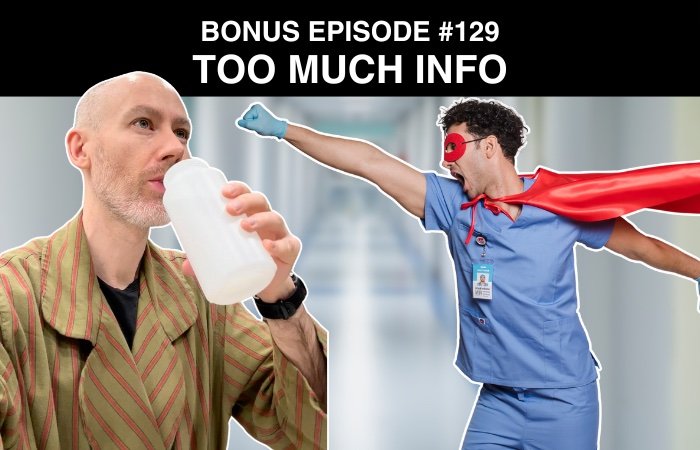


Hello, and welcome to bonus episode number 129 of the Culips English Podcast. How's it going? My name's Andrew. I will be your host and your English study buddy here for today. Thank you for clicking play on this episode and joining me for this study session. I hope that you will enjoy the next 20 to 30 minutes that you spend with me.
And what we're going to do here, let me explain what this bonus episode series of Culips is all about. I just share some stories from my everyday life as a Canadian living abroad here in Seoul, South Korea, where my home base is. And I hope that by listening and following along with my stories, you will be able to B.I.G.B. That is the motto for our series.
And B.I.G.B. stands for build your English fluency, increase your cultural knowledge, grow your vocabulary, and become a better and more fluent communicator. So, if those are some of your goals with your English, then I think you're in the right place. And I'm going to try my darndest, try my darndest, try my best to help you achieve these goals.
Now for this episode, and frankly, all of the episodes in the bonus series, you will get a free interactive transcript that you can follow along with every word that I say in the episodes. There's a complete transcript. It's perfect. It's not machine generated. OK, I make it myself. I check it myself. So, everything is correct, and you can trust it. And it's a really cool study tool.
You can just click on any word, and you'll be able to play the audio from that point. So, it's perfect for listening over and over again to a sentence or word that's hard for you to understand. Or if you want to do some listen and repeat practice or shadowing practice, I think it's perfect for all of those things. There's also a vocabulary glossary.
And what I do for that glossary is I choose maybe 10 to 15, depending on how much free time I have. 10 to 15 words or expressions that I think are important for you to know or that are difficult for English learners, maybe things that you wouldn't pick up on or idioms, any kind of expressions that are really important to add to your vocabulary.
I choose 10 to 15 of those from this episode and I'll explain them to you, give you a definition and also an example sentence. So, all of those things are free for everyone, and you can find them just by clicking the link in the description for this episode. And if you are one of our Culips members, then you'll also get a comprehension quiz. And thank you.
A big thank you to all of our Culips members out there who support the work that we do here at Culips and keep letting me make English lessons for everyone around the world. Without our member community, Culips wouldn't exist. It's as simple as that. It's a fact. So, thank you to all of the members out there who support us and allow us to keep making these episodes.
And if you'd like to sign up and become a Culips member, too, just follow the link in the description for this episode or visit our website, Culips.com. When you're a Culips member, you'll get unlimited access to all of the study tools and learning materials that our team has designed to help you get fluent in English faster.
And the list is too long for me to mention everything, but you'll get study guides for each and every episode, interactive transcripts for each and every episode, plus our weekly live classes where you can join with other Culips members and our teachers as well and have a discussion about Culips content.
The conversations that we have on the podcast, we'll continue those in the live classes, and we'll hear from you. You can share your opinion and meet with other Culips members from across the globe as well. There's the member only area of our Discord. There's ad-free audio. The list really goes on and on.
So, if you'd like to sign up and become a member, just visit the website Culips.com and you can do that. Well, everyone, I have to admit it's been a very, very long week and I am a little bit tired. I'm going to share a little bit about why I'm tired in this week's story and we'll get right to it. Without any further ado, let's jump in. Enjoy.
If you're a news junkie at all and a news junkie is a nickname or a slang term that we call somebody who really enjoys watching the news. If you are a news junkie, then you've probably heard a little bit about the political situation that went down this week in South Korea. Of course, I'm Canadian, but I live in South Korea.
And I have to say that as much as I try not to be a news junkie, I am kind of a news junkie. And the reason why I say I try not to be is because the news always just stresses me out. You know, there's always just bad news on the news, right? It's very rare that we see good news that makes us feel good. It's usually doom and gloom and bad things happening.
So as much as I try to stick my head in the sand and ignore the world around me, as bad as that seems, I think it's good for my mental health if I stick my head in the sand and ignore the world around me. So, I've been trying over, I don't know, the last two, three, four years, I think it probably peaked during the pandemic when I was just doomscrolling on my phone all the time.
And doomscrolling is that activity where you just are going through social media or going through the news on your phone and reading just bad news story after bad news story and seeing things that just make your life worse. OK? That is doom scrolling. So, I think my doom scrolling hit a peak during the covid pandemic.
And at that time, I tried to make an effort to stick my head in the sand. And guys, that's an idiomatic expression. Now I've said it a few times in a row here. That just means to try and purposely ignore something. Even though, you know, a situation is happening, you try to ignore it.
So even though I know really important global events and serious issues are happening around the world every day, I find that, first of all, I'm powerless for the most part to fix most of these problems. So, it's not like I can really do anything personally. And secondly, it just stresses me out and causes me to have a worse quality of life, let's say.
So, I try, I have been trying to ignore the news and to disconnect a little bit and focus on the things that I can change in my personal life and with my family and my friends and the people that I can have an impact on that way. And yeah, I've been trying to do that in general.
But the last year I've been failing, I have to say, with the American election that happened recently, I started to tune in more and more and more. It's just really hard. It's like we call it political theater. The political theater from the USA is really hard to ignore. And this week here in South Korea as well, the political theater was really hard to ignore.
And of course, here at Culips, one of our core principles, core beliefs is that we try not to get too political just because we have people listening from all around the world, from all different backgrounds, political beliefs, religious beliefs. And we try to make it as neutral as possible here at Culips so that we can foster relationships among all of our listeners.
We focus on what we have in common most of all, which is learning English and try to put the religious differences, the political differences aside. So, I'm not going to go too much into the political situation that happened here in South Korea this week.
But if you are listening and you are from outside Korea and you want to know more, maybe just send me a DM through our Discord account and I could send you some links to some news articles or podcasts or video clips. There are people out there who are much more educated in politics than I am and can speak much more elegantly than I can about this issue.
So, I can send you in that direction if you're interested. But I have to say that it was impossible to ignore the news here that unfolded in South Korea this week with the political situation, with the president declaring martial law, and then that being reversed. And now there's ongoing protests and maybe a possible impeachment of the president.
The political theater is just. It's very intense right now in South Korea. So, I think this week I've been glued to the news probably much more than I would like to. But this whole situation that unfolded over the last week started on Tuesday night. And in fact, the president of South Korea started martial law on Tuesday night. I think it was around 10:30 or 11 p.m.
And that's usually when I go to bed. And so, I actually was sleeping when this whole thing went down. But my wife woke me up and said, "Andrew, there's some stuff happening. You got to check out the news." And so, both of us were glued to the TV watching the news unfold this week. I think we didn't get to bed until past 3 a.m. on Tuesday.
And I feel like that really threw off my sleep cycle and I've been tired pretty much since then. I haven't really recovered. And I've been spending a lot of time this week following the news, reading up about the news. I have to say that there's sort of two things that make me not really as educated about Korean politics as I would like to be.
The first thing is, like I said, I try to stick my head in the sand and sort of ignore politics in general, just for my own personal mental health. I think I'm somebody that does get really stressed out about things that I can't control. And maybe that's not a healthy thing for for me mentally. So that's the first thing. And then also Korean politics are really hard to follow as a foreigner.
My Korean is not like super, super advanced where I can easily just read the news every day, fluently. It's like if I want to read political content in Korean, I have to pull out the dictionary and it's something that I should do more of. Really, I think there's only one way to get stronger in a language.
And you guys will know this just as well as I do. It's like putting in the time, putting in the effort. And the more content that you read in one focused area, like if I read a lot of politically-focused content, of course it will start to get easier and easier and easier over time. But I haven't put in that time. I haven't put in that work.
I was complaining this week that I think I spend too much time teaching English and not time studying Korean. But because of that, it makes it hard to follow. It's not something that I can do fluently. And also, the English coverage isn't so great.
So, for that reason, I have to say that a lot of Korean politics, some of the more underground stories or stories that don't make it to the English press kind of go unnoticed by me. So, I'm not somebody who really is up to date with all of the political comings and goings here in South Korea. But this week it was hard to ignore.
And I was really glued to the TV and glued to YouTube and glued to a lot of the newspapers and reading a lot about what was going on. So, it's been exhausting in that regard. Really quite an exhausting week. But that's not really what I wanted to talk about. I'm going to totally change the subject, OK? We call this “An about face.” An about face is an idiomatic expression.
That means to do a 180, to turn around completely. And so, I'm going to do an about face and tell you about another thing that kind of exhausted me this week. And the story is a little bit maybe TMI. I'm not going to go into all of the details because it does get a little bit just not pleasant to listen to.
But I'll try to keep it light, keep it funny and give you some details without going into the nitty gritty, shall we say. Or as I was talking with one of our Culips members, Marky. Shout out to Marky. She was in our Culips class from last week.
We had this great Culips class on Thursday evening and she joined me and other Culips members there. And on Zoom, all of these classes happen on Zoom and Marky background on Zoom was a picture of some grass. And so, I was joking with Marky that she's in the weeds. And we have this expression in English, this idiom, to be in the weeds or to go into the weeds.
And that just means to go into really fine details when we go into a lot of detail about something. So, I'm not going to go into the weeds in this story. I'm going to keep it light and not too detailed for you. But yeah, anyways, that expression, I thought of Marky when that came into my head. So, shout out to Marky.
Anyways, the story that I wanted to tell you this week is about going to the hospital for an annual health checkup. And I've told a story that's similar to this before in the past on Culips in bonus episode number 33, which that's crazy. That's almost 100 episodes ago. So, if you are a long-time Culips listener, you've probably heard me talk about going to the hospital for a health checkup before.
And so, I'm going to try not to repeat the story exactly the same as that. In fact, this one was a lot different. So, I'm going to focus more on the differences. But if you haven't heard that story before, and you're curious about what these health checkups are like here in South Korea, you can go back to bonus episode 33.
And I'll put the link to that episode in the description to this episode so that it's easy for you to find that one. But essentially, each year, I do go to the hospital for a yearly checkup and exam. It's just a total physical exam to see what your health condition is like. And we have this expression in English, prevention is the best cure.
And I guess the idea here is that if there is anything wrong, you know, God forbid, if you are sick or have a disease, it's much better to catch it at the early stages than the later stages, right? Everybody knows that is the case. And so, these health checkups are more like screening exams, really, they're just to check and see if everything is OK.
And hopefully, they don't find anything and you're good to go for a year. And then yeah, I do them every year. And so, this year was a little bit different, though, I have to say, because now I'm 40 years old. And 40 years old, I don't know, physically, if you change that much from 39 to 40 years old, but there's a psychological leap that's huge.
And also, once you turn 40 years old, then that's when doctors and hospitals start recommending that you do some more serious health checks just to make sure everything is OK. And so that meant for me this year, I got a colonoscopy. And essentially, guys, what you do is you get your colon and your intestines checked out.
They stick a camera into you, and they check to make sure there are no tumors or cancers or growths or anything like that. And so that was the big thing that I did yesterday, yesterday. And so, this was my first time ever doing one. And I guess I'll explain what that process was like, even though it was, yeah, a little bit intense, OK.
So about two weeks before the exam date, I got a package in the mail from the hospital, and it included some medicine that I had to consume, and some instructions that I had to follow for up to a week before the exam. And so, they just recommended that there were some things that I don't eat the week leading up to the exam.
Just some different foods that I guess are not good to be in your system, because they're going to stick a camera into you. And they want to make sure that your guts, your intestines are clean and clear so that they can see, right, inside to make sure there's… there's nothing wrong. So yeah, I guess about a week before I was scheduled to do this exam, I had to start following these instructions.
But the one week in advance of the exam instructions didn't really apply to me. So that was OK. But three days before the exam, then I really had to cut my diet back. And they recommended just eating foods that are easy to digest things like white rice. And there was a list of different fruits and vegetables, and even kimchi that they said don't eat. So, I just ate a really basic diet.
Since yeah, this this week, three days before the exam, and then one day before the exam, I had to really cut my diet back. I think I could only eat rice porridge. And so that was a pretty depressing day just eating plain rice porridge with only a little bit of salt on the top for flavoring. But that was fine. I mean, it's only one day.
So, I got through it. And then the day of the exam, I did it in the afternoon. So, I couldn't eat anything until the after the exam. So, I had no breakfast, no lunch, which is OK. I usually don't eat breakfast anyways, to be honest with you. So, it wasn't a huge sacrifice or anything like that.
But what was a little bit uncomfortable was, as I told you in this kit that they sent in advance, there was some medicine that I had to consume starting at 6am the day of the exam. And this medicine was designed to flush my system. OK, totally flush my system. And I'm going to try and use some euphemistic language here. And euphemistic language or euphemisms in English.
These are words that we use instead of using like a disgusting word. If it's related to a gross or disgusting bodily function, or maybe a sexual activity, or something that's really rude. English speakers, sometimes we use euphemisms, some words instead of saying the disgusting or the medical term or something that's going to make somebody feel uncomfortable.
So, to flush your system, that is a euphemism. That just means to get everything that's inside my stomach and inside my intestines and guts out. OK? And so, I woke up early. I woke up. Yeah, around 530. And to be honest, I think that was maybe one of the hardest parts of the whole experience was that I couldn't drink coffee when I woke up.
So of course, I love drinking a cup of coffee in the morning. It's one of my morning rituals and something that I just love. It's a great way to start the day. But I couldn't do that. I could only drink a little bit of water. So, I had a little bit of water to start the day. And then I had to take this medicine and the medicine tasted like a very, very intense sports drink. I like running.
Running is one of my hobbies. And sometimes when I run after I drink a sports drink that has some salt or some sodium in it to help me replenish my hydration levels after I'm sweating a lot when I'm running and I'm losing some of that salt content, you know? So, this medicine tasted like that sports drink, but it was 100 times stronger. It was very, very salty, and gross and hard to drink.
And I had to drink it down with 500 milliliters, half a liter of water. And I had to drink 250 milliliters of this medicine and then wait 15 minutes and then drink the last 250 milliliters. And then for the next, I guess, hour and a half, I had to drink an additional one and a half liters of water. So that was within one and a half hours, I had to drink two liters of fluids.
And this was designed to help me flush my system. And I got to say, the medicine was very effective. At first, I thought nothing was really happening. But then after an hour passed, the medicine started to kick in. And man, oh man, it really kicked in. I got to say, I was running back and forth to the bathroom. It wasn't pleasant. It was a very cleansing experience. I was cleansed to the core.
And yeah, this is a little bit embarrassing, but I actually had a meeting the morning of the exam that I was supposed to do just on Zoom. I thought when I scheduled the meeting, I thought I could probably do it. Like it's not going to be anything that I can't attend. Like I'm at home.
I have nothing scheduled. I do have to do this health check later in the afternoon, but my morning's free. I can work from home, and I can do this meeting. And once this medicine kicked in, I had to call up the person who I was supposed to have the meeting with and say, sorry, I can't do it. I'm sick.
Because there's no way that I could just stay in the same place for more than 10 minutes. Almost every 10 minutes I was running to the bathroom. And yeah, that was only the first dose. So, at 8:30, then I had to repeat the process all over again. I had to drink another half a liter of the medicine and then an additional liter and a half of water after that as well.
And yeah, it was a very intense morning. Let's just say I don't think I've ever ran to the bathroom as much as that in my entire life. So interesting experience. And finally, towards, I guess probably around 11 a.m. things started to calm down in my stomach.
Thankfully, there was another medicine that I had to take, which I think was designed to help things stabilize because at first, I was actually a little bit worried. Once this medicine kicked in, I was like, how am I going to get to the hospital? I have to take the subway for about 30 minutes to get to the hospital. And every five to 10 minutes I'm running to the bathroom.
What am I going to do on the subway? And my wife was actually joking. She's like, we can go and buy you a diaper if you need it. And I was really stressed out. She was freaking me out. I was like, do I need to wear a diaper? How am I going to get all the way to the hospital? But thankfully around 11 a.m. Things started to calm down in my stomach.
And that was good. I felt good. I felt like, OK, I can go to the hospital. I'm going to make it. And if I need to jump off the subway once or twice to use the bathroom, then it'll probably be OK. Anyways, thankfully, things calmed down and I could go to the hospital. Actually, the most stressful thing was when I was going to the hospital, I had to take the subway.
And as I got down into the subway station here in Seoul, there are some TVs that tell you when the next subway is coming. And actually, right now, the Seoul subway drivers and the whole subway system, in fact, all the subway workers are on strike. And so, they haven't stopped service completely, but a lot of the trains are delayed.
Each line is different, but it's usually between 5 to maybe 15 minutes. The interval of when the trains come are delayed. And so, the day that I was going to the hospital was one of these strike days. And I knew that the subways were delayed. So, if I missed my train, then it would be a long wait for the next train.
And because my stomach was so, how can I say, in flux, so unstable in the morning, I actually left my house right at the very last minute so that I could time it just perfectly to arrive at the hospital for my appointment time. But as I got into the subway station and I looked up at the TV to see when the next train was coming, I saw that my train was just coming into the station.
And I knew that if I missed that train, it would be a long wait to get the next train. And then who knows if I missed my connecting train, then I could be like super late in the end. So, I was like, I got to run for this train. And of course, I knew that I could make it to the train in time, but I was super worried about my stomach. I was like, oh my gosh, if I start to run, are things gonna hold up?
Am I going to be able to make it? OK. So, I had like this conflict in my head, run for the subway or not run for the subway. But I decided to risk it. I was like, I think I'm OK. I think I can do it. But my stomach felt OK, but I was still worried. And I think my wife's teasing earlier in the week got into my head. And I was like, I don't know, can I do it? So, I decided, let's go for it.
So, I ran for the train, and I got on the train just in time. And thankfully, my stomach held up. It was a champ. And I made it to the hospital right on time for my appointment without any problems. So, I got to the hospital, and I got signed in and I changed into my hospital clothes. You have to wear this gown, hospital gown, I suppose.
And my hospital gown was an interesting one because it had a big hole in the back end, which was for the operation a little bit later. But thankfully, there was like a robe that I could wear as well that kind of covered the hole. So, I wasn't just out there exposed in the hospital. But anyways, I got signed in, got changed into the clothes.
And then I had to do a series of just different physical checks. They check your blood pressure. They check your blood. You have to do… What else do you do? A hearing check, a sight check. There's a consultation with a doctor. I did an ultrasound. I did a bunch of different scans, x-rays, MRI, the whole kit and caboodle. Everything, really. It's a very thorough check.
So, I really actually enjoy doing it. I mean, going through the process isn't that great. But I really like looking at the data that I get about my health after. I enjoy looking at that and find that interesting. And I think it's just good to know. I think, yeah. I really do believe that prevention is the best cure.
So, although it's not the most pleasant thing to go to the hospital and do all of these checks, I'm really glad that I do get the opportunity to do it. So, I went through all of these checks. Maybe took about an hour and a half to do all of these various different checks from head to toe. And one thing that was a little bit annoying is I have to get my height checked.
And so, I stand on this scale. And it's an automated scale. So, you just stand on it. And there's this thing that comes down from above and kind of bonks you on the head and measures your height that way. And when it measured my height, it came out like two centimeters shorter than I really am.
And I was like to the nurse, I was like, "What? This is not right. This is way too short. I'm two centimeters taller than this!" And she was like, "Yeah, no, this is how tall you are." I'm like, "There's no way!" So, I don't know. As I'm getting older, am I shrinking? This was a little bit frustrating to me. And I wanted her to redo my check. But she said, just go.
Like, there's a lot of people waiting in line. And I don't know, maybe I was slouched over or something. I felt like I was standing up straight. But yeah, unfortunately, I'm going to be really short on my health check this year. And it's kind of funny. Each year, I do vary. So, I know the scale is not right. Because each year, it measures me incorrectly. But why can't it measure me going up?
Like, why can't I gain two centimeters instead of lose two centimeters? I don't know. So anyways, that was kind of funny and a little bit annoying. I wasn't really mad. But it was a little bit like, yeah, of course, of course, it came out that way. Anyways, after all of those were all completed, all of those checks, it was finally time for the big one, the colonoscopy.
And so, I had to have a consultation one-on-one with a doctor. And the doctor or nurse, not exactly sure of the position of this person. But they read me all of the different things that they were going to do, all the different procedures. And I had to sign some documents and consent and agree. And there were even some clauses.
Like if they find anything, a growth, or a polyp, or maybe even a little tumor that they can easily remove just with a snip, they were going to do that. I had to consent to agreeing to those being removed. And yeah, a bunch of different conditions and things that I had to sign. And then they put, I don't even know what the name of it is.
But because this is an invasive procedure, so an invasive procedure means they are invading your body, right? They're going into your body. So, they give you an anesthetic and put you to sleep for this. So, they installed one of those little things that connects to your vein. And I have no idea what the name of that in English or Korean is. I just don't know what it's called.
I'm going to Google it after this. And if you're watching the YouTube version, I'll put it here on the screen. And if you're listening to the audio version, guys, I'll put a little note in the glossary about what one of these things is called in English.* But they put this little thing contraption into my vein so that they could hook it up to the IV to give me the anesthetic to put me to sleep.
Then after signing all of those documents, the nurse came and got me, and I followed the nurse into this operation room. And she sort of lied me on a bed and put me into the correct pose that I needed to assume for this operation. And then I don't remember anything after that. I guess they gave me the drug and put me to sleep and did their thing.
And the drug worked very, very well because I don't remember a thing at all. I kind of remember when I woke up, when I came to, we use this expression in English to come to, and that means to regain consciousness after being unconscious because I was completely unconscious. I, you think I was joking that this was an exhausting week.
You think maybe after being that unconscious, I would feel somewhat relaxed, but it didn't really refresh me in that way. Anyways, when I came to the nurse said that I was not really settling down. Like I was really moving around a lot, maybe when they were trying to put me to sleep or something, but I have no, absolutely no recollection at all.
I hope I wasn't being a pain in the neck to the nurse or anything, but who knows? Anyways, I guess I was one of the first people to come to because there were several people at the hospital that were doing this process at the same time as I was. And they were all still passed out when I woke up. So, I guess I was the first one to come out of the anesthetic and regain my consciousness.
But I was like very dizzy and still kind of out of it once they got me going on my way. And I don't really remember too much until once you sign out of the hospital, they give you a coupon so that you can go to the basement of this building. There are many restaurants there and you can eat some food. And so, I don't really remember too much.
It's very foggy, but I think I came back completely online when I was in the restaurant. I had ordered a curry and rice, so I was eating curry rice and then kind of was like, boom, consciousness fully back. OK! And from that moment on, I remember everything clearly. But that whole operation, I don't remember. But I think that's the best way.
Probably it's something that's really uncomfortable to have to do consciously. So, I'm glad that they did it when I was unconscious and there was nothing major to report. They said that they didn't really find anything in there. So good news on that front. And yeah, no discomfort afterwards at all. So, 10 out of 10 experience.
It was very, you know, as for an unpleasant thing to do something that's, yeah, quite uncomfortable to talk about, quite uncomfortable to go through overall. I have to say that for an uncomfortable experience, it was quite comfortable in the end. So yeah, it's not like I'm going to be volunteering to do it as soon as possible, anytime soon.
But I think probably now that I am past 40, I'll have to check. But I think maybe every five or 10 years, it's recommended. And maybe once you hit 50, then it's like every two years or something, probably. As I age, the interval that I'm going to need to do this kind of thing will only get shorter and shorter and shorter.
So yeah, that day, just the other day when I did this health check, that was like a big physical event for your body, right? Going through all of that.
And so, I think in terms of the political situation that's gone on here in South Korea, that bad night of sleep that I had on Tuesday and just being glued to the news and a little bit stressed about what's happening combined with this intensive physical health check, it's just made for a tired week.
But I'm recording this on the weekend now, and I'm going to try and enjoy the rest of the weekend, the remaining bit of the weekend that I have. And I hope you as well. You are watching this probably the next week because we'll release it the next week. But I hope this week going forward, you have a relaxing week.
Of course, I also hope that you have a productive week of English learning up ahead. I want to thank you for listening to this episode. But before I let you go, I do need to share a completion code with you.
So, let's go with a phrase, an expression, an idiomatic expression. Let's review what we learned at the start of this episode, which was the expression, "To stick your head in the sand." So, I would like you to leave a comment either on our YouTube or our Discord community or the Instagram page for this post. And just leave an example sentence using that idiom, "To stick your head in the sand."
So, I'm challenging you this week. This one's a little bit more difficult. Remember, it means to ignore something, right? So, "To stick your head in the sand." So good luck. I look forward to reading your example sentences. Go, go, go. You have your homework now. You know what you have to do. And yeah, I'm waiting to see what you guys come up with.
Anyways, it's time for me to take off. Thank you for listening, and I hope you have a great week up ahead. As always, please take care, and I'll talk to you in the next Culips episode. Bye-bye.
