


Of course, we always want to be doing a better job year after year after year, improving our content, improving our study tools, improving our website and our user experience, all of these things. I would really appreciate it if we could get your feedback. Your feedback is important to us, and it will help shape the future path that Culips takes.
You’ll find the survey just linked right on the homepage of the Culips dashboard. So just log into your member account and you can do it. It’s really quick. It will take like five minutes maximum, I promise. And yeah, it would really, really help us out and I would appreciate it if you could do that favor for us. OK, so I think we’re ready to get started with this week’s story.
So, let’s do that now. Here we go. Enjoy.
In last week’s bonus episode, I talked all about my failed marathon attempt and the reason why I failed running my latest marathon was because of a knee injury. And today I’m going to tell you that story.
So, if you haven’t listened to bonus episode 123 yet, which is where I talked all about that marathon experience, go back, check out that story and then come back and listen to this one. OK? Because they are connected.
So, let’s pick things up where I stopped last week and that is after failing the marathon, doing a DNF, a did not finish, well, then I had to go back from Gyeongju where the marathon was to Seoul. So, my buddy, Jimmy, who I ran the marathon with, he drove his car to Gyeongju, so he was able to take me from our hotel and drop me off at the train station.
The train station in Gyeongju, weirdly enough, because it is for those of you who are not familiar with Korea, it is a really popular tourist destination in the country. There’s a lot of history there and a lot of things to see and places to visit and all of those touristy things.
So, they do get a lot of visitors to the city, but for whatever reason, the train station is actually a little bit away from like the central part of the city. So thankfully I had Jimmy there and he gave me a ride and dropped me off at the train station, which was a godsend because my knee was pretty sore the next day after that failed marathon attempt.
So, he dropped me off at the train station. We said our goodbyes and then I had to hobble from the drop off area at the front of the train station to the actual train platform itself, which was a considerable distance. And as I was hobbling to the train platform, a grandma, she must have been like in her 80s or 90s. She was pretty old.
She saw me just struggling to walk and I was limping, really trying not to bend my knee because that was what was causing me the most pain, especially if I put any weight on it. And “To put weight on something” means to put some pressure or to lean into something, especially if I’m talking about my knee, like to put weight on knee means to lean on it and support myself with my knee.
So, putting any weight on my knee really hurt and was painful. So, I was trying to keep it straight, not to put any weight on it. And you can imagine when you’re trying to walk like that, it doesn’t look too natural.
So, I can only imagine what I looked like, kind of struggling, but I’m sure, you know, after your city hosts a big marathon event, I’m sure there were hundreds and hundreds of people in Gyeongju hobbling around and limping the next day after the marathon.
Because, yeah, I know from experience that even when you successfully finish a marathon, your legs, for the most part, are really, really sore and it’s difficult to walk around the next day. So, yeah, it’s probably not too rare of an occurrence to see in your city after a marathon.
But anyways, that grandma saw me struggling to walk to the train platform and she came up to me and she was like, “oh, are you OK? I have a pasu pack.” And for those of you, I don’t know if your country has these or not. I think in Canada, my home country, we maybe have these products, but I’ve just recently started noticing them.
The last time I was back in Canada, I saw them for sale, but I hadn’t noticed them before living in Korea or I didn’t even know what they were before living in Korea. So, they call them this pasu pack, I guess, is what you call it. And it’s almost like a sheet, like a big sticker. And you stick it onto your skin if you have a muscle ache or, yeah, I think it’s mostly for muscle aches and pains.
And the idea is that it will soothe and heal your muscles. And so, this grandma said, “oh, I have one of these pasu packs and I don’t even know what we’d call those in English because it sounds like maybe that’s what we call a Konglish word, which is a borrowing of an English word that is adapted into Korean.
To me, and Korean listeners here can help me out and let me know if this is like a pure Korean word or not, but it sounds like a Konglish word, but I’m not even sure what the original English word that it would have borrowed from into Korean is. So, it’s kind of a linguistic mystery, these pasu packs.
But anyways, the grandma said, “Hey, do you want one of these? I have some and you can put it on your leg and maybe that will help you out.” So that was really kind. I felt moved by the grandma’s kindness. But yeah, I said, “no, I’m OK.” I didn’t want to just put on this like pack in the middle of the train station with this grandma there, that would have been too embarrassing.
And so, I said, “no, it’s OK.” And yeah, anyways, it was very nice, a nice gesture of the grandma. So, I thought, “Wow, the people in Gyeongju are really kind.” And I thought that was a touching moment. So anyways, I got back to Seoul. It was a bit of a difficult journey because when you’re on a train, even like stepping up to the train was difficult for me.
It’s not that high of a step, really, but when you can’t use your knee, then I realized, well, this is actually a pretty big step to get onto the train. So, I waited. I was the last one to board the train because I wanted everybody else to go in first so that I wouldn’t block their way or take up any time. And it was the same when I got off the train, too.
I let everybody else go off first and then I had to jump down the stairs and just land on my left knee, which was my good knee. It was my right knee that got injured. And yeah, you know, like when you’re in a train station and then after I arrived back in Seoul, the train station is not where I live. So, I had to take a couple of subways to get to my home.
And so, when you’re in the subway station, too, you know, you’re always going upstairs and downstairs. And usually, I am I’m one of these annoying people, at least my wife and sometimes my friends, too, they think I’m an annoying person in this way, in that I always take the stairs no matter what. I usually always, always take the stairs. No escalators, no elevators for me.
I think it’s just a nice way to get some exercise going up and down the stairs when I can. So usually, I never take these. But in this instance, I did take the elevator and that was a first for me, I guess. And I realized if you do have to take the elevator, it adds a lot of extra time into your trip because the elevators are very slow and there are a lot of senior citizens who like to take them.
And of course, I gave them priority. So, I let them ride first. And then when it wasn’t so busy, I got in the elevator and just adds a lot of extra time onto your trip. So, it was a slow trip back home, but I got to Seoul, and I was OK. I met my wife and kind of told her my sad DNF story that I told you guys last week. And that was pretty much it for coming back to Seoul from Gyeongju.
A little bit uncomfortable, but I did it and it wasn’t so bad. So, then the next day, it was Monday and I had to figure out what was wrong with this knee. I knew it was pretty painful and something was wrong. It was just like one of those things where I knew that if I just ignored it and just tried to wait it out and wait for it to heal on its own, probably would take a long time.
And it just felt really uncomfortable and not super, super painful or anything. Really, the only time that it felt painful was when I was going up or down stairs or bent it. But it wasn’t like a constant pain. But, you know, when you walk around, you do have to bend your knee and you do have to go up and down stairs in life.
So, I thought, yeah, definitely I have to go to a doctor and figure out what’s wrong with my knee. So, the next day I went to an orthopedic clinic. I went in the evening after my wife finished work because I wanted her to go along with me just because, you know, I think my Korean’s OK and usually I can explain what’s wrong with me OK.
But I’m always worried that the doctor is going to use words that I don’t understand and that it will be difficult for me to understand the diagnosis or what I should do regarding the diagnosis. And I think my wife also worries about that, that I’ll just pretend like I know. Like, I don’t know if you guys ever do this with English.
Maybe you’ve had this experience in the past, but, you know, sometimes there are things that we think we understand in the moment, and we act like we understand. But then later when we think about it, we’re like, “Hmm, I didn’t really get that. I didn’t really understand that.”
So just for linguistic support and moral support, my wife and I went to the clinic together and thankfully we were able to see a doctor right away. It wasn’t too busy at the clinic. There wasn’t much of a waiting time there. So, I went in, talked to the doctor. And yeah, it was kind of funny. So, my wife is here, but I’m kind of proud about this. Like, I feel I’m living in Korea.
I don’t want my wife to do the work here for me. I want to talk to the doctor. I want to explain about my medical issue. Although I have her there for linguistic support, I want to do as much of the work as possible myself. So, I explained to the doctor my situation and told him how I injured my knee, how it hurts, all of those details.
And so, he told me what we’re going to do, the kind of checkup that he’s going to do. He wanted to take an x-ray. He wanted to do some, yeah, some checks and some tests. And so, I said, “OK, yeah, perfect. Let’s do that.” And understood everything. And my wife was like, “I didn’t need to come at all. You’re doing just fine on your own.” So, I felt kind of good about that.
And so, there were a series of steps that we needed to do. The first was an x-ray. So, I went and got an x-ray and they x-rayed both my knees so that they could compare the good knee and the bad knee and see if there were any differences. And thankfully from the x-ray, the doctor said things don’t look so bad in the bad knee.
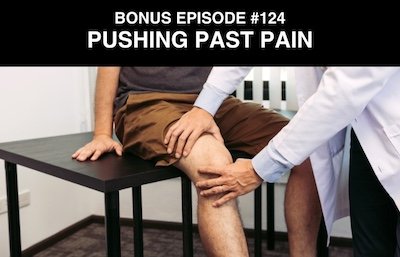
And next there was an examination where I had to lie down on a bed and the doctor like grabbed my leg and was pushing my knee in different places to see what was painful and what was not. And then he was ready to make his diagnosis. And so, he told me that I’ll probably need to do some treatment. I’ll need to get a shot that day.
He wanted to give me a shot, which I guess was a pain-relieving shot. And he also said that I didn’t need to take any medicine or anything like that. I just need to come back three or four more times for some different treatment. And also, I had to wear a brace that would keep my legs straight because he said bending the knee is not advisable right now.
So, he told me that I have to wear this brace for several days and to keep my leg straight. So again, OK, this was all in Korean, all in the Korean language and everything was cool. I was very proud of myself for having this discussion and this conversation in Korean and it just felt good. And I was proud of myself.
And you know, with learning Korean, like you guys with learning English, I’m sure you can relate to me. There are good days and bad days. And this day was a good day. Like I felt after this interaction at the clinic with the nurses and the doctor and the x-ray technician and everybody, it was cool. I felt very good and happy about my Korean on that day.
So, then it was time to get the shot in, in my knee. And so, the doctor said, “Go over to this room and the nurse will be in, in just a moment to help you with the shot.” So, I went in there and the nurse prepared my knee to get ready for the injection. And then the doctor came in and he was the one actually administering the injection.
And “To administer a shot” means to give it to you, right? To be the one who is giving the shot. And so, at that moment, then the doctor said, “Oh, I promise this won’t hurt. Don’t worry.” And in that moment, he spoke in totally like fluent, perfect English. And I said, “Whoa, you speak English?” And yeah, I guess he did his medical training in California.
And for whatever reason, I don’t know why he didn’t speak to me in English right from the start, but we spoke for most of the appointment in Korean. And then right at the very end, he switched to English and yeah, that was a surprise. And I said, “Hey doc, why did you make me struggle speaking to you in Korean like that?” But he said it was OK.
And yeah, so I thought that was pretty funny. And this is not the first time this has happened to me in Korea, dealing with doctors and dentists and going to clinics. I guess kind of makes sense that a lot of doctors maybe would do their training in other countries. And yeah, this doctor trained in California and his English was great.
And so, it’s nice to know now that there’s a really high-level English-speaking doctor in my neighborhood because this clinic was pretty close to my home so that if I need that help, I can go there again in the future. But that was just funny to me, that weird sort of linguistic dance that we had to do in the clinic between the two languages.
But at the end of the day, the shot didn’t hurt. I was worried that it was going to hurt because it looked like a pretty big needle and it went pretty far into my knee, but it didn’t hurt. And I got the brace fitted to my leg and then I had to, I didn’t have any crutches, so I just had to walk this really awkward walk with keeping my leg perfectly straight.
And when I do that, I noticed that if I keep my leg really straight, then I have to sort of push up higher on my left leg to be able to get my right leg to go forward. So, it was almost like I had to go onto my tippy toes every step that I took off my left leg to get my right leg forward. So, it was this weird kind of going up and down motion and it felt pretty awkward to me.
Wearing that leg brace was really uncomfortable, but a super good experience for me. And I think I’m actually going to tell you about the things that I noticed and learned about myself and about the environment and about society from having to wear that leg brace in the next bonus episode because it was a really insightful, eye-opening experience.
And I want to talk about that too, but if I do it in this episode, it will be too long. So, I’m going to save next week’s story for the things I noticed and learned and realized from having to wear that leg brace around town for a few days. But anyways, I got back home and yeah, just went about my week as I normally would, but just having to wear the leg brace.
And I also had to go back to the clinic a couple of more times. I think I went two more times last week. So, I visited the clinic a total of three times within one week. And the next two times that I went, I did a whole variety of like really weird treatments. One was an electroshock treatment where there was a nurse who had this machine. And it was almost like a defibrillator.
Like you see sometimes on TV dramas or the movies when there’s a hospital scene where maybe the patient has a heart attack, or their heart stops and they have that machine where they put the two paddles on somebody’s chest and then they boost an electric shock into them to kickstart their heart and get it going again. It was almost like that but focused on my knee.
And so, the first time I did it, the nurse was like, “Do you feel anything?” And I was like, “No, I don’t really feel anything. I think you can go stronger.” So, she ramped up the power of the machine and she was like, “Do you feel anything now?” And I was like, “I kind of feel a little something in my muscles around my knee, but not really too much.”
And then she’s like, “OK, let me kick it up again. But most people don’t go this high. Are you OK?” And I was like, “Yeah, let’s do it.” So, she put it up the high power on the machine and did it again. And then, wow, I really felt it felt like the muscles around my knee were dancing almost like they were really getting a lot of vibes going in there.
And that was painful, but it felt like helpful, like a good kind of pain. I’m not sure how to describe it, but I felt that that treatment was the most effective one. But then there were a variety of other treatments as well that I was more suspicious about. And I was like questioning in my head, do these really help? Like one of them was this light that they shone on my leg.
I guess it was, I think, an ultraviolet light or an infrared light. I’m not exactly sure what kind of light it was. I can’t remember, but I didn’t know if just this light would help. And another was a laser that was focused on my leg and on my knee. And again, I was like, I don’t know really if this is having any effect. Maybe it’s a placebo effect? I’m not sure.
But I did that for a total of three times, the first visit and then the other two times as well. And yeah, so I spent a lot of time in the clinic last week, wore the brace and also really focused trying to get extra sleep that week because I just know that sleeping is one of the best medicines ever, no matter what you’re sick with. If you sleep well, it’s going to help a lot.
And if you don’t sleep well, it’s not going to help at all. And in fact, will probably make things worse. So, I definitely tried to focus on getting extra sleep. And yeah, I think I logged nine or 10 hours a night each night last week. So, I was super relaxed from that. But I also found that trying to walk around town with this leg brace on was exhausting and I was pretty tired from having to do that.
So maybe things balanced out last week. But anyways, on that last visit to the doctor, he gave me another checkup. In fact, he did the same checkup that he did the very first day that I went in there and he had me describe the pain. And one of the nurses asked me to rate my pain on this pain scale. And it was like this big picture poster cardboard thing with a slider at the bottom.
And you could slide your pain from zero to 10 based on how you were feeling during that exam. And I put it at a zero. It felt a little bit uncomfortable, like bending my knees still felt weird. And every time I would bend it, it would make a popping sound, just like you are cracking your knuckles, that sound. And it didn’t feel like perfectly fluid or natural yet, but it was pain free.
And really, I only felt a slight discomfort going downstairs, but going upstairs was OK and any other kind of walking was OK. Bending it was OK. And so that was last Saturday, the doctor gave me the OK to remove the brace and walk around normally. And since then, it’s been another week and I’ve just been still trying to rest a lot, doing absolutely no exercise on the knee.
And now it feels pretty much back to normal. I’m happy to report I feel great again with the knee. I’m going to give it maybe another week or so before I really start trying out some exercise on it. But I’m going to be very, very cautious, maybe just some really light exercise and maybe some very light jogging, very slow, very short distances.
And just try to rehab my knee and get it back up to full health before I start training for the next marathon. This whole experience has been very illuminating and eye opening, and I definitely don’t ever want to do it again. So, I’m going to be extra, extra careful going forward that my knee is OK.
But yeah, good news at the end of the day that it’s not really a serious injury or anything like that. And I should be able to bounce back totally fine. The doctor did tell me not to run anymore. He was like, “Just stop running and start riding your bike. That’s better for your knee.” But I don’t think I’m ready to listen to the doctor in that regard quite yet.
As long as I can run, I’m going to try and run some more. And then, yeah, who knows if it’s a worst-case scenario and I would have to switch over just to riding a bike. I mean, I love cycling, too, so it’s not the worst news in the world. But yeah, anyways, guys, I guess that’s essentially the story of the knee injury and how I’ve been rehabbing and treating it. And yeah, it feels a lot better now.
So, fingers crossed going forward that I have no more problems with the knee, and I just have to be a lot more careful doing some strength and conditioning style exercises going forward, I think. So, I’m going to leave it here for today’s episode.
But thank you for listening all the way to the end. And thank you to everybody who reached out. I had many people send me a message or ask me about how my knee was doing this last couple of weeks. And it’s very nice of you guys. Thank you so much for thinking of me and asking about me. And yeah, I’m doing fine. So don’t worry at all.
If you made it to the end of this episode, I want to give you this week’s completion code. And this week’s completion code is going to be: “Treatment.” Treatment, because I had to get some treatment on my knee, those different therapies, and treatments that I told you about at the clinic. So, let’s make the completion code for this week that word “Treatment.”
What I’d like you to do is leave a comment, it could be on our YouTube page or Instagram page or Discord community, and you could make an example sentence with the word treatment, or you could just leave a one-word comment, really with treatment, that would be OK to whatever is cool with you.
And that will signal to me and our whole Culips community that you did it, that you finished this episode, and you completed an English study session with me this week.
So, I look forward to your comments and yeah, I think that’ll wrap things up for me here today. Have a great week of English studying up ahead and I will catch you in the next Culips episode. Until then, take care and bye bye.
