
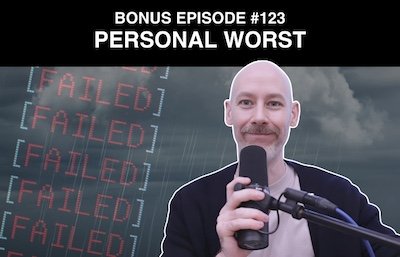


How is it going? I hope you're doing well. My name is Andrew. I will be your host and your English study buddy for this episode. Are you ready guys? Are you ready to dig in and do some English studying? What I'm going to do here in this episode is tell you a story that happened to me last week about my experience running the 2024 Gyeongju Marathon.
So as many of you guys know, one of my hobbies is running. I really, really enjoy it and I ran a marathon last week. And I'm going to tell you that story this week. So, stay tuned for that story in just a moment. But before I get started with that, I want to let you know that there is a free interactive transcript and vocabulary glossary to accompany this episode.
And I think that they will be very useful study tools for you. And I recommend checking them out. You can get them on our website, Culips.com or follow the link in the description for this episode. And if you are a Culips member, well, then you will also get a comprehension quiz. We throw in that little extra for our members just as a way to say thanks for your support.
And of course, we love all of our members. So, thank you guys for studying and learning with us and supporting the work that we do here at Culips. Speaking of Culips membership, if you are a Culips member, then I want to let you know about this week's upcoming small-group conversation classes. We have speaking classes here that we offer at Culips.
And the idea is first you listen to one of our podcasts and then after listening to that podcast, we discuss it as a small group over Zoom. So, it's really awesome. I've been hosting some of these small group conversation classes and also our other staff, Indiana, and Alina, they do this as well.
And it's just a great way to gather different Culips members from around the globe and practice our English conversation skills. And I have to say, meet some new friends as well because I've been really enjoying getting to meet with everybody week after week after week and getting to know them and to develop some friendships as well.
So that's really cool kind of side effect that you get from participating in these conversation groups. So let me tell you what's happening this week. On October 29th, we have a class hosted by Alina where we'll be talking about Simplified Speech number 201, that episode that we released last month, which is about the topic of audio books.
And then on October 30th there'll be a class hosted by Indiana. And I will be hosting one on Halloween, October the 31st. And in both of those sessions we'll be talking about Chatterbox episode number 326, Teen Employment. So, if you're a Culips member, I hope you will join us for one, two, or three of those sessions. You're welcome to join as many as you would like.
And if you're not a Culips member yet, then sign up so that you can participate in these speaking classes. Because I think when you participate in the speaking classes, then you're really practicing all of your English communication skills here with us. You're getting the input from our podcast episodes and you're getting the experience outputting while you're speaking.
And you can also get some feedback and some tips and ask questions to our excellent English teachers as well. So, I hope many of you will participate in this week's classes. To see the exact times and dates that they're starting in your time zone, because we have listeners from all around the world, then just visit Culips.com, log into your member account, and there's a time zone converter there.
So, you can see exactly when the classes will be starting in your time zone. But we try and schedule them so that there will be at least one class per week that should be, hopefully, convenient for your time zone. We try to take that into consideration when we are scheduling the classes.
So yes, I hope many of you will participate and that I can see some of you in my class happening on Thursday. All right. With that announcement out of the way, I think we should probably jump in and get started with this episode.
So, everyone, I promise I won't talk about the marathon after this for another, at least five or six months until my next one, but I want to share my race report and my experience doing the 2024 Gyeongju International Marathon.
So, without any further ado, let's get right to it. I hope you enjoy this story. Here we go.
So, my running buddy, Jimmy, and I, we drove to Gyeongju on Friday afternoon, late Friday afternoon, and it was about a three-hour drive. It was a really fun time just doing a road trip with Jimmy. Like, I love road trips. They're always really fun.
And when you get some tunes going and you're on the highway and you're talking about the upcoming marathon, like we're both running nerds essentially. So, we spent most of that time talking about running and the marathon and just catching up. And it was really fun. There was one bad omen when we were on the road.
That was just outside of Gyeongju when we were approaching the weather turned super, super bad all of a sudden. It just poured rain. It was like this deluge of rain on the highway. And yeah, it was a little bit scary, honestly. It was raining so, so hard and we couldn't see any of the cars in front of us. We couldn't see any of the cars behind us.
Everybody had their hazard lights on while we were driving there on the highway. So that was a little bit, I think like I took it as a bad sign. Like, first of all, this was less than 12 hours before we were supposed to start the marathon and it's just absolutely pouring rain. And we were probably, yeah, only 15 minutes away from Gyeongju at that time. So that was a bad sign.
But by the time that we had actually arrived at our hotel, then the weather had cleared up quite a bit. And I don't even think it was raining by the time that we got to the hotel. So that made us feel a little bit more reassured. Like we were iffy about the weather the whole time.
If you listened to last week's episode, I told you, I think in that one that the weather forecast at the time predicted that the weather would be hot and humid and windy and maybe even rainy, which is like just all of the worst conditions for running a marathon, right? And yeah, it turned out that that weather prediction was pretty accurate. And I'll get to that in a moment.
But anyways, we checked into our hotel probably around 7 PM. We were all settled, and we decided to eat some dinner. And Jimmy and I were really taking this marathon seriously, guys. We really wanted to do our best. And so, we were doing something which is called carb loading.
And carb loading is this technique that a lot of runners do before running a marathon where they consume and eat many, many, many, many, many hundreds of grams of carbohydrates before running. And I'm not a scientist.
I can't explain well the science behind this, but essentially you're trying to load your muscles with the energy that you get from the carbs so that when you're doing the running and doing the marathon event, then you have enough energy to help you finish the race and you don't bonk or you don't hit the wall, which is essentially when you run out of energy and you have nothing left in the tank, right? That's an expression that we use in English to talk about just having no energy left.
No, no passion left, OK? If you empty the tank, it means you give it your all and you have nothing left to give. You could think of a car where you're driving the car until the fuel light comes on and your gas tank is empty. It's that same imagery. OK? Same metaphor that's happening there. So, we were carb loading, which on the surface sounds really good.
Like I don't know about you, but personally I love carbohydrates. They're some of my favorite foods. So, think of carb-rich foods like bread and pasta and rice and potatoes. OK. All of these are like my favorite foods. So, I was super stoked to carb load. I thought, well, this is one of the nice things about doing a marathon.
Actually, most of the things that we have to do for a marathon are pretty unpleasant. Like a lot of training, a lot of hard work, a lot of grinding out there. But a couple of days before the event, you can just feast and load up your body with all of these carbs so that you'll have enough glycogen, I believe is the thing that you want in your muscles, and you get that from carbs.
So, I've done this before in the past. I've carb loaded, but I didn't really research how much I should eat, and I didn't really know any guidelines about exactly… I just sort of, you know, ate a little bit more than I usually would. But this time around, like I said, I was doing it properly.
And so, both Jimmy and I did some research into carb loading and we realized we had to eat much more than we were anticipating. Like I believe breakfast… we looked at this little meal plan and you could enter your body weight and it would give you a report about how many carbs to consume.
And I entered my body weight, and it told me I should be eating two bagels for breakfast with jam. And then for lunch I should eat just a regular lunch, but have four bowls of rice. Four bowls of rice! And then dinner was like 500 grams of pasta or something ridiculous. Like that's a whole bag of pasta, right? And you're supposed to do this for the two days before the marathon.
So, you should be carb loading and just eating all of these carbs. I was running the marathon on Saturday morning, so I should do it Thursday and Friday. And it was pretty much impossible. Like I have a good appetite. I can eat a lot of food usually, which is not necessarily a good thing, but I tried it on Thursday, and I ate the two bagels for breakfast. I could do that.
But then it felt like all of a sudden, I just finished those two bagels, and it was lunchtime, and I was supposed to eat four bowls of rice for lunch. I was like, there's absolutely no way that I can do this. So, I looked into it a little bit more and you can also get a lot of carbs from beverages like sports drinks or apple juice, orange juice. These also are pretty carb rich.
So, I had to turn to some liquid carbs to try and help me get the amount of carbs into my body that I needed. But all this is to say that on the Friday night before the Saturday race, we were racing on Saturday morning, Jimmy and I were still in our carb-loading phase and we are really careful about what we wanted to eat, for a couple of reasons.
Because first of all, we wanted to make sure that we hit our carb goal. And second of all, if you're a runner or if you've ever participated in a marathon event or anything like that, you'll know that having a calm stomach when you are running the event is very, very important, OK?
There's… I don't want to go into the TMI of the nasty details, but if you have an upset stomach or anything like that, then that can pretty much end your race.
We call it GI issues, gastrointestinal. That's what GI stands for. So gastrointestinal issues. It's just like when you have to go to the bathroom when you are running the race. And you don't want that because that can totally end your race or it can make you feel very, very uncomfortable while you're running the race or even worse. And I'll let your imagination take over for you there.
So, because of these two things, because we wanted to carb load and because we wanted our stomachs to feel good the next day, we actually brought our own dinners with us.
I know it sounds a little bit disappointing and it is a little bit disappointing, to be honest, that you go to a different city to run the race and you want to do some sightseeing while you're there and maybe even try some of the local restaurants, but you never know.
You don't want to try a brand-new restaurant and eat something that doesn't agree with you. And then the next morning you have some GI issues or anything like that. It's happened to many, many runners in the past. We're trying to do things correctly. So, we didn't do that. And yeah, it was a little bit sad. We were like in the lobby of our hotel.
There was a little dining room and a little microwave. So, Jimmy and I took our food down there and we just sat in the hotel lobby. It was empty. It was like just us by ourselves eating like chicken and rice before the… the race. So, we finished that up and yeah, that wasn't the best dinner. I have to admit it wasn't the best dinner, but it did the trick.
And we were in bed, I think by like 9-9:15 PM ‘cause we had to wake up early the next day to catch the shuttle bus to go to the start line of where the marathon was, which was like this big athletic stadium and athletic park. So yeah, we got a good sleep in. I have to say I was pretty tired. I didn't sleep well the Thursday night before going to Gyeongju.
And that was also maybe a bad omen because many things that I've read and heard say that the sleep that you get two days before the marathon is the most important. The night before the marathon, you know, most people are a little bit nervous or anxious or they just have a lot of energy and they don't sleep too well and that doesn't affect performance too, too much.
But the sleep that you get, I guess two nights before the marathon, that is the important one. And unfortunately, I just had not the greatest sleep on that Thursday night, which would have been two nights before the marathon. So yeah, I was completely tuckered out and tired and ready to hit the sack. And “hit the sack” means go to sleep. So, I was ready to hit the sack on that Friday night.
I think it was like, yeah, nine or 9:15 PM when it was lights out in our hotel room. And I slept really well, went to sleep right away and we woke up early the next day. I guess probably I think Jimmy was maybe up a little bit before me. He's an early riser, which is what we call somebody who wakes up early, “an early riser.” So, he's an early riser.
So, I think he was maybe up, who knows around like 4:30 or something. And I probably woke up around five and we got ready for the race. We fueled, which means just eating. I don't know. Maybe people who run want to sound cooler than we really are. So, we use these words like we “fueled” or we “fueled up” which just means to eat breakfast. So, we had some coffee, we had breakfast.
Jimmy's a champ. He's really well prepared and he brought coffee, and he brought a toaster, and he brought bagels. So, we had this sweet setup in our hotel room and yeah, he, he really did things the right way. And so, we had a nice little breakfast and I guess around probably 7 AM we left our hotel and we walked to the bus station where we caught the shuttle bus to go to the marathon grounds.
So, once we got there, we got ready. We got our bags checked. And we made sure that we were all geared up and we had stretched a little bit. Of course, before starting the race, going back to these like GI issues, you want to try and use the washroom once before the race starts.
So unfortunately, the line to go to the bathroom before the race starts is extremely long and yeah, we had to wait in line for like probably 30, 40 minutes. I think this race was like awesome, really well organized. I can't say enough good things about the organization and operations of the race overall.
But if there were a few extra porta potties at the start line, that would have been probably a little bit better. Maybe they'll adjust for that next year cause the lines were long. But it was kind of fun. Like even though you're standing in line to use a bathroom, which seems like a terrible kind of situation to be in.
I was talking a bit with some of the other runners who are waiting in line and yeah, the time passed pretty quickly. But then, before you know it, it was time to start. And so, Jimmy and I, we worked our way into the starting corral, which is what you call the area where all of the runners wait before we start.
And I believe there were around 1300 runners who are running the full-course marathon like we were planning to do. And there were maybe a handful of elite runners like professional runners, maybe about 20 elite runners. And of course, they get the best spot right at the start and they're allowed to start about five minutes before everybody else. I believe all of them were from Africa.
I'm not sure how many different countries were represented, but the winner I think was from Kenya. I believe Kenya. I hope I'm getting that right. But yeah, I think he was from Kenya. So, and he finished in like 2 hours 12 minutes, or something, which is mind boggling how fast the professionals can run. And yes, so the elites went and then five minutes later, it was our time to start.
So, we're all ready at the start line. And I guess I should say before we started, I should give you a little update about the weather. In the end, it was hot. It was almost, I believe, 20 degrees Celsius at that time, maybe 18, 19, 20, somewhere in there. Pretty warm for like a late October race, right? Much warmer than the year before.
I remember last year when we did this race, we were wearing jackets and sweatpants before we started and like trying to jump around and warm up to make sure that we were like hot and warm and ready to go before the race. But we didn't have to do that this year. The weather did it for us. Even without warming up too much, it was really hot outside. So, we didn't have to do that at all.
It was also humid, which is not great. It was overcast and looked like it was going to rain. And in fact, pretty much as soon as we started running, it started to rain. It started just misting, but it's not great when it's raining. Obviously, you can probably imagine that it's not so great. And when it's just misting, it's not like so bad. But one thing that I found to be a little bit annoying was my shoes.
Like my shoes didn't have that much grip on the pavement when I was running in the rain. I felt like my feet slipping a little bit. I felt like I was expending or using too much extra energy because the pavement was wet. So, every step that I took, every stride that I took, and when my foot would hit the pavement, it would slip just a little bit.
It's not like I was going to fall over or anything like that. But in the back of my mind, I was a little bit annoyed. Like, “I wish it was just dry on the road. I would get a little bit more traction and I would be able to not use as much energy.” So, that was one of the things that I was thinking right at the very start of the race.
Because essentially as soon as the gun went off and we took off and we started the run, then it started raining. And I could feel that just a little bit of slipperiness on the road as I was running. So yeah, anyways, the race starts, we're off, we're going, it feels good. There's a great atmosphere among all of the runners.
As soon as we started the race and we turned the first corner of the race, there was a traditional Korean farm music band, I guess we would say in English, which has like some drums and some cymbals. It's very rhythmic music and they were playing, and they were all wearing their traditional Korean costumes, which made it look really festive and traditional and cool.
And so that's just like motivating, gets you pumped up. And yeah, you're with, at the start when the race first starts, you're with so many other runners. Everybody is running together probably for like the first kilometer before things start to even and space out a little bit. So yeah, just a good vibe, a good atmosphere at the start of the race.
If you listened to last week's episode, you'll know that my goal for this race was to finish a sub 2:55 marathon. That was my goal. I wanted to finish in under 2 hours and 55 minutes. So, to do that, you have to go at a pretty decent pace, and I had a plan worked out with how fast I should be going for each kilometer. And I programmed that into my watch.
So, my watch would give me an update about each kilometer and tell me if I was going too fast or too slow. And essentially all I would need to do is follow that pacing plan and I would stay on track and finish the race at my goal time. So that was my strategy for the race. And it started off really well.
I was dialled in, I was hitting my goal pace for each kilometer, kilometer after kilometer, kilometer after kilometer. I was just ticking them off. And the way that I had organized the race is what's called a positive split where I'm starting the race fast. And then with each kilometer that I tick off, I'm going to slow down a little bit.
And the reason that I wanted to do that is because as you may know, I've talked about it last week in last week's bonus episode, I've been dealing with some slight running injuries. I had an Achilles tendon issue on my left leg, and I've been having some problems with my right leg as well. So, my reasoning was like, well, these injuries might start causing me some problems as I go on.
And I would like to get the hard work done quickly and over with. And then as the race progresses, I can kind of slow down, slow down, slow down. I mean not slow down that much that… even my final kilometers on my pace plan were still pretty fast. But I could at least relax a little bit as the race went on.
So that was my strategy, and it was working really, really well for like the first five kilometers. I checked in at the first five-kilometer point, felt great. And in my mind, I was thinking, “Wow! This is amazing. Like things are falling into place.” I was really worried about how this would go. I was worried about my Achilles tendon on my left leg.
I was worried about the knee injury that I had been nursing. And we use that verb “to nurse an injury” just means to like deal with an injury and try and treat an injury. So, I've been nursing this injury on my right leg as well. And I was just really worried about how the marathon would go or even if I could do the marathon. So, I had all of those worries in my mind up until the marathon started.
But as we started, I don't know if it was just like the excitement or the adrenaline of finally doing it after these months and months of training, but I felt great. Like I couldn't even feel any discomfort at all in my Achilles tendon or my knee like they both felt absolutely perfect. So, in my mind, I was just like, “Wow, things are falling into place. OK, this is perfect!”
And I didn't want to dwell or think about these things too much. But of course, that thought crosses your mind, right? You can't help but think like, “Oh, OK, it's time. Like it's my time to do this. Everything's falling into place. No injuries are bothering me. And let's go out there, Andrew. Let's have a good run!” I kind of self-talk to myself while I'm running. I talk to myself like this.
I say, “Come on, Andrew. OK. Everything's good. You're feeling good and you can do it!” So, I was talking to myself and encouraging myself that way. So, five kilometers tick off. No problem at all. 10 kilometers check it off. No problem at all. Feeling great still and hitting my time goals. And in fact, I went out a little bit too hot.
The pacing plan that I use on my watch will tell me if I'm going too fast or too slow. And I was about a minute ahead of schedule. And more likely, about two or three minutes ahead of schedule because the way that I actually set up my pace plan was not for a 2:55 marathon, but I think it was for a 2:53:30 marathon because I always like to give myself just a little bit of extra space in case I'm not able to hit my speeds.
Uh, yeah. So, I give a little buffer space when I'm setting up my pacing plan in my watch. So, I was ahead of schedule doing great, feeling great. The weather at this point had the rain had almost stopped. So, it was just like a light mist and the race had really spaced out all of those hundreds of runners that I had started with.I don't know where they went.
They disappeared and I was pretty much by myself. There were a couple of runners around me, but yeah, it gets a little bit lonely. Like at the start, all of the vibes are great and you're with all of these other people. And then once you pull ahead and I hit my pace goals, then there weren't too many other runners around me, which was a little bit lonely.
I guess there's nobody to like commiserate with. When you're running beside a couple of other guys or girls, sometimes it happens too, you know, you're like, you're all in it together. You're in the trenches together. You're all suffering together. But when you're by yourself, it's just, there's no one that you can commiserate with.
And that's a nice word that you could add to your vocabulary as well: “commiserate” which means to almost like complain or understand a bad situation together. So anyways, a couple of kilometers later, I hit the 12-kilometer mark and that's when my knee suddenly went, “Oh, Hey Andrew, what's up?” My knee checked in.
My knee started to say, “You know what? Actually, I'm not going to let you run this race pain-free today.” So, my knee started acting up a little bit around the 12-kilometer mark. And with each progressive kilometer, it started getting a little bit worse and a little bit worse.
And so, in my mind, you know, at first you just kind of try to downplay it, to not take it seriously and to fight through the pain as much as possible. I don't think it was really too painful at the start, but it's annoying and it got a little bit worse and a little bit worse. And I could notice that I was using more energy than I wanted to be using to try and hit the pace goals that I wanted to hit.
And I also noticed that I was adjusting the way that I ran to try and find a stride that would be more comfortable for me. And so that also uses some energy and it just gets in your head, right? You start thinking, OK, like “How am I going to deal with this problem? Conditions now are not perfect. My, my knee is sore. How can I adjust? How can I overcome this?”
And so, I kept trying like different things, different mental tactics to try and just ignore the pain and to keep running. And as I said, like at this point, it wasn't anything like a 10 out of 10 pain that was just gonna, you know, make me have to call the ambulance and take me away on a stretcher or anything like that. But it was definitely hurting and felt worse and worse and worse.
Around the 15-kilometer mark. So now we are getting right into the race. We're officially in the race. I'd been running for just under an hour at this point. Then it started to really rain. So it was, I would say pouring rain at this point it was a heavy rain. So that was great, right? Like one more thing that I need to deal with is some heavy rain.
And yeah, it actually kind of felt refreshing. It was nice because I was working probably too hard, harder than I would want to. My heart rate was higher than I would want at this point. But that was just another thing I had to deal with. So now I'm soaking wet, the rain's coming down, the wind's blowing my knees like, "What's up? Stop running, Andrew," dealing with this pain.
And I'm essentially kind of by myself. There's no other runners around, but I just kept going as well as I could. Went through to kilometer 17, 18, 19. And then at kilometer 19 is when there is a divergence in the two courses. So, the half-marathon runners and the full-marathon runners, we run the same course for the first half of the race.
But then yeah, at the halfway point, the half-marathon runners go back to the stadium and hit their finish line and finish their race. Whereas the full-course marathon runners go the other way, and they do, yeah, another 21 kilometers before they get to finish.
So, I was at that point where there was a fork in the road and there were some signs directing the half-marathon runners one way and the full-course marathon runners the other way. And it was at this point where I really, really was strongly considering just stopping. I was like, “You know what? Let's just do the half course. It's going to be a DNF. I wouldn't finish the full course.
But if I cross the finish line for the half course, at least it will feel like it wasn't totally a waste of time and that I still finished a half marathon.” So, I was thinking about doing that as I was coming up to this fork in the road and debating it and debating it. And then it was time to make my decision. Should I do the half course, or should I do the full course?
And at the last moment I thought, “You're doing the full course. You're not quitting. We are not quitting today. We are doing the full course!” So, at that moment I turned, and I went to do the full-course race.
Well, maybe that was a stupid decision because as soon as I turned the corner to go down the path towards the full course marathon, then there was a hill and as I was running, I mean, it wasn't like a big hill. It was just a slight downhill. But as I was going down that hill, then my knees started to feel really uncomfortable.
And this is hilarious because it was like only a hundred meters after deciding to go the full-course route. My knees started feeling quite uncomfortable at that point. And so, I thought, “OK, I'm just going to stop for a second and see…” Like maybe I can just give it a little massage for a little bit. And at this point I was thinking, you know, I'm going to try my best to finish the race.
But that goal of two 55, I thought, you know, if my knee is still in this condition for the rest of the race, it's going to be almost impossible. So, I had to shift my goal at this point to go from, you know, hitting the sub two 55 to just completing the race. So, I was like, “OK, I'm going to stop. I'm going to check this out, going to get my knee good and then I'll just take it a little bit easier.
And even if I don't finish the race at my goal time, that'll be OK.” So, I stopped, I slowed down and took a look at my knee just for a second. And right at that moment, it was really funny. There is this other runner who was another foreigner like me. There were not too many foreigners participating in this race.
I saw maybe three or four different visible foreign runners aside from the elite runners who I mentioned, I think were mostly from Africa. Other than that, it was like 99.7% Korean and just like a handful of foreign runners as well. And so just as I stopped, one of the other foreign runners passed me.
And as, as he passed me, he was like, "Don't stop, man. Keep going, keep going. You can do this." He was like yelling out at me to keep going. And he pumped me up. I was like, “Yeah, you know what? Let's go. I can do this!” And so, because of that, I just started, I was like, “OK, let's, let's get going fast again.”
And I thought maybe I could even run with this guy because he was only like a few seconds behind me, right? Like maybe 10 or 15 seconds behind me. So, he's going pretty fast as well. And so, I thought, “Oh, maybe I could run with this guy, and we could commiserate together for the rest of the race.” And so, I started running again. And like I said, I was on a little bit of a downhill.
And after stopping and starting again and trying to get back into a running motion again, my knee was just like, "Nope, not happening today." It was extremely painful. The first step that I tried to take, my knee just like gave out. It wouldn't even support my weight. This point I just had to take the DNF, the do not finish. I decided to call it and “to call it” means to quit. So, I decided to call it.
To quit. And I was really just worried about further injuring the knee. I didn't want to, you know, I thought it's not in a great spot right now, but if I keep going, if I put another half marathon into this because essentially, I quit, I think I was right around the 20-kilometer mark, maybe 19 point something kilometers. So, I essentially finished half of the race almost.
A little bit under half. But I thought if I put another half marathon worth of heavy running into this knee, then who knows what would happen, right? Maybe I would further injure it and cause some serious damage. So unfortunately, I had to take the DNF, the did not finish. I was pretty disappointed.
You know, I had been training for a long time and really wanted to do well on this marathon, but it just wasn't in the cards for me, which means it just wasn't my day. Wasn't meant to be. So, I pulled over to the side of the road, hobbled over to the side of the road. You know, when you're walking and you're just sort of limping, right? We call that “hobbling.”
So, I hobbled over to the side of the road. I was pretty upset, and I took my bib off right away. I was like, “Ugh!” And I had to walk maybe about a kilometer and a half, two kilometers back to the finish line. And that took a while because I was limping. I wasn't able to walk naturally. So, I was limping around, but I got there. And it was kind of cool.
I was able to see some of the elite runner’s finish. I was able to watch the award ceremony. Usually that's something that I never get to see, the award ceremony because all of the elite runners finish so fast that by the time they finish and they do the award ceremony, I'm usually still running. But this time obviously I was finished, and I was able to watch the award ceremony.
The winner won 50,000 American dollars. And as I mentioned earlier, he finished in about two hours and 12 minutes. So hey, not a bad payday for two hours and 12 minutes of work, right? Of course, it takes months and months and months and months and years of training to get to that point where you can run that fast, but still a sizable check. I was happy for that guy.
And yeah, what else I, after that I walked to a different part right near the end of the course, but a little bit before the finish line. And I waited for Jimmy. And yeah, I don't want to say too much about Jimmy's race because it's not my story to tell, but to keep things short, Jimmy had a time goal that he wanted to hit just like I did.
And when his time goal happened, I didn't see him, and I waited and waited and waited. And then finally Jimmy crossed the line, unfortunately at a time that was a little bit slower than he anticipated or wanted. And Jimmy was joking that both Jimmy and I, we did PW's. PW's. Now if you listen to last week's episode, I think I explained the expression PR, which is a personal record.
And that's when you run the fastest you ever have. OK? That's what your goal is. As a runner is you want to PR, you want to get a personal record, but instead of a personal record, this was a personal worst, a PW. So, Jimmy and I, we both PW'd in this race. They were both personal worst times. And so that was really unfortunate. And yeah, we were, we were both just disappointed.
And for whatever reason, it wasn't in the cards for us. It just wasn't meant to be. We trained really hard. We did everything right we thought. Maybe it was the weather. I don't want to use that as an excuse because a lot of other runners did really well, despite the weather conditions. And Jimmy and I both ran in hot, humid, rainy, and windy weather during training.
So, we thought maybe we'd be prepared, but it just didn't work out the way that we wanted. So yeah. Disappointing race for both of us. We were pretty bummed out that day. It wasn't anything to celebrate. Usually, we like to celebrate after the race, but we still did go out and have a nice dinner together and stuff, but it wasn't like a happy event.
We weren't celebrating the way that we wanted to, but you know, this is life, right? Sometimes things don't work out the way that you want to. And we're both registered for the 2025 Seoul Marathon. So now we said, “You know, we're at the bottom of our redemption arcs. We're going to build back better. We're going to train harder, and we will hit our goals for the Seoul Marathon.”
So yeah, that was my marathon story guys. And since coming back to Seoul, I went to a clinic and saw a doctor who specializes in knee injuries to see what's up with this knee. And I'll tell you that story later, but I've been back two times this week already. And I have to go again right now. Actually, I have another appointment here in just a moment.
So, I've been at the hospital many times this week, and it's been an interesting experience dealing with this knee, but don't worry. I think I'll be OK. Of course, I will recover. It's not super, super serious or anything like that, but it has been an interesting experience. And I'll probably tell you about that in next week's bonus episode. But for now, I think we will wrap things up here.
I've been blabbing on long enough about this marathon, but if you made it all the way to the end, thank you so much for listening and studying English with me today. Before I let you go, I need to give you a completion code and let's make the completion code for this episode: “Personal.” Personal.
Because unfortunately at the Gyeongju marathon, 2024 edition, Jimmy, and I both had personal worst runs. So, you know what to do, leave a comment with this word “personal” or if you want to make an example sentence using the word “personal” that would be awesome as well. If you're watching the YouTube version, you can leave the comment on our YouTube page.
Or if you're listening to the audio version, our Discord community is the best place to leave that comment or even on our Instagram page as well. you can do it. And that will just signal to me and to our other community members as well that you listened and studied with this entire episode. So go, go, go, and leave your comments with that word “personal.”
So, everyone, I think that's it for me for now, but please take care and I will catch you in the next brand-new Culips episode until then, bye-bye.
