
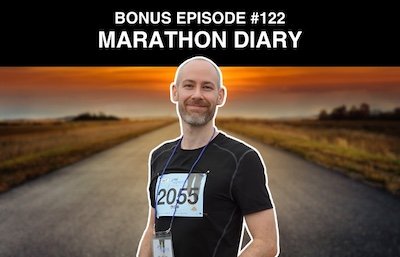


Hello everyone, and welcome to bonus episode number 122 of the Culips English Podcast. How's it going? My name is Andrew. I will be your host and your English study buddy for today. And, in our bonus episode series, what I do is I tell you some stories from my everyday life as a Canadian guy living abroad in Seoul, South Korea.
And I hope that by listening to these stories, you will be able to improve your English fluency. In fact, we have a motto for this series. It is B.I.G.B. And B.I.G.B stands for build your fluency, increase your cultural knowledge, grow your vocabulary, and become a clearer and better communicator.
So, if those are your goals with your English, if you would like to do those things with your English, then I think you are in the right place, and I will try my best to help you achieve those goals. Accompanying this episode is a 100% free interactive transcript and vocabulary glossary. And if you're a Culips member, then we'll also throw in a comprehension quiz as well.
If you would like to sign up and join Culips as a member, just visit our website, Culips.com. That's where you can see all of the details about the awesome study resources, and learning materials, and bonuses that you will get as a member. Alright, so I'm going to get right into this week's story because it's a little bit of a long one. Please bear with me, guys.
I'm pretty passionate about this topic, and when I get fired up when I start talking about it, then it's hard for me to stop. So, this episode is a little bit on the long side, but I think you'll find it enjoyable anyways. It's my runner's diary of what I've been up to in my running and my training over the last four months, getting ready for my next marathon.
So, I hope you'll enjoy this episode, and without any further ado, let's get right to it. Here we go. Enjoy.
If you're a long-time Culips listener, you'll know that one of my hobbies and passions in life is running, and especially the marathon distance. I ran my first ever marathon in 2019 in a place called Chuncheon, South Korea, and it's one of the top marathons in the country, the Chuncheon International Marathon. That was an awesome race. I really loved it.
It's what made me fall in love with the marathon distance. I think I finished in three hours and seven minutes and some change. Not exactly sure what the seconds were, but I finished what I thought was a pretty decent time, and yeah, I couldn't get enough. I fell in love with marathoning at that moment.
Unfortunately, after that marathon, not too long after that marathon, we had the global Covid pandemic, and that shut down a lot of the races here in Korea. So, I wasn't able to run in another marathon for several years, but I did keep running throughout that time, of course.
Even through the thick of the pandemic, when we were required to wear masks even outside here in Korea, I would go running outside with my mask on. It was rather uncomfortable, but I had to get those kilometers in. Had to keep up my passion for running.
And once the pandemic had passed us and things were settled back to normal, and we regained a sense of normalcy in the country, and races started up again, then I ran another marathon, my second marathon last year, around this time in October of 2023.
In that race, I was just running it with one of my running buddies, Jimmy, who I've talked about on the show a lot here on Culips, and so Jimmy and I ran it together. I think we probably even have a Culips episode about that marathon, so if you want to go back and check that out, you can. And I think I finished that one in around three hours and 20-something minutes, early 20s, 21, 22.
I was trying to help Jimmy get a PR in that marathon, and we were able to accomplish that goal, so we both felt awesome about that effort. And then, finally, the most recent marathon that I finished was in March of this year, in 2024. I ran the Seoul International Marathon, I guess it's called the Seoul Marathon here in Seoul. One of the most popular and prestigious events in the country.
And since I started marathoning, I've always had this goal of doing a sub-three, which is finishing the marathon in under three hours, and I was able to accomplish that goal in Seoul. I finished in two hours 57 minutes, and I think 39 seconds. I can never remember the seconds correctly, but I think it was 39 seconds. So, I was able to accomplish that goal. It was really tough.
I was totally dead after. I don't think I ran a very good race in retrospect. I think I made a lot of errors and made life difficult for myself because I ran too fast for about the first 30 kilometers and then once I hit kilometer 30, and for those of you who don't know, a marathon is 42 kilometers and a little bit of change, another couple of hundred meters after the 42-kilometer point.
But the first 30 kilometers I ran too fast, and I was too excited and too stoked, and I hit a wall at kilometer 30, and it was a really uncomfortable final 12 kilometers to the finish line. And yeah, each marathon is a learning experience. Yeah, I think the more that I do, and I'm still very much a newbie at the marathon. I've only completed three, so I'm very much a newbie.
But with each marathon that I finish, I'm getting more and more data, more and more information about how to do this long-haul event, and yeah, I think that will just make me a better and more efficient runner going forward. So, I was able to achieve my sub-three goal in Seoul this year at the marathon.
That was awesome, but pretty much as soon as I finished that marathon, I was thinking about the next one. What's my next marathon going to be? What's my next goal going to be? And yeah, I don't know, I think a lot of people who run have this experience that when they finish a race, whether it's a 10k race or a marathon, whatever distance, once you finish that race, then usually…
Of course, this is not always the case, some people maybe just hate it and want to quit and think no, I'll never do that again, but people like me who get the bug, they're always thinking about the future. What's the next race, let's do it, let's get going.
I guess accomplishing your goal in a marathon is just really, really motivating, and inspiring, at least it is for me, and so pretty much like the same day that I finished that Seoul marathon, I was already plotting in my head about my next race. And so, guys, the time has come to run my next race. And probably by the time you're checking this episode out, I've already finished it.
Because usually, I prepare these bonus episodes the weekend before they're uploaded, so if we upload them on a Monday, then I usually record them on Saturday or Sunday, but this is a special case because I'm recording it in advance because the weekend before we upload this episode, I will actually be running in the Gyeongju International Marathon in Gyeongju, South Korea.
So yeah, I'm doing it in advance here because I will be out of town and busy running the marathon the weekend before this episode gets uploaded. So, yeah, by the time you are checking this episode out, I've finished the marathon, or at least I've tried to finish the marathon.
We'll see how it goes, and that's actually what I want to talk to you about in this episode, is what we call the training block leading up to this Gyeongju marathon. How I've been training for it, how I've been doing throughout the training block. There's been a lot of highs and lows, so I'll share some of those experiences with you.
First, I should say that my goal for this marathon, like Jimmy and I, my running buddy Jimmy, who I mentioned just a second ago, we ran the marathon together last year, but we're not running it together this year, at least I don't think so. We have different time goals. And I'm going to try, my goal for this marathon is to finish in under two hours and 55 minutes.
So I'm setting the bar just a little bit higher than I was able to accomplish in Seoul, as I finished the Seoul marathon in two hours 57 minutes and some change, so my next goal that I want to achieve is sub 255, sub 2:55.
So really, I need to shave off like a couple of minutes, two and a half minutes or so will get me under my goal, which of course sounds like not a big deal, but in running time, two and a half minutes is a big deal, and it's going to be no easy feat to accomplish that. However, I think going into Gyeongju this year, I'm familiar with the course because I ran it last year. It's a decent course.
Korea has tons of mountains in it, and the whole peninsula of Korea, I think, is covered in 80% mountains, so it's really hard to find a flat stretch of earth, especially one that's 42 kilometers long. But relatively speaking, the Gyeongju marathon is quite flat, so that's going to be nice. That works to my advantage.
Of course, running up and down hills, you can imagine, is not very pleasant when you're running a marathon, so the flatter the better, and Gyeongju is a relatively flat course. There are a couple of small hills you have to go up and down, but nothing too bad.
So, I'm familiar with the course, it's a great time of the year here in, I guess it'll be late, mid-late October when we're running the race. And as long as the weather conditions are good, and hopefully, fingers crossed, I will be able to achieve my goal of doing a sub 2:55 marathon. So, I'll report back when I finish and let you know how it goes, either way, but that's my plan.
And I have to say, I'm really on the fence about whether I can accomplish this or not. Physically, I feel so good and so bad at the same time and let me explain. My aerobic system, my… my lungs, my breathing, my physical fitness in that capacity feels amazing. I feel like these days, I'm running faster and easier than I ever have. And yeah, I've been actually surprising myself.
I'm running, and I'm looking at my watch that I use for tracking my runs. And I love my watch, my running watch. All runners who have a running watch will tell you it's a fantastic tool that really, really helps you with this sport. It gives me information about my heartbeat, about how fast I'm going, about my cadence, about so many different things related to running, it's indispensable.
I really, really need it when I'm running. And yeah, sometimes I'll be out running, and I'll feel like things are pretty easy, and then I'll look at my watch and see my speed and see my heart rate, and it's really surprising to me that I'm running at that speed with that level of ease, without putting too much stress on my body.
Thinking back, like when I started running, many, many years ago, I've been running for over 10 years now. Thinking about back to when I first started, the speeds that I'm running at now are unimaginable. So, I've really come a long way with my running skill and my running abilities. And so, in that capacity, in an aerobic-fitness capacity, I feel awesome.
However, other parts of my body are not feeling so awesome, and that's really where the question mark is about this marathon for me. So let me explain. I'll… I’ll go back to the start of this training block, which for me began in June, so the race that I'm running here, the Gyeongju marathon, is happening, I think, October 18th or 19th is the official date.
And yeah, so from June to mid to late October, right, October 19th, that is what we have, June, July, August, September, and a bit in October. So, about four and a half months ish of training, which is a typical marathon training block. I think most people who are gearing up for the marathon, they either train for 16 weeks or 12 weeks beforehand.
And, I have this book that I got to help me train for this marathon, which is called "Advanced Marathoning." It's one of the most famous books about marathoning, and in that book, there are several training plans that you can use to follow and help you get ready for the marathon.
And, I selected one of the 16-week plans, which has you running, I believe, between 89 to 110 kilometers, give or take a few kilometers per week, throughout those 16 weeks. So, I had read a lot of good things about this "Advanced Marathoning" book, it's like the bible for marathoners. And I dove right in as soon as I got the book.
I read through the whole thing and looked at the plans, and I selected a plan that I thought was not too ambitious but that would push me, and that would be something that I could follow throughout the whole training cycle.
So started in June, and actually, maybe you'll remember, if you're a long-time or regular Culips listener, that in June, I actually ran a half-marathon, I believe it was on June the 1st, with a couple of my running friends, and that was in a city called Boryong, in South Korea here. And I was not too happy with that race result.
It was a PR for me, and a PR means a personal record, so I was able to break my personal record in the half-marathon distance, but it didn't feel too good. I wasn't happy with my result, and the course was also not super great. At the end of the course, there was this big mountain that you had to go up and go down, which was just killer, and made me feel like not so great about my result.
Like I felt like I should have been better than I was at that point. I guess, coming off of the Seoul Marathon and my sub-3, I had all of these ideas that I was gonna, you know, running was gonna be easy for me now, but couldn't be more wrong. I think, yeah, I was still happy to PR in that race. I can't remember what my final time was, an hour and 26 minutes and some change.
But I thought I could have gone faster. I was in the back of my mind, I wanted to do 1:23 or 1:24. I was thinking that would have been a realistic goal, and I wasn't able to achieve that goal, so it wasn't a great way to start the training block, but that's how things kicked off, was with that half-marathon race there in June. And then throughout June, I started ramping up my weekly running amount.
I think after the Seoul Marathon, you know, in my life, April and May tend to be really, really busy months, and into June as well. So, I didn't have as much time to carry up my running throughout those spring months, but then as soon as we hit the summer, my schedule frees up a little bit more, and I had time to hit the ground running and to get started with my training.
So, June was OK. I spent most of my June just slowly ramping up the amount of kilometers I was running per week and doing some basic workouts. The book that I was following, "Advanced Marathoning," this plan had me running six days a week, with one rest day.
And three or four, well, probably three of those days are easy runs, where you're just going very slowly and taking it easy and not going too far at all, almost like a recovery.
So usually, you would do one more intense session, and then the next day would be a recovery run, and one of those intense sessions would either be some speed training, maybe you're sprinting up a hill, maybe you're doing a long run, or a tempo run, where you're trying to run at a pace that is faster than is comfortable for you.
So, there are all these different styles of running workouts that you have to follow in… in this book. And I was following those and slowly ramping up the amount of distance that I was running each week and the amount of time that I was spending on my feet. Runners call this TOF, time on feet, which is a really important measurement for doing the marathon.
You need to spend a lot of time on your feet, just walking and running, especially running, doesn't have to be really fast, but you do need to spend a lot of time running each and every week if you want to be able to complete the marathon OK. So, June went by, I feel like it was just a regular training month, nothing special. But then July started, and July was a really big challenge for me, and probably every runner in South Korea.
Because July is when summer really begins here in South Korea, and it's terrible. It's a really difficult month for running. And in retrospect, I kind of wish that I just bought a gym pass and ran inside in an air-conditioned gym on a treadmill. And I hate running on treadmills.
I hate being inside when I run, but in retrospect, it probably would have been a good idea because the heat, the humidity, and the rains from the rainy season really made July a challenge. It's… it was a constant game of me checking my phone and checking the weather reports to see when there would be a window of the day where there wasn't any heavy rainfall.
Because yeah, it's the monsoon here in July, in Asia. I think in many countries in Asia, but especially in Korea. And I know some other countries around the world when they have the monsoon, it's very predictable, like maybe it will rain only in the morning or only in the afternoon, and it’s sort of like that every day. But it's not quite like that here in Korea, and really rain could come at any time.
So that made training really tough because, yeah, I'd be wanting to go at the same time every day to make that routine and have that steady habit, but one day it would just be absolutely pouring rain in the morning, and I wouldn't be able to run, and then the next day, it would be absolutely pouring rain in the afternoon, and I wouldn't be able to run.
So, you really have to juggle and be flexible with your schedule, which is not ideal. And then also, because of the rain, a lot of the paths here are closed. So, I've talked about this before on Culips as well, that a lot of the good biking paths, and running paths, and walking paths in South Korea are beside little streams. And those little streams, most of the year, are just very little streams.
But they actually have a greater function in the infrastructure of the city, and that is that they provide drainage for all of the rainwater that happens during the monsoon season. So, those little streams turn into absolutely raging rivers during the really heavy rainy season, and all of those paths are closed down, they're taped up, there are big signs saying, “Don't go in here.”
And yeah, so I have to abide by those rules, and it makes it really difficult to find a place to run. Because you realize that so much of the path infrastructure in Seoul is based around those riverside and stream paths. And so, when those are closed, it's like where do you go running?
Seoul is a very big city, it's a mega city, it's dense, there are many people, and just running on the road or running on the sidewalk is out of the question. There are too many people, too many cars, too dangerous. And especially in the rain, when people are holding umbrellas at eye level where one of those little spokes from the umbrella could poke you in the eye, super dangerous.
And yeah, the streets are wet and slippery, so it's not a good place to go running. So, I had to do a lot of scouting to try and find where could I go for a run. I ended up finding a park that's sort of really far away from any rivers and streams, and I ended up going to that park a lot.
But it wasn't that great because, well first of all, you can imagine when all of the walking paths are closed, everybody else who wants to go for a walk and get exercise, especially if they have like a pet dog that they need to walk, we're all going to that same park. So, I think it's more crowded than usual. There were a lot of runners there, and we all sort of stuck together.
So, there would be runners on one side of the path, and there would be people walking their dog and going for a stroll on the other side of the path, but it's just like not ideal, I think, for anybody, nobody was really happy with that situation.
And also, the park that I went to had like a loop around the circumference of the park, which was maybe two or two and a half kilometers to complete the loop, which was nice. But one side of the loop is going like really steeply uphill, and the other side of the loop is going really steeply downhill. And again, that's just not ideal for running.
I mean, it's good, it's a good workout, but especially running downhill with wet pavement and wet ground is not ideal. So yeah, it was very difficult to run, but I did find that one park that was open every day, and I could run there. And then, also close to where I live, there's an apartment complex. And behind the apartment complex is a big nature reserve or park or something.
So, it's almost like a forest right behind the complex. And then also, there's this old road that's completely blocked to cars that runs behind the apartment complex. And it's about seven or eight hundred meters long. And nobody really hangs out there. It's just like this abandoned old road in between this nature area, a forest, and this apartment complex.
So yeah, I went there, and I did some running there too. I believe one of the days, I did this like really long run. I think almost 25 kilometers, where I just ran back and forth, back, and forth, up this little stretch of road that's 700 or 800 meters long. And I remember that day distinctly because it was pouring rain.
And it just rained all day. My wife was like, "What are you doing? You're crazy. Why are you outside running in the rain?" At least it's super hot at the same time. So, it's not like you're going to catch a cold or anything like that, or at least I didn't. But yeah, running up and back that little stretch of road in the pouring rain.
And I remember one of the security guards for that apartment complex. Here in Korea, most apartment complexes have a little security building. And usually, it's retired guys who are the security agents. And they're just checking out the apartment complex, dealing with complaints, making sure everything is running smoothly.
But his little security booth, where he hangs out and watches the CCTVs and that kind of stuff, does his work, was really close to where I was running back and forth. And so, he was kind of looking at me strangely like, "What in the heck is this foreigner doing, running in the pouring rain, back and forth, back and forth, doing a 25-kilometer run on this little street?"
But I had to get my workout in, and yeah, it worked fine in the end. So, I'm happy that I found those places, and I guess next year, probably, I'll opt for the gym membership. Because it was pretty unpleasant to run in July in Seoul here this year, but I was able to have a great month of running. I think in the end, I wrote it down, I ran over about 450 kilometers in July.
So, I was able to hit my training goals. I had great workouts, great running in July, felt really good about that. But then August hit, and August was a train wreck. I really wasn't able to keep up with my training schedule very well during August.
If you guys have listened to the recent Culips episodes from, yeah, a couple of weeks ago, you'll know that at the end of July and into August as well, I visited Japan and I went back to my home country of Canada and spent a few weeks in Canada. And during that time, I didn't do too much running. I did do one run in Osaka around Osaka castle, which was fantastic.
It was also extremely hot and humid and very, very unpleasant due to the heat, even at like 10 o'clock at night. I was still sweating like crazy out there, trying to get a run in around Osaka castle. And I did do some running as well in Canada before my wife came. I went to Canada a week before her, and then a week later, she came and joined me.
So, during that week, when my wife was still in Korea and I was in Canada by myself, I was able to get some nice runs in. I would, yeah, run around the area where my parents live. They live pretty close to Okanagan Lake, which has some great trails right beside it, and unfortunately, till the end of the trail is only about five kilometers.
So, I could run down the trail five kilometers, then run back to my parents' house, and then run back, and then run back, and I would do those for my longer runs, do a couple of lengths of that trail, and then the greatest thing about running in Kelowna, in my hometown where my parents live, is that there's this huge lake right beside the trail.
So as soon as you finish running, then you can just jump in the lake and cool down, and that was awesome.
I really enjoyed running in Kelowna and cooling down in the lake every day. I did that, yeah, probably about six days out of that seven days where my wife wasn't there, and I'd even go back sometimes in the evening to go for another swim. So yeah, it was awesome to run in Kelowna before my wife came.
But then as soon as my wife joined me in Canada, I don't think I did one run while she was there, for the entire like 11 or 12 days that we were in Canada together. I don't think I ran once. And I justified it by saying like, "Hey, we don't get to do this very often, this is a really special trip.”
And we were super active, we had really busy days, and things to do, and I just didn't want to spoil our trip with me being really, you know, one of those people where I'm like, “I have to get my run in. I have to get my run in.” Like, I didn't want to do that to her. That's just annoying, right? So, I just decided, hey, you know what?
Let's enjoy our life. I'm gonna stop running while I'm in Canada here, while we're together. And then I'll resume my training once we get back to Korea. So, I thought that was fine, and it's good to give the body a break as well, so I wasn't too worried about losing any fitness or anything like that. Just a couple of weeks, I thought it's no big deal. It'll be OK.
So then after Canada, we come back to Korea, and we get into our regular daily routines again, and that means that it's time for me to get back on the running trail and go for a run.
So, I was really excited because, maybe you've heard, in one of the bonus episodes from my time in Japan in Osaka, I bought several new pairs of running shoes, and so it was time to try out those running shoes and break them in, and go for a run in them.
And in my first run back here in Seoul, I went out for a run just for an easy run, like my normal path that I always go on. And my left Achilles, my Achilles tendon on the back of my ankle on the left side, you have that big tendon that runs down the back of your ankle, and we call that the “Achilles tendon.”
That was just really, really painful, and I was like, "What the heck is this? How am I injured?” Like, just taking a few strides running, and suddenly, weirdly enough, it was really, really painful. And I was so shocked, and miffed, and surprised about why this was happening because I hadn't run for like the last 12 days.
I had absolutely no pain when I was just walking around, didn't feel anything or notice anything, and then I just took, like, even my first stride of running, and suddenly I have this pain in my ankle. So being a long-time runner, this is not something that's super new to me.
It's like you get these little aches and pains all the time, and usually, to be honest, they go away after a couple of hundred meters of running. Like, you just power through, you don't give up, and those little aches and pains, especially after you haven't moved for a little while. A kind of rusty body, I don't know, your body's like, "What's going on? I haven't run for a while."
Those aches and pains usually disappear after you run for… for a little while. So, I wasn't stressed out or anything. I thought, "OK, this is weird, but, you know, it happens. Let's just continue on with the run." And so, I continued on with my run, but throughout the whole run, that pain never dissipated. And in fact, it got worse!
And the next day it was still there, and the next day it was still there, and it wasn't going away at all. And I was super bummed because I thought, you know, this could be a really serious injury. Tendon injuries like tendinitis tend to be no joke. Pardon the pun.”
And there's not great treatment options for it either, and so I spent a lot of time on YouTube and reading the internet and trying to find different exercises and strategies and things that you could do to help the tendinitis.
And I tried doing all of those, and nothing seemed to improve, but also at the same time, the things that I were reading on the internet were telling me that as long as the pain isn't getting worse and worse and worse, it's sort of staying at a similar level, then it's probably not too bad to just keep running.
And probably this is like me making a conscious decision to continue running when it's probably a good idea to stop. Like if you have an injury, it's probably in your best interest to stop. To try and rehab and recover. And feel good again. And then continue running. But now we are into September. And I have this marathon on October 18th or 19th. It's only like six weeks away.
And I had been training hard throughout all of July. I didn't want to throw that training out the window. And so yeah, I just kept running. And maybe, well, not maybe. I know this is kind of a stupid attitude to take. But I think many Canadian guys, we kind of grow up with this attitude. This culture of just putting your head down and persevering.
Even if something hurts a little bit. I think this is kind of an ice hockey mindset. And yeah, it's almost seen as a noble thing. Or something that's respected in the ice hockey community. That you play when you're injured. And you keep going when you're injured. And you just tough it out. You don't be a baby. You don't cry about it. You just keep going.
And so, for better or worse, and probably for worse, I think some of this mindset is instilled in me. And so, it's like, OK, your ankle's sore. Well, your ankle's sore. You still got to run the marathon. Figure it out. Tough it up. Don't cry about it. And keep going. And so that was my attitude. And yeah, I ran throughout September. Probably, I think, I got around 350 kilometers in, in September.
It wasn't an awesome month of training. But I was able to keep up mostly by following the plan in the “Advanced Marathoning” book. I did have some really productive runs. Some really great runs. But I was always hampered by this sore ankle at the same time. The weird thing about the ankle is when I start running, the first four kilometers or so, it's quite painful.
But then, I don't know what happens. It gets warmed up or something. And then once I hit around four kilometers, I don't feel it at all. That pain totally goes away. And then when I stop, it comes back. So yeah, it's not ideal. And thankfully, some of the exercises that I've been doing to try and rehab it have made it feel like 95% better. It's pretty much 100% now.
I've been doing, yeah, these exercises that I saw online, and been doing some self-massage, and body work, and I think it's really working. So, I'm not worried about my Achilles on my left-hand side right now at all, feels good, and I should be good to go for the marathon on that front.
But just a couple of weeks ago, another injury has struck, and I'm dealing with this injury now, on my right leg, with my knee. Suddenly out of nowhere, my right knee, it's super, super painful when I'm running. I wouldn't say super, super painful. It's like a four out of ten pain. But then sometimes it gets up to around five out of ten. And I think this injury is called “Runner's knee.”
It's a really, really common running injury. Just like your Achilles tendon injury, I think both of these injuries are caused usually by not having the proper strength in some of your muscles in your legs. To deal with tendon issues. And I think runner's knee also is usually some kind of tendon issue. A tendon is the piece of your body that connects to your muscles and your bones.
And kind of keeps those in place. So, if some of your other muscles are too weak when they're connected to the tendon, this can cause issues. And obviously, you can tell by the way that I'm talking about this that I'm not an expert at all. But this is what I've learned from some researching on the internet. And so yeah, now I'm having these issues.
My left ankle is sore, and my right knee is sore. Thankfully, thankfully, the ankle has improved. But I could power through with the ankle, even if it was sore. I felt like I could power through and run, and still be an effective runner. And hit all the goals that I wanted to hit in my workouts and my exercises. But with the knee, it's a huge question mark.
I have done some really good high-quality runs throughout October. Actually, October has been a great running month for me. I was out the other day, and I hit a new PR in the 10-kilometer distance. I went for a 10-kilometer run, and I went all out.
This was one of the prescribed exercises in the “Advanced Marathoning” book, is that towards the end of your training block, you should go for a 10-kilometer all-out run. And so, I did that, and I broke a new personal record. I finished in under 38 minutes, I think I was 37:42. So, that was huge for me. And actually, that run was funny because I just felt so good, I was running really well.
And as I was running that run, my wife was actually out that night, I was running at night, and she was coming home, and she was walking home on the same path where I was running. And so, I was like, I think almost finished the run, around eight kilometers into the 10 kilometers, and then suddenly, I hear my name called out, and it's my wife.
And you know, I'm trying to do as fast all-out effort as I can, and I hear my wife and see my wife. And the first thing that crossed my mind was like, "Oh no!" Because obviously, I have to stop and say hi to my wife. She didn't know that I was doing this all-out effort, you know, when I go out, I don't really tell her the details about the kind of exercise or the kind of workout that I'm going to do.
I just say I'm going for a run. And so yeah, it would have been a total jerk thing for me to do just not to stop for my wife, right? So, I stopped quickly, and because I was running pretty much, you know, as fast as I could sustain for 10 kilometers at a 10k pace, I was pretty out of breath. So, I just stopped, and I said, "Hi, I gotta keep going," and so she was like, "OK."
So, I ran off again, but I had to stop that time, and there was another issue that I was having with my shoe as well, during that run, and I had to stop and fix my shoe. And when you're doing an all-out effort like that, stopping really sucks. You might think that it's nice that you can catch your breath for a second, but one thing is that it adds time, right?
When you're stopped, your clock doesn't stop, just your body stops, so your time keeps adding up. And then also, it takes a lot of effort to go from still to full speed again. So, I really hate stopping for any reason at all when I'm doing one of those all-out efforts. But I had to say hi to my wife, and I had to fix my shoe.
And because of that, I feel like, man, maybe I could have done a 36-minute 10 kilometer, which, yeah, seems very, very much in reach. So, like I said, my fitness is great, but my body, my knee, and my Achilles tendon, not so good right now, at the moment. And although the Achilles is much better, the knee is a giant question mark.
And one of the last long runs that I did was a 30-kilometer long run, getting ready for this marathon that I'll be doing shortly. And during the long run, the knee felt OK, but after I finished, it was really, really sore, and so I didn't run for three days after. And then I did go for just a gentle 10k yesterday, and now the knee is really, really sore again.
So, I'm going to, my plan, is not to do any more running before the marathon. When I'm filming this right now, I have another week and a half, and I'm not going to do any running at all. I'm just going to work on trying to fix my knee and trying to do some of those exercises that are going to be helpful for it. And give it time to rest and recover.
I think my fitness is probably as good as it's going to be, as good as it’s going to get before the marathon. And I don't see me losing or gaining any fitness, so I think the best thing to do, just let my knee rest and recover, and hopefully, it will feel good by the time that we have to do the marathon. And if it doesn't feel good, then maybe I just won't run the marathon.
I'm not gonna try and injure myself long term. Of course, I put a lot of time and effort and blood, sweat, and tears, we could say, into training for this marathon. But at the end of the day, I have to think about this as being a sport that I want to do going forward for the long term. And yeah, I have to listen to my body.
So, I'm a little bit worried about my knee, I think after the marathon, if it's still causing me issues, then I'll go see a doctor and get an official diagnosis of what's going on. But I'm pretty sure it's just runner's knee, and yeah, kind of sucks, but thank you guys for listening to my story. Those were the ups and downs of this training block.
And as you can see, this is something I'm really passionate about. This is something that I personally love to watch. I go on YouTube, and there's a couple of runners who are out there in the… the YouTube community who talk about their training cycles just like I'm doing right now. And I love watching this kind of thing on YouTube, but I know it's not for everyone.
But if you're interested in exercise or just interested in some of the kinds of things that you have to deal with when you train for a marathon, then I hope you enjoyed listening to this episode. Thank you for making it all the way to the end. By the way, you did a great job, and I'm proud of you for completing this English study session with me.
Before I let you go, I should share this week's completion code with you. So, let's say that this week, we will make the completion code 'knee.' Let's do 'knee.' I was gonna say 'tendon,' but that's a pretty hard word to make an example sentence with, so let's go with the completion code 'knee,' spelling K-N-E-E for this week's episode’s completion code.
And what I'd like you to do with this completion code is leave it in the comments. If you are listening to the audio version, you can leave a comment on our Discord community or our Instagram account. If you're watching the video version, then you can leave a comment on the YouTube page.
And just write 'knee' or write an example sentence using the word 'knee,' and that will signal to me and the wider Culips community that you did the time, you put in the effort, you put in the work, and you are able to complete this English study session this week with me.
Well, everyone, it's time for me to go, but as always, have a happy week of English learning up ahead. Please take care, and I'll talk to you in the next Culips episode. Bye bye!
