


Let me quickly explain what it is and what we do here. Essentially, the motto for this series is B.I.G.B and I think it explains really well the goals of what we try to accomplish in the bonus episodes. So let me break it down for you. B.I.G.B stands for build your fluency. That’s the first B. I stands for increase your cultural knowledge of the culture of English-speaking people.
The G stands for grow your vocabulary. And the final B stands for become a clearer and better English communicator. So, if those are some of your goals with your English learning, then you are in the right place and I will do my very best to help you achieve those goals. And what I do to help you achieve those goals is I just tell you some stories from my everyday life.
I’m a Canadian guy, but I live abroad in Seoul, South Korea, and I just share some stories with you about what I get up to in my daily life. So, with that being said, what I’m going to talk to you about in today’s episode is the final part, the final leg of my summer vacation, which I spent back home in Canada.
If you haven’t heard the stories up until now, the last several bonus episodes have been about visiting Kelowna, my hometown, about visiting Victoria, British Columbia. In this episode, I’m going to tell you about visiting the Rocky Mountains, going to Banff, going to Calgary, Alberta, before finally flying back to Seoul.
And guys, if you don’t enjoy these vacation stories, these travel adventures that I’ve been sharing with you over the last several weeks here, then rest assured that you don’t have to hear about any for the next little while, because I think I’ll be out of travel stories after this episode. So that’s what I’m going to do, is tell you about visiting Banff in this episode.
But before I tell you that story, let me share a few things with you about Culips. The first thing I want to do is let you know that to accompany this episode, there’s a 100% absolutely free interactive transcript and vocabulary glossary that will explain and break down and give you some examples of the key vocabulary that you’ll hear me use when I’m telling my stories.
And if you’re a Culips member, then you’ll also get a comprehension quiz so that you can test how much you are able to understand from listening to this episode. And if you’d like to sign up and become a Culips member, I’d highly encourage you to do that. It’s a wonderful way to study with us, to take your English to the next level with Culips and our curriculum.
There are tons of benefits and bonuses and special tools and lessons that you get when you are a Culips member, which will just make learning with us so much better and so much easier. And I invite you to learn all about the details by visiting our website, Culips.com.
That is the place where you can also sign up and become a Culips member to improve learning English with Culips and also support the work that we do here. So, if you’re interested in becoming a Culips member, please check out our website. And also, I wanted to let you know about this week’s small group discussion sessions.
Each week, we have several classes that Culips members can join to practice their English speaking. We had an awesome session last week, actually. We had some great people out at the session that I hosted, at least. We met with, I think there was like 13 or 14 Culips members there. We just had a nice time talking and yeah, I really enjoyed it.
So, if you are a Culips member and you haven’t joined us for one of these small group discussion sessions yet, I would really highly encourage you to do it. I always have a great time after and I always feel like the time is too short. Like we have one hour for these sessions, and it seems like the time just flies by. It’s really fun.
Everybody is very friendly and yeah, it’s just a great way to practice our English output. Of course, that is also part of things, right? You can listen to our podcast episodes or watch them on YouTube, whatever you prefer to do. That’s great for getting a lot of input, getting English into your brain and I think that is so, so, so important. So, I’m really proud of you for doing that right now.
But also at some point, we got to use our English to communicate with others and speaking is the main way to do that. And so, these small group discussion sessions give you that opportunity. It’s especially great for those of you who don’t live in an English-speaking country at the moment because yeah, sometimes it can be hard to find people to speak English with, right?
So, if you are a Culips member, I would encourage you to join us this week. As I mentioned, we have three sessions and they will be happening on September 25th, 26th, and also on October the 1st. Can you believe it? It’s already going to be October very soon.
September just seemed to fly right by, in my opinion, and oh my gosh, we’re already getting in almost to the last very end part of 2024. Crazy. Anyways, so this week our session topic, we’ll be talking about Catchword Episode number 278, which is “Left to your own devices.”
That’s the title of that episode and yeah, we’ll be discussing it and I would recommend that you listen to that episode before joining the session.
You can also check the discussion questions so you know exactly what we’ll be talking about during the session, and you can see the time when the classes will happen in your local time zone as well as the information to join the sessions through Zoom, they happen on Zoom, just by logging into your Culips accounts and following the conversation schedule, class schedule link that you can see big and bold on the dashboard.
So, those are our times for this week, and I hope many Culips members will participate. If you’re not a Culips member yet and you’d like to participate, go, go, go, sign up and become a member. That’s one of the benefits that membership provides you with and we hope that you will enjoy the classes if you do decide to sign up and become a member.
All right, I think that’s it for the announcements. I’ll stop rambling on here with the announcements and we’ll get started with this episode in earnest where I tell you about what I got up to when I visited Banff and the Rocky Mountains just about a month ago. So, let’s get started with that main story now. Here we go.
Last month in August, I visited Canada with my wife and the final leg of our trip was going to Banff, Alberta and visiting the Rocky Mountains. So, we had to get there by taking a plane. We left my hometown, Kelowna, where we were visiting my parents and we flew to Calgary. It’s a pretty short flight. It’s maybe an hour-ish or so.
And if you listened to last week’s bonus episode, I told you about a white-knuckle flight that I took with my wife to get into Kelowna. But thankfully, leaving Kelowna and going to Calgary was not that experience. It wasn’t a white-knuckle flight this time. We took a larger airplane. There were no problems. The weather was good. And so, it was smooth sailing.
Smooth sailing is an expression, an idiom, that we use in English when we’re talking about a journey that has no bumps at all. It’s just smooth and comfortable and safe. And it was smooth sailing into Calgary from Kelowna. So, we landed OK in Calgary.
But let me back up just a moment and actually tell you about a kind of chaotic and stressful incident that happened just a day or two before we were scheduled to arrive in Calgary and then make our way to Banff. Now originally, we were going to rent a car in Calgary and then drive from Calgary to Banff in the Rocky Mountains.
Now, Calgary is not in the Rockies itself. It’s just a little bit outside and it takes maybe an hour and a half drive from Calgary, and you can arrive in the Rocky Mountains. And I mean, you’re right in the Rockies. When you get to Banff, it is very, very mountain-y, very, very Rocky-like. I don’t know if you’ve seen pictures of the Rocky Mountains before.
I’ll put some pictures on our social media, on Instagram and Discord. And if you’re watching the YouTube version, I’ll put some in the video as well. So, you can see exactly the scenery that I’ll be talking about in this episode. But yeah, to get from Calgary to the Rockies is not that far of a drive.
And I thought it would be cool for my wife and I to have a little bit of freedom to do our own thing and go our own way. So, we decided to rent a car instead of taking a bus or something like that. So, while we were in Kelowna, maybe about a week and a half before we were scheduled to go to Banff, there was actually a huge hailstorm in Calgary.
And hail are like these big ice pellets that fall from the sky. I don’t know if you’ve ever had that kind of weather where you live. I guess it probably depends on your climate. If you live in a warmer place, maybe you don’t experience that kind of weather too much. But in Canada, hail is not too rare. Like, I remember growing up that it would hail a couple of times each year.
But usually when it hails, the ice pellets that fall from the sky are quite small. They’re like the size of a grain of rice, essentially, very, very small little ice pellets. But this hailstorm that happened in Calgary was totally different. And the hail was like golf-ball sized hail. And it caused a ton of damage. There was part of the airport that was shut down.
There were airplanes that were damaged at the airport. So that was one thing. Like, my dad was like, “You guys might not make it to Calgary.” Like, “The airport got destroyed, windows were smashed by the hail, airplanes were out because they were damaged.” And so that was the first thing that kind of stressed us out, was like, oh, maybe we won’t even make it to Calgary.
But well, in fact, actually, our flight did get canceled now that I think of it. But they rescheduled us on a flight that was a couple hours earlier in the morning. So, we were supposed to leave at like 10am, I think, and then we ended up leaving at 8am or maybe 7am. I believe it was 7am ‘cause I was a little bit annoyed that the flight got bumped to an earlier time.
Because my parents live quite far away from the airport in Kelowna. It’s at least a 45 minute to an hour drive, depending on traffic. Not so bad in the early morning. So, let’s say 45 minutes. But still, you know, if you have to be on the airplane to take off at 7am, that means you’re waking up really around 4:30 in the morning to get ready and then to make your way to the airport, go through security, all of these steps.
So yeah, 7am flight is not too pleasant because it really means an early start to the day. But yeah, I was just happy at the end of the day that the flight wasn’t cancelled or anything. It just got bumped to an earlier time slot. And I think that was because of the hail damage.
But another side effect of this huge hailstorm that happened in Calgary was that I heard that many, many vehicles, and cars were damaged. And so, there were so many people renting cars because their… their car had to be fixed at the shop. And there were so many people at the shop getting their cars fixed.
So, there was like, this lack of rental cars in the Calgary area because of this hailstorm. So, I heard this, and I was like, I think, you know, I think it should be OK, because I had reserved the car in advance. But you never know, like, I’ve heard so many stories of rental cars not being available when you go to pick it up and your reservation gets bumped with no advanced warning or anything like that.
So, I was a little bit in the back of my mind stressed, like, are we going to arrive in Calgary and there’s not a car for us? Or, you know, I don’t know, that was just sort of stressing me out a little bit. But I thought, hey, it’s an adventure. Let’s just go and see what happens. And we’ll go with the flow and things will work out. They always work out, right?
So, I had that in the back of my mind. But then, like a day or two before we were supposed to take off, I was talking with my brother, and he was like, “OK, yeah, when you guys get to Calgary, how are you actually getting to Banff? You’re taking a bus, right?” And I was like, “No, we reserved a car, we’re going to rent the car.”
And then he told me, “That’s a terrible idea.” He’s like, “Did you reserve parking? Did you plan for like, how you’re going to do your your trip in Banff and your trip to Lake Louise,” because that was our main thing that we wanted to do in that area is actually a little bit outside of the village of Banff. And I should say that Banff is a small mountain village in the Rockies.
And then one of the great sites to see around that area is this beautiful lake called Lake Louise. And there’s another lake called Moraine Lake. And we were planning just to be in Banff for, I guess it was two days, no, two nights and three days. So, we were going to arrive on Friday, and then we had to leave, fly back to Seoul on Sunday.
So, the Saturday, that was our main attraction for the Saturday was to drive to Lake Louise and see the lakes, that lake and Moraine Lake, and just hang out and do some little hikes and nature walks and take some pictures and just enjoy the beautiful, beautiful, gorgeous scenery. So, my brother asked me, “You got your parking figured out?” And I was like, parking figured out?
Of course, we’ll just drive there and park. And he’s like, “No, no, no, it’s not so easy.” And he told me that, yeah, you have to reserve a parking place in advance, there’s not very much parking, and that his friends had visited there recently, and they had all these issues with parking and stuff.
So, then my stress level went up another notch because I was like, OK, first of all, I stressed about maybe the car rental situation not being so clear, because, you know, are they going to have a car for us in the end or not?
And then on top of that, the parking situation was something that I just, I mean, this was a failure on my part, this was a travel planning failure, that I didn’t take into account the parking at all, just never crossed my mind, I didn’t think about it at all.
So, I went to the Parks Canada website, Banff itself is in a national park, and Lake Louise is also part of a national park. So, I went there, and I looked at the visiting Lake Louise information. And I guess the reason I never thought about doing this before is I had visited Lake Louise three or four times in the past and never had an issue with this.
But come to think of it, I’d also never been a driver, I was always a passenger in somebody else’s car at this time. So, I guess maybe that’s why it never crossed my mind. But it had this section of the website that was like, are you coming to Lake Louise from Banff? So, that is exactly what I was going to do. So yeah, click Yes, check that out.
And then it said how to get here, and it had recommended way was take a bus. Second recommended way was ride a bicycle. And then in big red print, there was like this big warning that said do not drive your car to Lake Louise. It was like there’s no parking. Even if there is parking, there’s cars that are just like circling all day. It said the parking lot is jammed from sunrise until sunset.
And if you bring your car, you won’t have a place to park and you won’t be able to visit the lake. And it’s not the kind of place where you can just pull over to the side of the road and kind of find your own parking spot. It’s like, you know, there’s a highway going and it’s impossible to park on the side of the highway.
And then you pull off to go to the lake, but they just have the one parking lot. And I think they’re very strict with the parking controls too. So, if we just sort of tried to pull off into the forest to park somewhere or something, like impossible. This is a national park is very strict. And yeah, if you don’t reserve your parking in advance, then there’s no spot for you.
So, seeing this, I was like, great. OK. What are we going to do? We have our car reserved. We have no parking. Like I better check in and see how much my wife actually wants to go to Lake Louise. Like maybe we could do something else instead. I don’t know. So, I asked her, you know, “OK, are you flexible with this plan or not?”
And my wife was like, “No, that’s what we’re going there for. Like that’s a huge thing that I want to do.” Of course, I had seen it before, and it is beautiful. And I wanted to go there with my wife as well. But if she was like, oh, let’s try something else. That’s OK. Then I would have gone with the flow. But yeah, she was really adamant.
And “adamant” means really, really strongly voicing an opinion. She was very adamant, very strongly voicing her opinion that she wanted to visit Lake Louise. And so, yeah, I was stressed out in this situation about what to do. And what I ended up doing was just canceling the car reservation. I was able, luckily, I was able to cancel without paying any penalty or anything like that.
So, I decided, yeah, let’s just keep things simple. We’ll go back to basics. I mean, I was envisioning us not really having the amount of freedom as I was expecting to with a rental car.
So yeah, I canceled the car reservation and then I had to figure out, OK, now we have to get a bus from Calgary airport to Banff and then we have to get a bus from Banff to Lake Louise on the Saturday and getting the bus from the airport to Banff was no problem. That’s pretty easy to figure out. There are tons of shuttle buses going back and forth all the time.
But the problem I had was getting to Lake Louise because this was like two days before we were supposed to visit, the height of summer, the peak tourist season. And of course, because of that, all of the buses were sold out, all of the tours were sold out. And so, I had to spend a couple of hours frantically trying to make a new travel plan and figure things out.
But I found a good company. It was this bus company that just picks you up, takes you to Lake Louise and drops you off. And then they come back at the end of the day to pick you up. So that was perfect for us because we didn’t really want to do like a guided tour or anything like that. We just needed transportation to and from the lake and yeah, so that worked out perfectly.
This Australian driver picked us up and there was actually several Australian people in, it’s not really a bus, it’s like a minivan, like one of those big sprinter vans. So maybe a 14- or 15-seater van. So, there was a bunch of us in there and there were several Australians who all lived in Canada, and it was so funny.
They’re all talking amongst themselves about what they liked about Canada, what they didn’t like about Canada. And so, since I had just spent some time in Australia earlier in the year, it was kind of funny to compare notes with them. But yeah, a very scenic drive from Banff to Lake Louise and in the end, everything worked out all right. So, all of our plans were totally fine.
We had a great time overall. Visiting Banff is great. I think it’s one of the nicest places in Canada. It’s like this cute little village. Population, maybe around 5,000 people? They have a very touristy little downtown strip that you can walk down. It’s closed to traffic. It’s got a lot of cute shops and restaurants and cafes and that kind of thing. But the scenery is just amazing.
You’re right in the middle of the Rocky Mountains, which are these huge, huge mountains. And actually, the day we arrived on Friday was overcast and a little bit rainy in Banff itself. And yeah, not the nicest weather there. But thankfully the next day when we woke up on Saturday, gorgeous.
And it’s kind of funny because when we arrived, it was so cloudy and you just see where the cloud line is, is essentially where your view stops. So, you can’t really tell how big the mountains are. But then the next day we woke up, we looked out the window and we’re surrounded by these huge mountains and there’s beautiful rivers and the air is just clean and fresh and cool.
It was nice and cool there, not too hot, just perfect temperature in like the low 20 degrees Celsius. So yeah, just really, really nice time that we spent in Banff. I guess we woke up on Saturday, well to back up, we arrived on the Friday, like I said, by the time we checked into our hotel and arrived and everything, we didn’t get up to too much on Friday, just checking out the little downtown-y area of the Banff village.
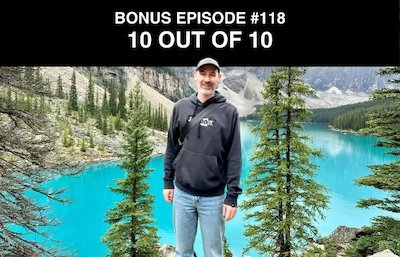
But then Saturday was our big activity day. We woke up early. We took that bus with our Australian driver to Lake Louise. Lake Louise is absolutely gorgeous. It’s this rather small lake, to be honest, it’s kind of a round shape and surrounding it are these Rocky Mountains. And at the far end of the lake, there’s a glacier that feeds the lake and is this beautiful turquoise green color.
There’s a walking path around the lake. So, when we arrived, that’s what we did, we just spent some time walking around the lake. There’s really not that much there. There’s a big hotel by a famous hotel brand, like a really, really famous hotel, which has beautiful views of the lake. But other than that, there’s not too many things to see or do.
There’s no like cafes or restaurants or anything like that. It’s just a very nature-y area. So as soon as you arrive, there are many, many tourists who are just taking pictures like crazy. And of course, that’s what we did too, right? We just took pictures like crazy.
But then after that initial astonishment and shock of the natural beauty and the scenery of seeing Lake Louise, after it wears off a little bit, then you can walk around the circumference, the edge of the lake, and you can actually get up close to the glacier, which was really cool.
And you can see some of the glacier runoff water, which makes like these little miniature streams and rivers at the north end of the lake. And so, we went up there, walked around, and we spent a good three-ish hours probably like checking out the lake. We brought some snacks with us, because as I mentioned, there are no restaurants up there.
And since we were going to be out all day, we prepared some snacks in advance. We had one kind of funny, cute story. My wife and I were sitting on this bench, and it was quite wet around, like, the trail that we were walking on. So, I think maybe earlier in the morning, or maybe the previous day, it had rained pretty hard around Lake Louise. So, there were still puddles on the ground.
And this bench that we were sitting at, having a little snack, eating our lunch, I think we brought some sandwiches with us or something like that. While we were sitting on that bench, we had to really cuddle together side by side, because there was a massive puddle that was blocking where you could put your feet while you were sitting on this bench.
So, we were like cuddled up side by side on this bench. Of course, because we like to cuddle up. It’s always nice to cuddle up with your wife in a beautiful area, right? But also, because there was this big puddle on the ground, so we couldn’t put our feet in that area. Essentially, we had to sit right up close to each other side by side to avoid getting our feet wet.
Well, anyways, the bench faces the lake. So, we’re just looking out at this beautiful scenery, eating our lunch. And then this woman came up to us, she was probably pretty young, like maybe 20, 21 years old, like early 20s. And she said, “Oh, can I take a picture of you guys? You guys look so cute, sitting on the bench together looking at the lake.” And she’s like, “Can I take your picture?
And can you give me your phone so I can take a picture for you? This is really, it looks just so cute from the back.” So, we’re like, “OK!” And then she took our picture of us from the back looking at the lake. And yeah, it did turn out to be a really cool photo. And it’s just nice of her to come up to us and be like, “Oh, you guys look so cute there sitting together. Can I take your photo?”
And so yeah, that was a nice moment for us. We have a nice photo to look at now in the future to remind us of that moment. So, after we spent several hours there at Lake Louise, then actually our bus driver came back and he picked us up and took us to the second lake, which is not that far away from Lake Louise called Moraine Lake. I think it was 10–15-minute drive, like it wasn’t very far.
So, he took us up to that Moraine Lake and then dropped us off again and gave us another three or so hours to check out Moraine Lake. Moraine Lake, I had never been to before. So, I was super stoked to check out that lake. And I was just so impressed with the scenery, the natural beauty of Moraine Lake. Like just amazing.
The color of Moraine Lake was just something that I had never ever seen before. It was amazing. I don’t know if you’ve ever seen or ever tried the sports drink called Powerade. There’s a blue version of Powerade that they sell here in South Korea. Sometimes I drink it after I go running, actually. It’s kind of one of those drinks that you drink to rehydrate after doing some exercise.
That sports drink is this insane color of blue, like a very, very bright blue, unnaturally blue. It’s probably bad for you, actually. Probably some food dye in there to get it to be that blue color. It’s this very, very blue sports drink. And Moraine Lake had the exact same color as Powerade.
So, I was joking to my wife, like, “Oh, this looks exactly like the Powerade I drink sometimes after I go running.” It was just incredibly blue, a very, very beautiful lake. So again, we did the same thing. Like, we took a bunch of photos and just looked at the lake. And then actually there was a cafe at Moraine Lake. So, I stopped. I grabbed a coffee. I think that was my first coffee of the day.
I made it all the way after lunch with no coffee, which isn’t too common for me. So, I grabbed a coffee and then we walked around the path, and we were surprised to see some youngsters jump in and start swimming in the lake because it’s this like freezing cold alpine lake. But I think these guys were from Europe. And again, they were probably like teenagers, 16, 17, 18, younger kids.
Just having some fun swimming in this extremely cold alpine lake, but it looks cool. I was a little bit jealous. I was like, “I wish I brought my swimming trunks and my towel because it would be cool to jump in.” But yeah, had a great day up at the lakes there. And then in the evening, our driver picked us up again, took us back to Banff.
We went to our hotel quickly to clean up and get ready because we had another thing to do that evening and that was attend a jazz concert. So, I think I mentioned here on Culips a little while ago that my co-host Suzanne was also planning a trip to the Rocky Mountains in Alberta with her husband and her husband’s family.
And it just so happened that we weren’t in the same place at the same time. We missed each other by like a day or two. So that kind of sucks. It would have been awesome to meet up with Suzanne in the Rockies, but we weren’t able to make things align with our schedules for that reunion to happen. That would have been so cool.
But while I was talking to Suzanne about her travel plans for visiting the Rockies, I was asking her if she had any tips or suggestions, and we were sort of going back and forth and sharing some plans and tips with each other.
She mentioned that there was this jazz concert series happening in Banff throughout the summer and that piqued my interest because, yeah, I love watching live music and I know in Banff they have this very famous art center. I believe it’s called the Banff Center for the Arts and Creativity, if I’m recalling that correctly.
And they have these famous residencies there and these are like legendary in Canadian art circles. And I’m not an artist or anything, but I did play in a lot of bands when I was younger and living in Canada. And so, it was always like this kind of cool, almost like a fantasy.
It was like, what if our band could get a residency in Banff and you get some money, you get a stipend, you get to live in Banff, you get to spend all of your time using this amazing facility that they have and just creating music, creating art. And they have all of these different residencies for… for writers, for artists, for musicians.
And I guess part of their summer series is, I didn’t know about this before, but I kind of learned about it while we were watching the concert, is that they invite a faculty of very highly accomplished jazz musicians to the Banff Center for the Arts and Creativity to work with a class of like 20 or 30 young jazz musicians.
And so, I guess it’s kind of like a summer school or a summer camp. You have these really, really highly accomplished jazz musicians that are working with students. And yeah, it’s this program. So, the concert that Suzanne told me about was the faculty for this jazz camp. And they were the highly accomplished jazz musicians.
They were putting on a concert that Saturday night that we were there in Banff. So, I looked at the faculty list, and I would say I’m a jazz music fan, but I’m not super, super knowledgeable about modern jazz as much. But there is one artist that I recognized from the list of musicians who are going to be playing. His name is Shabaka, Shabaka Hutchings.
And so, I was down. I was like, “Oh, this is cool!” This is like a jazz musician who I know and respect, and I’ve seen him play on YouTube a lot. And I’ve listened to his work before quite a bit. So, I was like, down, we got to do this. And I had bought the tickets well in advance. But yeah, it was finally time to go to the concert. And it was, I gotta say, it was amazing.
So, the concert was really, really, really cool. I had very low expectations, like I didn’t really know what to expect. And like I mentioned, I only was familiar with one of the musicians, but it was this rather unique jazz group that played. So, there was a pianist, a drummer, a bassist, a trumpet player whose name was Takuya Kuroda, a Japanese trumpet player.
There was the piano player’s name is Aaron Chulai. There’s ShabakaHutchings, who plays flute. And he also played, well, he played several different kinds of flutes. There was a saxophonist playing saxophone. There was a harpist, a harp player, and there was a vocalist as well.
And yeah, if you guys are interested in learning any names about these musicians, I can research them and tell you about them in more detail. But I mean, that’s a pretty interesting jazz group, right? You don’t, you think of jazz, you think of the bass, you think of the piano, the drums, trumpet, saxophone, but you don’t really think of the flute as much. You don’t think of the harp as much.
And the vocalist, I’m not exactly sure what style of music she’s trained in, but I believe it was kind of maybe a Southeast Asian or a West Asian kind of style of music. So, it was really eclectic, like this mix of really different styles all coming together. And it was cool. They were called The Faculty, like the faculty of teachers at this jazz camp.
And they all played a tune or two that they had composed or arranged. And so, it was just this different mixture of many different styles of music and was really, really cool. I don’t know. I guess I haven’t seen a lot of really highly, highly accomplished jazz players in my life, but our seats were great. We were right up close to the front, I think in the fourth or fifth row.
And so, we had this great view. The sound was amazing. The musicianship was amazing. And I just really, really, really enjoyed it. I thought it was so cool. And that was just an amazing way to cap off the evening was with that jazz concert as well.
So that was like a 10 out of 10 day, to be honest, that was everything that you want out of a travel experience, beautiful scenery, great cultural experience at night. And so, yeah, overall, amazing way to spend our final full day in Canada. And then after that, we were pretty tuckered.
So, we went to bed. And the next day we woke up, we had a little bit of time before we had to leave on the bus to go back to the Calgary airport. So, we walked around more of the residential area of Banff. Like I said, it’s the small village, there are tons of really cute little houses there. And my wife and I were kind of scheming like, how could we buy a house in Banff?
How could we move to Banff? Would we be able to live here? Like it’s just one of those places that probably in reality, doesn’t make for a great place to live because of its small size. And we were visiting there in the summer when it’s super beautiful, the weather’s amazing. But it is a mountain village in Canada.
So, most of the year, it’s going to be pretty cold and snowy, or at least a significant part of the year. But it was still fun to live that fantasy. And as we were walking around looking at some of the houses, we noticed a garage sale. So, I said to my wife, “Come on, we got to go to the garage sale.”
For those of you who don’t know, a garage sale is when somebody just wants to sell some of their old belongings. It’s usually like when they’re doing a spring cleaning or move maybe. And so, they just put a sign up in front of their house and set up some tables and display the items that they want to sell outside.
And you can go and look at it and if you want to buy something, then you just give some cash to the seller there, the owner of the items and they’re yours. And yeah, I think in Korea, people don’t really do this kind of sale. So, I thought, oh, this is a cool thing to show my wife, like how we sell things in Canada, the garage sale culture.
So, we went to the garage sale and unfortunately, it wasn’t the greatest. There weren’t too many things there that were interesting. But my wife ended up buying some huge pairs of woolen socks, I guess, probably the guy that was having the garage sale used to be a soldier because he had like a lot of Canadian military stuff that he was selling like old clothes that were military issue clothes and camping supplies that were military issue camping supplies.
And he had these packs of wool socks that he was selling for two bucks a pair. They were brand new 100% wool unopened socks. And so, my wife said, “I can use these for my slippers in the winter.” I said, “OK, let’s buy them.”
So, we got her some woolen socks at the garage sale on our last morning in Banff before finally leaving Banff and going back to Calgary and then flying from Calgary back to Seoul to wrap up and end our Canadian summer vacation. Well, everybody, I think I’ve shared with you all that I can share because I’ve told all of my stories here about my time in Canada.
Overall, the summer vacation was just great from starting in Osaka with the Culips meetup to finishing in Banff with the great scenery and the amazing jazz concert. So yeah, I feel like a lucky guy. I had an amazing time this summer and it was just awesome in retrospect. Of course, now that I’m back here in Seoul, it’s always good to be home.
And I’ve got several weeks of stories and things to tell you about, about what I’ve been up to since returning to Korea, but we’ll save those for a different time. I think for now, this is going to bring me to the end of this week’s episode. So, thank you for making it all the way to the end. And since you made it all the way to the end, I need to share this week’s completion code with you.
So why don’t we make this week’s completion code: “Jazz.” Jazz. J-A-Z-Z, because I saw a really memorable and fantastic jazz concert in Banff with my wife on our final day there. So, what I’d like you to do with this completion code is either leave a comment or make an example sentence and leave a comment with this word jazz. And you can share that wherever you’d like.
Any of our socials is fine. On our Instagram, our Discord community, maybe on YouTube, if you’re watching this on YouTube. And that will signal to me and signal to other Culips community members that you listened all the way to the end, that you did your English study for this week. And we’ll all be proud of you for doing that.
It’s awesome, guys, that you’re doing the time, you’re putting in the effort. And I’m very proud of you for studying with me this week. So, keep up the great work. Have an awesome week ahead, as always. And I’ll talk to you in the next Culips episode. Until then, bye-bye.
