


Hello, how's it going? My name is Andrew. I will be your host and your study buddy for this English lesson. You are tuned in to the Culips English Podcast. How's it going? If you're new here, welcome. If you're a returning listener or returning viewer, because guys, if you don't know, I've been recording these bonus episodes lately and putting them on our YouTube channel as well.
So, if you're listening to the audio, but you want to watch the video version, then it's on our YouTube channel for you. So, whether you're a listener or a viewer, welcome. It's great to have you here, and in our bonus episode series, what I do is I just share some stories with you from my everyday life as a Canadian living abroad in South Korea.
And the goal here, why we're spending some time here with English today, is that we can B.I.G.B. This is the slogan, the motto for our bonus episode series. It stands for: build your English fluency, increase your cultural knowledge, grow your vocabulary, and become a better communicator. That's why we're here. That's what we're planning to do with these bonus episodes.
Well, we have a very special episode today because this is bonus episode number 99. Yes, the Great One. Do you get that cultural reference, "the Great One"? If you're a Canadian, probably you get this reference, and if you're a hockey fan, then you might get this reference as well.
But if you're not a hockey fan, and you're not a Canadian, then perhaps you don't know what I'm talking about. Well, it all goes back to this amazing, fantastic hockey player, the world's best hockey player, many, many say. His nickname is "the Great One," and his name is Wayne Gretzky.
He played for the Edmonton Oilers and the Los Angeles Kings and some other teams in the 80s and the 90s. And Wayne Gretzky's number was 99, and his nickname is "the Great One." So, episode 99 of our bonus episode series as well.
It's gonna be a great one, I hope, and now you have a little tidbit of knowledge about ice hockey that you can carry with you and maybe quiz your friends or give a trivia question to your friends. Ask a trivia question to your friends, something like that. Anyways guys, I'm not gonna talk about ice hockey today in this episode.
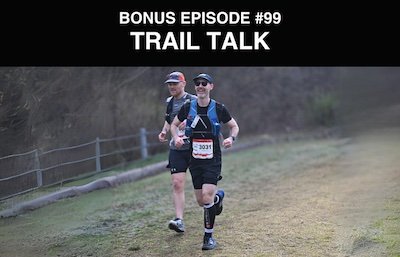
Instead, I'm gonna talk about a different kind of sporting adventure that I participated in a couple of weeks ago. It was a trail race. As you guys know, if you're a listener, a regular listener of the Culips English Podcast, one of my hobbies is running, and here in South Korea during the spring, there are many different marathon events and racing events and running events that appear all over the country.
And I had the pleasure and the pain, I guess I could say, because it was a pleasurable and painful experience, to participate in this race. I had the pleasurable and painful experience of doing a really cool trail racing event a couple of weeks ago, and I'm gonna tell you that story here today in this episode.
But before we get into that, I do want to let you know that there is a free interactive transcript and vocabulary glossary for this episode, for everyone. Everyone can access it for free. You don't even need to sign up for an account or anything. Just click the link that's in the description for this episode, and you can check it out.
And if you haven't studied with the interactive transcript yet, I really highly recommend it and suggest that you check it out. It's so awesome. You can just click or tap on any word that you see in the transcript, and the audio will play from that point, and as you follow along with the transcript, the word that I'm saying is highlighted while I say it.
So, it's just a really cool study tool, and I hope you will check it out if you haven't already. And the vocabulary glossary, maybe this word is new for some of you. A "glossary" is just like a mini dictionary, I guess you could consider it that. It gives you just a brief definition of the word in question.
So, in the glossary, I'll choose maybe 10 or 15, maximum 20, usually around 15 words that I think are important for you to know. Maybe there are words that are more difficult or words that are not as frequent and common, and words that I think many of you out there are probably like, "What does that mean?"
Of course, you know, I don't know what everybody's English level is, so I have to go with my intuition and guess, but I do select 15 of the words that I think are important for you to know, and I include them in the vocabulary glossary with a brief definition and an explanation, and also an example sentence.
So, I think that would be really helpful for you to check out as well. Again, it's free for everyone. You can get it just by following the link in the description. Now, if you are a paid Culips member, and we do have Culips memberships that we offer to anybody who's interested, well, then you'll also get a comprehension quiz.
I'll post the quiz in the Discord community for our members, and guys, you can check how much you were able to understand just by doing that quiz after you listen to this episode. And I love it, after we post a new bonus episode each week, then many of our members post their scores in the Discord with their quiz, a little screen capture, and yeah, it's cool to see everybody's amazing results.
Maybe I make the quizzes too easy. I'm not sure, but we get a lot of 10 out of 10s. Actually, I don't think I make them too easy. I think they're a little bit challenging. It's just that our member community is really good at English, and they get perfect scores. So, that's awesome to see.
If you're interested in becoming a Culips member and learning about all the other bonuses that you get when you are a member, we give lots of benefits and bonuses to our members, lots of tools designed to help you improve your English fluency, well, then just follow the link that we'll put in the description for this episode.
And one more quick announcement before we get started here with this episode, and that is: thank you. Thank you, thank you, thank you to everyone who has sent in a story for bonus episode 100. Next week will be the milestone episode. Next week will be bonus episode 100, and I'll be featuring your audio stories in that episode.
We'll get to hear from our community of listeners from all around the world, and I think you guys are gonna love this episode. You'll get to hear from people just like you who are learning English and improving their English with Culips. So, thank you to everyone who sent in a story.
Unfortunately, I've had a busy week, and I haven't had the time to personally reply to every message and email that I've received, but don't worry guys, I have your stories, and I'll be featuring them next week in the episode. So, I haven't put the episode together yet.
I'm not exactly sure how I'll do it, the format of it, but I'll figure that out, and it will be interesting. It'll be something a little bit different, but just as a heads up, probably next week will feature less of me and more of you, and I think that's the whole goal, right? So yeah, next week, we'll celebrate bonus episode a hundred, and thanks to everyone again who has participated.
I really do appreciate it. So, in this week's episode, I'm gonna talk to you about participating in my first ever trail running race. A couple of weeks ago, my friend Jimmy and I, if you're a longtime listener of Culips, you'll have heard me talk about Jimmy for a while now. He is my running buddy, and we run together. We train together, and we also race together.
It's a really great friendship that we have that's centered around running, for the most part. And a couple of weeks ago, we participated in a race way out in the sticks, in the boonies, in the middle of nowhere, in South Korea, in a little, little village called Jangsu.
And I don't know, if you're watching the YouTube version of this right now, maybe you'll be able to see the t-shirt that I'm wearing. The t-shirt that I'm wearing is a kind of participation gift that we got from running in this race. Often when you sign up for running events, really, I've only done running events like marathons and stuff in Korea, so I'm not sure about other countries.
So, maybe you guys could fill me in if you know about this or not, but at least in Korea here, whenever you register for a race, usually you get some kind of t-shirt to say thank you for participating, I suppose. So anyways, the t-shirt that I'm wearing right now is the t-shirt that I got when I registered for this trail race, which is called Jangsu Trail Race, I think, or Jangsu…
What does it say? Jangsu Trail Race? Yes, OK, I just checked the t-shirt. So, it was in the middle of nowhere, in the sticks, in the boonies. OK, these are two slang expressions that we mean to say way far away from a city, "in the sticks" or "in the boonies." I think, in fact, we featured these expressions on Culips before in a Catch Word episode.
So, perhaps you've heard them and know what they mean, but if they're new to you, that's what it means. It means to be in the countryside far away from the city. So, the race actually took place on a Saturday morning, as I mentioned, a few weeks ago, and since it was very far away from Seoul, Jangsu is in, I believe, Jeollabuk-do.
A province called North Jeolla Province in South Korea, and it's far away from where I live in Seoul. It took me several hours to get there, and because the race started so early in the morning, it would have been impossible for me to leave Seoul like really early in the morning and arrive there to start the race.
The race start time was 8 a.m., but they encouraged racers to arrive early so that you could get ready before the starting gun went off. So, because of that fact, I actually went down to meet my friend Jimmy, who lives in a big city in the southern part of South Korea called Gwangju, and I stayed at his house. Thank you to Jimmy and Jimmy's wife for hosting me, by the way.
They are excellent hosts and really treated me well, and I was so thankful for them for hosting me for the night. So, I went down on Friday night, and I stayed at Jimmy's place, and we woke up really early at the crack of dawn on Saturday morning, and we drove to Jangsu to start the trail race.
It was about an hour and a half drive from Jimmy's place, but thankfully in the morning, there was no traffic or anything, so we were able to get there really smoothly and easily. So, it was interesting, as we were getting closer to this village. I guess I could call it like a village, Jangsu is more like a village than a city.
As we were getting closer and closer, suddenly, we drove into this really thick fog, like that morning was not too cold. It was nice. The temperature was good, but it was really, really foggy. So even though, you know I think we arrived around 7am in the morning, and the sun had risen, it was really gray and super, super foggy.
So much so that as we were driving up to the athletic field where the race started, we didn't even know that we had arrived yet because it was so foggy out that we couldn't see anything, even like two or three meters in front of us was just completely invisible because of this thick, thick, thick fog.
And so, we were laughing, like the GPS that we were using to navigate us to this starting point told us that we had arrived, and we're like, "Are we really here? Like, we don't see anybody else at all." And we were confused and thought we got lost or something and that the GPS navigated us to the wrong location, but we're like, "OK, let's check it out," and sure enough, it was there.
It's just that the fog was so thick that we couldn't see anything at all. But once we got out of the car, we could hear some music playing, and it was like this great festive atmosphere at the starting point for the race. So yeah, we geared up, we got on our equipment, because as I mentioned, this was a trail race. And a trail race is quite different than a road race.
I guess those are the two different types of running races. Maybe there's other ones. I don't think there's like a water race or anything. The two kinds of races that I'm aware of are road races, where obviously you're running on a paved surface, a road, and a trail race, where you're running on a non-paved surface, like a dirt trail or something.
And the difference between road races and trail races that I'm aware of, the biggest difference is that usually a road race is flat. Like, when you want to run a marathon, ideally, the best condition is to have a very level, flat surface. However, trail racing is completely different. Usually, it's the opposite. You're going up mountains and through mountains and those kind of hiking trails almost.
You can imagine it as running on a hiking trail. So, obviously when you are running this kind of race, then you need a lot of different equipment. When you're running a road race, you have shoes for speed, and when you're running a trail race, you have shoes with a lot more grip, a thicker sole. The sole is like the bottom part of the shoe. That's what we call it, the sole. Not like your spirit.
Not that kind of soul, OK? It's a part of a shoe, the sole. So, you have a thicker sole with more grip and more traction so that you don't fall over, because when you're running on a dirt path, it's much easier to trip and fall over, right? So yeah, we had to get on our equipment. We had like a running vest.
There weren't as many opportunities to stop and get water when you're running in the mountains, so you have to carry your own water with you. Some people were really geared out and had lots of different equipment, like poles that they could use to help them when they're running up the mountain and especially, I think, running down the mountain. But I'm not really a trail runner.
This was my first ever trail event, so I didn't have those poles. But I got to tell you, during the middle of the race, when I saw some of the other participants using their poles, I was like really jealous, and I wish I had a pair of poles at that time. I think in the future, if I do another trail running event, which I think is very, very likely, it was a lot of fun, spoiler, it was a lot of fun.
I really enjoyed it. I think if I ever do another trail running event, then definitely, I have to pick up some poles and use them. So, anyways, where was I? I was talking about the start of the event, and yeah, we actually ate breakfast really quickly right in Jimmy's truck before the race started. We brought some bagels with us and some peanut butter. So, it was kind of a funny scene.
We were just hanging outside of his truck in this like thick fog. We couldn't really see anybody else. We felt like we were alone, even though we knew that there were hundreds of runners just a couple of hundred meters away from us also getting ready.
And yeah, because of the fog, it really made us feel like we were alone, except there was music playing, so we knew that there were a lot of people around. But anyways, we got on all of our trail running gear. We geared up, and "to gear up" means, well, it can mean many different things.
It has a special meaning when you're talking about driving a car, but here I'm meaning it more in a slang sense to mean like get excited, feel good, pump yourself up, get energized for the event. So, we pumped each other up, we geared up for the race, and we also ate some bagels and peanut butter. I think Jimmy and I both had a bagel and peanut butter to get ready for this race.
Anyways, finally it was time to start the race, and we were off, and the whole vibe of this race was just so positive. There were many, many people from the, I'm imagining they're from the local area, from Jangsu, cheering us on at the start.
And it was really cool because it was a trail running event, and I think trail running probably has its origins in Europe, and I've seen this on YouTube before with some other races, like some famous trail running races in Europe and even some bike races in Europe, when participants go by, so when the racers go by, the audience or the spectators, they ring a cowbell.
And the trail racing organizers for this Jangsu race, I guess they gave out cowbells to all of the spectators, and they also gave a cowbell to us once we finished as well. So, it's really cool. Now I have this like souvenir cowbell from the race. It's awesome.
But the spectators also had these cowbells, so as we started and as we ran by the people who are watching us take off from the starting line, they were all ringing these really loud cowbells, and it just pumped you up and gave you like a good energy, and there's lots of positive vibes. A lot of people were smiling and happy, and it was just a cool way to start the race.
The race actually started on, I believe it was like a horse-riding trail. So, it was this nice wide trail, and it was grass. The first like couple of kilometers, three, four kilometers or so, it was all grass. So, it was really nice and soft and just lovely to run on. That's like the perfect running surface is grass. So yeah, it was nice. The start of the race was really nice.
Now, Jimmy and I, as I mentioned, we are not trail runners. We are road runners, and we've both been running for several years. So, it's not like we're beginner runners, but in a lot of ways, I did feel like an amateur at this event.
And the particulars of the race, just to let you know, the distance was 38 kilometers, and the vert. "Vert" is what we call like how much you go up and how much you go down, vert, I guess that stands for vertical.
But a lot of sports will call it vert, like if you're a skier or snowboarder, often you'll refer to vert as like how long the trail is on the mountain, and the same thing for running here, the amount of vert over the course of this race, I think it was around 2,000 meters up and 2,000 meters down. So, a lot of climbing and a lot of descending.
If I recall correctly, we went up and down four different mountains. And some of the mountains were higher than others, but when you add all of those up, it amounted to about 2,000 meters of climbing and 2,000 meters of descent over a 38-kilometer distance. So, I wasn't racing this race to win, if that makes sense.
Like, I just wanted to go and have some fun and participate in the event and try it out, see if I liked trail racing.
You may recall, if you're a regular Culips listener, that just a few weeks before this, I did the Seoul Marathon, and after that event, I was really tired. I gave it my all during the Seoul Marathon, and once I finished, I was pretty exhausted, and so this trail racing event was just a couple of weeks or maybe three weeks after the Seoul Marathon.
So, in that time between the Seoul Marathon and the Jangsu Trail Race, I didn't do too much training. I just kept it light and easy, and because of that, I wasn't gonna go out with a bang and just really try and give it my all for this Jangsu race. I just wanted to enjoy it, have fun, and just yeah, have a great experience running this race. And Jimmy was in the same boat as I was.
So, we were on the same page, and we're like, "Yeah, let's just take it easy. Let's not kill ourselves. We're gonna have fun out there. We're gonna enjoy the experience, and we're just gonna go at our own pace." So, that was great. We were like, "Let's just enjoy it." So, we were running mostly with the main pack of runners.
Of course, when the starting gun goes off, there are always those people who want to win the race, who are like the top athletes, and they just go really fast, right? Well, that wasn't us this race. We were just hanging out in the middle of the pack with all of the other runners and just taking it easy.
When we hit the first climb, many people just stopped and walked up it, so you're not…. This is something that I wasn't really aware about because I'm not a trail runner, really. I always wondered, what happens when you hit these big climbs and you have to go up the mountain? Do people run up them or do they hike up them? What happens?
And I learned that most people just stop and walk up the mountain because it's too steep and really difficult to run. Now, I'm sure some of the first-place people who got the top prizes, I'm sure they probably ran up the mountain, and those people are a little bit crazy and insane, but me and Jimmy and most of the participants there, we didn't do that.
We just stopped and walked. Now, there were some parts towards the end of the race where we picked up our pace a little bit, but for the most part, whenever we hit a huge climb, we just walked. Well, I gotta say, the race was super scenic. It was just amazing going through the mountains, going through the forest. There were really different types of forests that we went through.
As I mentioned, we started with this like horse riding trail that was grassy, and it went through some farms. And then we hit the first climb, we went into the mountains, and was this beautiful pine forest. And then we descended, and we went through this bamboo forest that was really cool. And then there was a section where there were birch trees. I think they were birch trees.
So, the variation of landscape was really cool to see, and when you got to the top of a mountain, you could look down at the village and the other mountains in the distance. So, there are great views on this trail, which was a real nice change from running in the city. Like the Seoul Marathon, we're just in the middle of a big city and it's not so fresh or clean.
But out there in the countryside, in the mountains, it was just awesome. And I have to say, the morning fog that we experienced at the start of the race, after an hour or two, that all cleared up, and so we had a really nice view. It was a little bit cloudy that day, but that was actually a good thing.
I think if we had the sun beating down on us, it would have been really, really difficult and hot, but the temperature was just right, it's a little bit on the warm side, but not so bad, and we didn't have to worry about getting sunburned or anything like that because the sun was hiding behind some clouds that day. So, anyways, as you can imagine, the race was really difficult.
About every 10 kilometers or so, there were aid stations, and when you arrived at an aid station, you needed to use your own cup, and you needed to use your own utensils for food. So, if you wanted to take any food or drink anything, you had to bring your own supplies. They didn't supply you with any cups or anything like that, which was fine.
So, we had to carry all of this equipment on our backs. With… most people had like a running vest, and I had a running vest as well, so I put like a little fork and a little cup in my running vest, and when I arrived at the aid station, then you could replenish.
And you could eat some food or drink something, because of course, when you're giving it your all on this kind of race and you're really exerting yourself and using a lot of energy, well, then you need to replenish. And you need to refuel and stock up again. So, they had some drinks like Gatorade and water and cola.
I'm not the kind of guy that would drink cola in a race, but I think if you're really trying to go fast in this style of race, you're burning so many calories and using so much energy that you need a sugary drink like that to try and get some calories back into your body.
So, I didn't drink any cola, but I had some water and some Gatorade, and that was good, and they also had a variety of snacks. They had cookies and bananas and chocolate bars and candy, and anything like with a lot of carbs and a lot of calories to make you feel refreshed again. And at the second or third stop point, they even had some Korean food.
So, they had like rice balls that were really delicious, and I think they even had some bibimbap that you could eat. I didn't try the bibimbap. And I also saw kimchi. This is a very Korean event, to stop in the middle of this intense race and eat some kimchi, it didn't really seem like something I wanted to do at the time, but that was cool, and many people were enjoying it.
So, that's all that matters at the end of the day. Anyways guys, to make a long story short here, Jimmy and I finally finished this grueling event. We did it. We completed the race, and it took us about seven hours, I think. I'll have to double-check my time here exactly, but it was around six hours and fifty something minutes. So, almost seven hours.
Of course, we did take some breaks at those checkpoints, but overall, from the start until the finish was almost like a whole day of moving. So, we were really tired when we crossed the finish line. I believe we placed in the top 25%, which I think was nice for our first ever event. Even though we weren't trying to kill it and trying to win, we still did pretty well.
I think we were like… I think Jimmy was 104th place, and I was 105th place, even though we crossed the finish line at the same time. Jimmy beat me slightly. That's OK. I was happy to have him take the win, take the W. And yeah, I think we placed 104th and 105th out of around four hundred and something participants in the 38-kilometer distance.
So, we were happy with that result. And after, we were so exhausted when we crossed the finish line, as you can imagine. It was really tiring, all-day effort, and my legs were killing me because the muscles that you use for road running and road racing are totally different than the muscles in your legs that you use for trail running.
Especially when you're running downhill and going down the mountain. That's killer. That's really difficult. So, my quads, the quad muscles in your legs are the muscles in the front part of your leg, from about your knee to your hip, that kind of front leg muscle is your quad.
My quads were really working overtime, really working hard to help me get down the mountain and get down the hill. So, after we finished, I had to sit down, and my quads were barking. If we say something is barking, like, often you'll say this is a kind of slang expression, some people say, "My dogs are barking," and that just means, "My feet are sore."
Like, if you've been walking around all day, you could say, "My dogs are barking," and that means, "My feet are sore." In my case, my feet actually were fine, but my quads were barking. My quads were quite sore. But it was great because this race, I really have to give a shout out to the organizers of the Jangsu Trail Race. It was so well organized.
The volunteers were super helpful. Although there were only a handful of foreign participants, I think maybe, excluding Jimmy and I, I saw maybe 10 or 15 other foreigners participating in this race, so it was mostly a Korean event, but they still went the extra mile and did a lot of extra effort to help us feel really welcome to this event.
All of the materials were translated into English as well, so it was really, really nice that they went the extra mile for all of us foreigners and made us feel welcome, and a big shout out to the organizers of the race for doing that. Really, really do appreciate it. And at the finish line, it was great. The atmosphere was so positive.
There were a lot of different food booths set up, and there were also many different stalls from different vendors of, you know, running stuff essentially. Different gear, and shoes, and equipment vendors set up.
They had some massage booths set up, so if you needed to get a massage in order to make it home, I guess you could get a massage. And one of the cool things when we finished is they gave us a gift certificate for 10,000 won, which is roughly, I don't know, eight or nine American dollars, but it was enough to get a lunch and to get a drink.
And they had some seating set up where you could just chill and eat some food and socialize with the other racers, and they had some good music playing. So, it was just like this awesome festival vibe at the end. So, Jimmy and I got some food. I had a cold beer. After all that work, I decided I need a cold beer.
So, I had an ice-cold beer, and we ate some food, and we recharged our batteries again with enough energy to make it home, and then we did the drive back to Gwangju, and I took a train back up to Seoul. So, all in all, it was just a terrific weekend. I have to say, for my first ever trail race, it was just a great experience.
Jimmy said that it was one of the best things that he's ever done in South Korea, and he's like me, he's a long timer here. He's been in Korea for, I think, over a decade as well. And I have to say too, definitely in terms of running events, it was probably the most well-organized, best event that I've ever done in terms of running.
And also one of the funnest events I've ever done in terms of running. So, definitely next year,I'm already looking forward to doing this again, and I think I might have to add some more trail running into my repertoire in the future as well, because I don't want my quads to bark next year like they did this time.
Guys, it was so funny, after the race, maybe the next six or seven days, I could barely walk. My legs were so, so sore for the next six or seven days. It was terrible. Trying to go to the subway was the worst because when you take the subway in Seoul, you have to walk down like four or five flights of stairs, and I looked like an old grandpa trying to get down the stairs. It was just terrible.
But my legs are all recovered now, and I think going forward, before the next Jangsu Trail Race, I'm gonna run up some hills from time to time so that I'm ready for the next race. Anyways, everyone, I think I'll end things here for today. Thank you for listening to my story. I hope that you enjoyed this one. I promise that I won't have too much more running content in the future.
I know that sometimes I go on and on about running, but it is one of my passions, and I love talking about it, and it is how I spend a lot of my time.
So, when I do an event like this, it takes up a whole weekend of my time, and that means that I don't really have any other stories to share because it was all spent preparing for the race, traveling to the race, doing the race, and coming home from the race. So, I don't really have too many other stories to talk about from the last weekend except for this race.
But it was an awesome time, and I really enjoyed it, and I hope you enjoy listening to the story, too. Now, for this week's completion code, this week's completion code, let's go with the word "trail." Trail, T-R-A-I-L.
What I'd like you to do with this completion code is make an example sentence, any example sentence, using this word "trail," and you should share it with our community either on our Discord server, or in the comments for the Instagram post for this episode, or in the YouTube comments for the YouTube post for this episode.
And by sharing the completion code and that expample sentence using that word "trail," what you'll signal to me is that you studied with the whole episode, you made it all the way to the end. And you'll also be encouraging our community as well, other Culips listeners from around the world, just like you, and you will be saying, "Hey guys, I finished this episode.
I did it, and you should do it, too." You'll be encouraging the rest of the Culips community. So, go ahead, leave your comment with the completion code "trail" and I look forward to reading your comments and your example sentences. So, everyone, that's it for me for today. Take care, and good luck with your English studies for the next week here.
I hope you have a great week and a productive week of English studying. I gotta say, I'm proud of you for making it all the way to the end of this one. Great job, as always. Take care, everybody. I'll see you next time. Bye-bye.
