


I’m a Canadian guy, but I’m headquartered in Seoul, South Korea, and I hope that by listening to my stories, you will be able to B.I.G.B. That is our motto, our slogan for this series, and B.I.G.B. stands for build your fluency, increase your cultural knowledge, grow your vocabulary, and ultimately become a better and a clearer communicator in English.
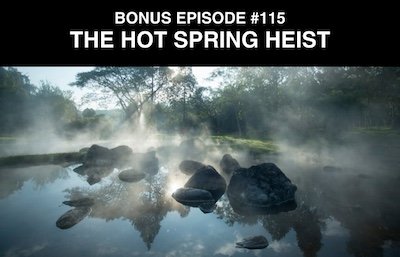
So, if those are your goals, then you’re in the right place. Today, I’m going to tell you a story about visiting a hot spring and some of the cool and amazing things that I got up to, and also one of the funny and unfortunate things that happened to me at the hot spring in this episode. So today is a hot spring episode. I think you’re going to like it.
It’s a good one, and it was actually an amazing, amazing experience. So, I can’t wait to tell you all about it. But before we get started, I have some announcements for you. The first announcement is about Culips membership.
If you’re ready to improve your English, if you’re ready to take the next step in your journey, if you are ready to improve your fluency faster than ever, and you really want to get the most out of learning with Culips, then I highly recommend becoming a Culips member. For an affordable price, you can become a member. We have monthly options. We have yearly options.
I recommend the yearly option just because it’s much, much more affordable, actually. But it’s up to you. Whatever option is best. And when you’re a member, you will get access to the study guides and the transcripts that we make for all of our episodes, plus much, much more. Like access to our Fluency Files series.
You will get an invitation to the member-only area of our Discord community. You will be able to join our weekly speaking classes. We usually host two to three speaking classes each and every week that are run by one of our expert teachers here at Culips. So, you can practice your speaking about a recent topic that we’ve showcased and featured here on the Culips podcast.
So, yeah, so many amazing things that you get when you are a member. We really try and do the most for our members just to show our appreciation. There’s also ad-free audio. There’s bonus content. Tons of stuff. If you would like to see all of the details and to sign up and become a member, then visit our website, Culips.com, or just click the link that is in the description for this episode.
And our speaking classes for this week, I think, are going to be really interesting. I would invite all of you who are interested to participate. There are classes happening on September 2nd, September 3rd, and September 5th. Of course, they happen online through Zoom, so that people from all over the world can attend. And you’ll have to check the schedule.
I’ll put a link to the schedule in the description for this episode so you can check it and see when it happens. Because we have listeners from all around the world, it’s difficult to say the time, but there is a time zone conversion tool on the schedule. So, guys, just select your time zone at the top, and you can see the time displayed in your local time.
Our topic for this week is going to be childhood discipline and punishment. That is something that we talked about in a recent Chatterbox episode. I actually talked with Alina, our Discord moderator, about that topic, and it was a really interesting conversation.
So, after listening to that podcast episode, now it’s your turn to practice your speaking, to share your thoughts, to share your opinions, to hear other people’s thoughts and opinions about the topic as well, and to have a nice, deep talk with other members of the Culips community.
So, you’ll be able to do this this week in those speaking classes, and to check all the details and to see the schedule, just follow the link in the description for this episode. OK, everyone, I think that’s all I wanted to talk to you about at the start of the show here. So, without any further ado, let’s get into my main story for this week, which I have titled “The hot spring heist.”
So, I hope you enjoy this one. Let’s go. I have a younger brother who is two years younger than me. He lives in my hometown of Kelowna, British Columbia, Canada, but he actually doesn’t work there. He works up north in a place called the Northwest Territories, way up in northern Canada. In order to get there, you have to take a couple plane rides, you have to drive a long way.
It’s really out there. And because it’s really out there, he works in shifts, like long shifts. Most people, when they say they work in shifts, they go, you know, an eight-hour shift, a nine-hour shift, something like that. But my brother does closer to three-week or four-week shifts. So, when he goes to his job site, he works every day for four weeks, but then he has two or three weeks off.
And so, it’s kind of a really intense period of work, but then a little bit of time to relax, a longer period to relax and recharge, I suppose, for the next shift that he has to do. So, when I went back to Canada, you know, I’m always a little bit nervous. Is my time in Canada going to overlap with my brother’s time off? If I was there when he had to work, we wouldn’t be able to see each other.
But thankfully, when I went back this last time, he was on his time off. So, we were able to hang out, not for the whole amount of time that I was there, but for a pretty good chunk of the time that I was in Canada. My brother was also there just during his time off. And so, we were able to meet up and hang out, and we went on an awesome adventure together.
And that’s what I’m going to tell you about now. So, when we were planning, like, what do we want to do? I threw out the idea to my brother about going on a road trip. We had done that maybe three or four years ago, and it was awesome.
We went through an area of British Columbia called the Kootenays, which is not quite in the Rocky Mountains, or at least the area that we went to wasn’t quite in the Rocky Mountains, but it’s really close to the Rocky Mountains. So, the landscapes are amazing, beautiful lakes, beautiful forests, beautiful mountains. The Kootenays are just a really special place in the world.
If you’re ever traveling in Canada and you want a cool place to check out, I highly recommend the Kootenays. But that’s what we did a few years back. So, this year I threw out the idea to him again. Hey, how about a road trip? Let’s go through the Kootenays. I think last time we did three or four days. But he said he didn’t want to do a long road trip like that again.
So, he suggested camping instead. He loves camping. He’s a big outdoor enthusiast. And hiking, camping, I don’t know, all of those, like, outdoor things in the winter, snowboarding, those kinds of activities, he loves. So, I was like, yeah, whatever you want to do. I’m down. Camping sounds great to me. And he suggested that we go camping to a hot spring.
This hot springs is called Halfway Hot Springs if I recall correctly. And it’s in a place called Nakusp. Nakusp, or just outside of the city of Nakusp. Actually, calling it a city would be an exaggeration. It’s not really a city. It’s more like a little village. Not sure what the population is. Probably under 2,000 people live there. It’s just like this really small place.
Again, in the Kootenays, or pretty close to the Kootenays, I guess. I’m not exactly sure where the Kootenays start but feels like the Kootenays. And, yeah, it’s getting closer toward the Rocky Mountain range. So, you are starting to get some bigger mountains compared to my hometown, where there are a lot of mountains in Kelowna, but they’re not as big.
It’s kind of cool to go on this road trip that we went on to go camping because you do notice a huge change in scenery, even when you’re only driving for, I guess, it took us maybe 2 1/2 hours to get there. Something like that.
So, yeah, you see this massive change from my hometown, which is more of an arid, dry place, going into the Kootenays where you have more forests and bigger mountains. So that was really cool. Anyways, my brother suggested camping at this hot spring, Halfway Hot Spring.
And, to be honest, I was down right away because I had heard so much about this hot springs growing up just from other friends. My brother has been there several times, so he told me about it. And just, lore. Like, it’s kind of this mythical place in British Columbia, Halfway Hot Springs. It’s not easy to access.
You have to take a logging road. And a logging road is the kind of road that we call that’s not really built for cars. It’s a dirt road, and it’s really just a way for logging trucks and logging equipment to access the forest when they’re going to do that activity of cutting down the trees and logging.
So, you have to take this logging road, and you have to drive off-road for several kilometers, maybe 12 to 15 kilometers, about that. And then you have to do a little bit of hiking to get in. And, yeah, so it’s not the easiest place to access. And for a long time, there wasn’t a lot of information about Halfway Hot Springs online, as far as I know, too. It was kind of a local secret, locals only.
People didn’t want to get the word out there too much so that the place would become too busy. But, yeah, I was totally down to go. And my brother started making the preparations for the trip. So, he has a car, but he didn’t trust his car to go up this logging road. He thought it might be a little bit difficult for me to drive my car off-road for, you know, up this mountain on this logging road.
So, we decided to rent an SUV instead just to be on the safe side. Because actually, while we were driving out there, he told me the story that happened to him, I think it was last year in the winter, him and his buddy went up. And, yeah, it was in the winter, so obviously the road conditions were way, way worse.
But his buddy’s truck actually got stuck, and they had to, like, hitchhike into town and find somebody to tow their truck, get it unstuck, and it was this big ordeal. So, I think that was in the back of his mind, that he wanted to be cautious, and, yeah, didn’t want to take his car up the logging road, which I think is probably a good idea.
Although when we arrived, we did see some cars parked there, so I guess it is doable if you only have a car. But better safe than sorry, we decided to rent an SUV. So, we rented the SUV, we got it loaded up with camping gear. My brother has lots of camping gear, except he only had one little tent that only fits one person.
And so, he was like, “Should we cuddle up in this one-man tent together?” No, he didn’t ask me that. I thought we probably could have, but maybe not the most comfortable experience. So, he actually borrowed another tent for me from one of his friends.
So, we loaded up the SUV with some camping supplies, we stopped at a grocery store, we got some food for the camping trip, and then we were off to go to Halfway Hot Springs. From Kelowna to the Hot Springs itself takes about… yeah, I guess we stopped along the way often, so I’m not exactly sure how long it would take if you went there directly.
Probably two hours, two and a half hours. It’s not that long of a trip. The drive is beautiful. You go through just amazing landscapes, you see a lot of the beauty of British Columbia. Mostly unpopulated places, so you’re mostly just driving through the forest and the mountains, and there are lots of rivers and lakes that you pass.
In fact, at one point in the trip, you actually have to take a ferry. And the ferry is a rather interesting ferry. I think it crosses this place called Arrow Lake if I’m not mistaken. And the ferry actually is on, like, this cable tie. So, the boat, the ferry boat, just goes from one side of the lake to the other side of the lake, and yeah, it runs on this cable, so there’s no real drive.
I don’t think there’s a driver inside the ferry, actually. It’s just somebody pulling the lever at one side, and the ferry goes across, and it takes only like five minutes to cross over to the other side of the lake, and then you can get off. Unfortunately, we missed the ferry just by, like, one minute each time, so we had to wait for the next ferry to come, which takes like 20-30 minutes.
It comes every 20-30 minutes. And yeah, so we had to cross a lake at one point that didn’t have a bridge. It had this really small, cool-style ferry system. And that was part of the charm of the road trip, I guess. It’s cool to experience little things like that that you don’t get to do every day. So finally, we’re getting close to where the hot springs are.
And I guess I should say also that in this area of British Columbia, the Kootenays, there are several hot springs. I guess it’s just like a hotbed. A hotbed of hot springs. That expression, if there’s like a hotbed of something, it means that there’s a lot of those things in that area, or it’s popular in that area. I could say maybe South Korea, where I live currently, is a hotbed for K-pop music.
And that just means K-pop music, obviously, because it is Korean, is really, really popular, and famous in this country. So that’s what hotbed means. And this area of British Columbia, the Kootenays, is a hotbed for hot springs. There are many of them. And I’ve actually been to several of the more popular hot springs in the area. There’s one called Fairmont Hot Springs.
There’s one called Radium Hot Springs, if I’m recalling correctly, and some other ones as well. And I’ve been to them before. And they’re OK. They’re great. It’s like a nice, relaxing way to spend some time. But those are not really too natural feeling. The water that comes out of the ground that’s super hot, that is what hot spring is, right? Is this hot water that comes out of the ground.
They’re completely natural. But the way the hot springs are developed is like it’s almost that they’ve built a swimming pool outside. So, it’s usually an outside swimming pool. But instead of just having, like, pool water, it’s hot spring water. So, the water comes out of the ground, and it’s pumped into the swimming pool. And you can go outside and float around in the pool.
But then, yeah, I don’t know. It just seems like you’re in a swimming pool that’s filled with hot water. So, although they are cool, and if you ever get a chance to check one out, I would recommend it. It does feel good. And after you visit the hot spring, you know, your skin feels nice, and you feel relaxed and rejuvenated.
But this hot spring that we went to was really, really special because it actually happens outside in these like natural pools. There has been a little bit of human–how should I say this– human interaction with the hot springs. So, somebody did build some little pools out there using rocks and some cement.
But you’re like right out in nature, in the forest, sitting in these hot pools, and it really feels like there’s no level of manipulation. Like it doesn’t feel like you’ve just gone to a swimming pool or something. It feels really, really natural, these hot springs.
So that is really what sets them apart from other hot springs in the area, just in case you are familiar with some of the other hot springs in British Columbia because I’m sure some of you maybe have visited, and they are big tourist attractions in that neck of the woods.
So finally, we arrived at the area of the highway where we need to turn off the highway to go up the logging road to the hot springs. And there’s no signage or markings or anything like that. And so, it was kind of funny with my brother.
He was like, “OK, I think I remember we have to cross this bridge, and then once we cross this bridge, it’s like the second road on the right,” something like that. And so we were, like, driving on the highway, and every time we passed a little logging road going off the side of the road, we’re like, “Stop, look up. Is this the right one?”
But yeah, his memory served him correctly, and he was able to find the correct logging road. And the logging road actually took a while to get up as well because it’s up this mountain. It’s really bumpy. It’s a dirt road. You do have to go slowly on it to be safe. And we were in this rental SUV as well, so you don’t want to go too hard on a rental car, right?
It could be expensive if you were to… to wreck it or something. So, I think the logging road was about 15 kilometers, and we were going super slow, like maybe 15, 20 kilometers an hour. So, it took us a while to get to the end of this logging road, and we were going to camp at the hot springs. There are, I think, 20 or 25 camping sites available, and it’s first come, first serve.
Which means that there’s no reservation system, and if you arrive there and there’s a free spot, then you can camp there. You do have to pay. It’s $20 a night to camp there, Canadian dollars, of course, which is really affordable, I think. But we were worried, or at least I was worried.
My brother didn’t seem to be too concerned, but I was worried if we get there and there are no camping spots, then that’s going to be like a waste of a road trip for us. We’ll just have to turn around and go back home.
But thankfully, there were three free spots when we arrived, and yeah, we had a later start to the day, so we actually didn’t get there until around 5:00, 5:30, sometime in the early evening. So, because of that, I was especially worried, and I thought, “Oh, yeah, they’re definitely going to be all booked up.” But yeah, we got a spot, so that was awesome.
The guy who works at the campsite, the manager, I guess there’s a guy that lives up there full-time. I heard his name was Bob, and he’s kind of a local legend. Everybody knows him, and when you go up there, it’s fun to run into him, and he’s a really nice guy. But Bob wasn’t there. Maybe he was on vacation. Maybe he was on a camping trip. I don’t know.
But there was another guy that was working in his place, and he came around to our campsite. And yeah, he has you fill out a little form. You have to register your car there, and you also have to pay the money to camp. So, we paid that guy. I can’t remember his name, unfortunately, but super friendly, cool dude that signed us in and explained the hot springs for us.
The way it works is there are the camping sites at the top, and you are maybe about 200 meters or so, 300 meters, above where the hot springs are. The hot springs are located right beside this amazing river.
It’s like, I don’t know, if you could imagine what you think Canadian wilderness looks like in your mind with like a forest and a big mountain and a raging river, well, that’s where these hot springs are located, right beside one of these raging rivers. So, you’re about 300 meters up above the river.
That’s where the campsite is, and then when you want to visit the hot springs, you can go down this trail and go down several flights of stairs, and then you can get to the hot springs. So, the hot springs are– there are three pools, and like I said, they’re semi-man-made. Like, they feel pretty natural, but I think somebody probably did. Maybe it was Bob, the groundskeeper.
Somebody did make them more pool-like and I think added some depth to them because the real natural pools, there are like the three man-made pools, but then there are some more areas where the hot water is just coming, seeping out of the ground. It’s really cool. And you can go in those completely natural little pools, but they’re not very deep.
They’re only like, I don’t know, 10 centimeters deep. Like, they’re very, very shallow, and the water in them is extremely hot as well. I was shocked. It’s like boiling, almost boiling hot water in some places that’s just seeping out of the ground. So yeah, we didn’t hang out in those ones as much. We just stuck to the man-made pools. So yes, where was I? We arrived at the campsite.
We got checked in, and just as we got checked in, it started to– ba ba ba– can you guess? It started to rain. It started pouring rain, and so we were like, great. OK, we got to get our camp set up ASAP. Thankfully, the campsite that we did have was in a very canopied area, and what I mean by that is that there were many trees around, and the trees covered the campsite.
So, although it was really pouring rain, not too much rain actually made it all the way down to where we were camping. It helped to keep the campsite dry. But nonetheless, like this really big downpour of rain, you want to get your tent set up right away. So, my brother got started on his tent, and I got started on my tent, which actually wasn’t my tent.
Remember, this was the tent that my brother had borrowed from one of his friends. And so, you know, I’ve been camping a few times. I know generally about how to set up a tent, but this was my first time seeing this specific tent, and every brand of tent is a little bit different from the next. So, I got the tent actually set up OK, but in the rain, what is the important part to install?
Well, that is the rain guard. I got to get the roof on over the tent, because most tents these days I think have like a mesh top for ventilation, right, so that the air can escape. And then you put the rain guard over the top of the tent just to keep the rain out. So that was actually a part, the rain, I think we call that the “rain fly.”
That was the part that I didn’t know how to set up, and so my brother had finished with his tent, and then we were trying to get the rain fly set up, but it was really awkward because the instructions for how to set up the tent were somehow like printed on the tent itself. So, we were trying to like read it, and it was getting darker, and it was raining. So, we’re like, ah, just like cover the tent.
So, we just did a really rough job, and I took a picture because I thought it was really funny like how terrible this tent looked when I just set it up really quick just to make sure everything was dry. In the end, and I’ll share the picture on our Instagram and in the YouTube video if you’re watching the video version of this episode as well, just so you can see it.
But yeah, in the end, we got the tent set up. Wasn’t pretty, wasn’t perfect, but it did do the job, and it kept me dry all night. So, once we got all of our gear set up, it was probably around 7 p.m., and in Canada, in this area of the country in the summer, it really doesn’t get dark-dark to like where it’s completely dark until quite late, like 9:30, 10 p.m., maybe even later than that.
So, it’s really nice. You have this kind of twilight time in the evening where it’s between light and dark. So, it was getting darker, but it wasn’t completely dark yet, and I think we ate a little bit of food, and then it was time to hit the hot springs. So, you have to, yeah, hike, like I said, down a little trail that doesn’t take that long.
It’s like maybe 10 minutes, 15 minutes max, and then there are all these steps that you have to go down to where you can get beside the river. And there’s also a little changing room that’s built there. It’s like pretty rough. It doesn’t have, you know, like lockers or anything like that. It’s just like a little shack, but it’s really nice. You can go in.
You can get changed into your bathing suit, and there’s also some benches and stuff where you can put your towel, you can put your shoes, you can put your bag. And there are also some outhouses a little up the trail as well. So, if you need to use the washroom, there’s an option for you. For those of you who don’t know, an outhouse is just a very rough kind of toilet with no plumbing.
It’s just like a toilet, and then instead of the waste being carried away with water down pipes, it just falls into a big pit that’s under the toilet. So, yeah, there were some outhouses as well. Thankfully, I didn’t need to use those because they’re usually pretty stinky. So that was good. So, yeah, we went, we got changed, and we hopped into the first pool, and I was shocked.
I was expecting it to be like kind of lukewarm water, but the water was just a really nice hot temperature. And the pool was much deeper than I thought it would be as well. Like when I asked my brother, “How deep are these pools?”
He said, “You know, it’s like up to your waist or something,” but he was wrong about that because when you sit down in the pool, it really went up almost to my chin. It was quite deep. So, you can get this full body immersion in this amazing hot water, like a really, really nice hot temperature. Definitely gets you sweating and gets your body temperature up.
And you’re just sitting out in the forest. Like I said, there’s this really big raging river. Only a stone’s throw from where you’re sitting. That’s a nice expression there, “a stone’s throw away.” Think about like if you picked up a stone off the ground and you threw it, how far could you throw it? Unless you’re a baseball player, probably not too far away, right?
So, if something is “a stone’s throw away,” it means it’s pretty close. It’s not too far away. So that river was just a stone’s throw away, and my brother and I, we didn’t have the place to ourselves. There were some other people there, but the day that we visited was the day after a long weekend.
So, I imagine the hot springs were really, really busy during that long weekend, but then after the long weekend, there weren’t many people there. And so, I think we were only in the main hot spring pool there with like three or four other people. So, it was really cool. We talked with them a little bit, but for the most part, it was a pretty chill zone. Not too many people were talking.
You’re just sort of like zoning out, listening to the river, listening to some of the birds in the background, just taking in the amazing, amazing scenery. I mean, guys, this is probably one of my top three experiences that I’ve ever had in nature. Like I can’t even put into words how amazing it was just to be in the forest right beside this river.
The sun’s going down, starting to get dark, we’re in this hot tub– well, not hot tub, hot spring, I guess. And yeah, just absolutely an amazing 10 out of 10 experience for me. Of course, after sitting in the hot springs for like 10, 15 minutes, you start to get pretty hot.
Your body temperature really starts to rise, and in fact, it was recommended that you only sit in the hot springs for like 10 minutes. I think I pushed it a little bit longer because it was so nice to sit in them. But yeah, after 10, 15, 20 minutes, you do start to get really hot. So how do you cool down? Well, there’s that rushing river filled with ice-cold glacier water.
Actually, I’m not sure if it’s glacier water or not. I’m not sure where the water comes from, but it feels like it could be. It’s freezing cold water. And so, my brother was like, “Let’s go do a dip.” And I was a little bit worried because, like I said, this was a raging river, and I like swimming, but I mean you’d probably die pretty quick in this river if you were stuck in the middle of it, a very strong current, very cold water.
But he knew an area where there was like a little inlet and the water wasn’t really flowing too quickly there, and yeah, you could sort of get in. It wasn’t super deep, but you could submerge your body. You could sit in it, and you could cool down. So yeah, you go from the hot spring to this icy-cold water in the river and then back and forth and back and forth, and it’s like heaven.
Like your body just feels so good doing this. So that was amazing. As time went on, there were fewer and fewer people at the hot spring. People started to go home as it started to get dark. My brother and I stayed, though, because it was just like cool, like getting so dark, and you can see the stars up above you as well. Just amazing, amazing. We checked out some of the other pools.
We checked out some of the springs that were just coming right out of the ground. Like I said, the water was just–it’s not really flowing out of the ground. It’s just appearing. It’s just oozing out of the ground almost. So, we checked those out, and we just had an amazing time.
But after you’re going back from hot spring to river, you know, you can do that, I don’t know, maybe we did it five times or so, but then you’re just zonked out. And we had a long travel day and camping setup day. And yeah, it was time for us to go to sleep. So, I stupidly didn’t bring my phone with me.
I thought, “I’m going to leave my phone in the car,” and so I didn’t bring my phone with me at all. And I didn’t know how long we would stay there, but by the time we were ready to leave, it was totally pitch black and totally dark. Thankfully, my brother brought his phone, so we were able to use his little phone flashlight to try and find where we had to go.
So, we used his little guiding light. We were both huddled up together because I don’t know if you’ve ever been in a situation like this, but in the forest there, it is completely dark at night. Like, there are no lights at all. It’s just a totally really dark night. The moon wasn’t shining too bright that night, so it was very, very, very dark.
And for a city slicker like me, now I live in Seoul, this huge, huge mega city, and I realized I don’t really ever see darkness in Seoul. Like it’s almost impossible to get into an extremely dark situation. I guess you could lock yourself up in a basement room or something to see pure darkness, but if you’re just out and about outside, you never see real darkness.
So, this was real darkness, and we did have to use my brother’s flashlight. Thank God that he brought his phone, because otherwise we probably would have had a really, really interesting slow, slow, slow hike up to the camping site again. But he had his phone, so we were all good.
However, in the end, I actually did end up having a very slow, slow, slow hike back up to the camping site because we went back to that changing room shack, and we got changed, we got our clothes on, we got dried off, we’re ready to go. Last step, what do you need to do? Put on your footwear.
And I had a pair of Birkenstock sandals that I wore on my trip, and I wore them down on the hike to get to the hot spring. But when I went to go put on my sandals, they were gone. Somebody had taken my sandals. Now, I want to say that this was a mistake because there was one other pair of sandals that were left at the changing room.
So, you know, it’s really dark. I imagine probably– This is me thinking in good faith, OK? Thinking in good faith. Somebody needed to go back to the camping ground, and it was dark, and maybe they were like me, they didn’t have their phone, I don’t know, so they’re just looking for their sandals, and they put on my sandals by mistake, and then just went back.
But, yeah, the other side of the coin could be that they saw my sandals, and my sandals were–they’re not new, but they’re in pretty good condition. The pair of sandals that were remaining were in terrible, beat-up, gross, nasty condition. And, yeah, so thinking in bad faith here, maybe that person stole my sandals.
They’re like, “Here’s my chance. I can ‘accidentally’ take these sandals.” And, yeah, so anyways, at the end of the day, I didn’t have any footwear. My brother was like, “Just take the sandals that are here. Obviously, you guys got them mixed up, and you can just take those old sandals at least to walk back to the campsite.” And I wanted to pose this question to you guys.
What would you do in this situation? If your footwear suddenly went missing, your sandals, in this kind of situation, would you walk barefoot back to the campground? Would you take the old, nasty, gross sandals and use them to go back to the campground? What would you do in this kind of situation?
First of all, I was pretty annoyed. I thought, “This is great,” because this was actually at the start of my trip to Canada, and I was planning on wearing these sandals for the entire trip. And now they were gone. And, yeah, it would be very difficult, I think, to find them again.
I mean, there are only 25 or so campsites at this campground, but to go to each campsite and be like, “Hey, did you take my sandals? Hey, did you take my sandals?” And it was like 10 p.m. at night, right? Obviously, I’m not going to be able to do that. So, my answer to this question…. What did I do? Can you guess? Did I walk barefoot? Did I take the sandals?
Guys, no, I couldn’t take the sandals. They just looked gross, and I was like, “I don’t want to wear somebody’s old shoes. That’s nasty. I’m going to go barefoot. I’m going to go the natural way.” And so that was why my walk back to the campground was really quite slow.
And, yeah, it was kind of a funny experience huddling beside my brother to try and see the path with his little phone flashlight, but also walking barefoot, so I had to avoid rocks or stepping on, like, a pinecone or something. You know, that could be pretty painful. But made it back to the campsite with no problems at all.
And, yeah, by this time, we were pretty tuckered out and ready for sleep. And so that’s what we did. We went to bed, and throughout the night, it was raining on and off. And I don’t know if you’ve ever been in this situation where you’re camping outside in the woods, and it’s raining, and you can hear the rain on your tent. It’s just amazing. Like, I love it.
The forest smells so fresh when it rains as well. So, you have this, like, fresh air, this really earthy smell. The rain pitter-pattering on the top of your tent. I slept like a baby that night. I had an amazing sleep. And we woke up rather early because we had to take the rental SUV back by early in the afternoon. So, I think we were up by, like, 6 a.m. or so.
We stopped in the town of Nakusp for some breakfast, and that was amazing as well. I love those little, like, small-town diners that you get to see in small towns in Canada, in the USA. Maybe some of you out there will know what I’m talking about, but they have, like, an independent vibe to them. They’re often not franchises or anything like that. And so, yeah, they’re really cool.
And we stopped at this cool little diner, got some breakfast, got some coffee, hit the road, had to take that ferry back again, and we missed it just like we did on the way there just by a couple of minutes. But it was fun to just walk around and check out the lake and check out how the ferry works and that kind of thing.
Ah, on the way back, too, we stopped at this amazing lake called Kalamalka Lake. It’s just a little bit outside of Kelowna, and it’s really famous in the region for having this beautiful turquoise-y blue color. So, most lakes in the area where I’m from, it’s called the Okanagan, they have, like, a dark-blue color to the lake, and there are many, many lakes.
They’re always a dark-blue color, but this one is a lighter kind of turquoise blue. So, it’s really quite beautiful. It’s stunning. And I’ll see if I can find some pictures and put them up for you so you can see the lake. But we stopped there. We had to go for a swim. The weather was just so nice, and so we stopped there and went for a swim. The water was actually quite cold, surprisingly.
And I did a ton of swimming when I was back in Canada. Like, every day I was in Okanagan Lake, which is the lake that runs through my hometown. Actually, my parents live just a few minutes’ walk away from the beach in Kelowna there. So, yeah, I was up every day swimming in the morning and in the evening, usually two swims a day.
But also, Kalamalka Lake that one time on our way home. We stopped there. We went for a swim, and yeah, then my brother dropped me off, returned the rental truck, and that pretty much brought our one-day camping trip to Halfway Hot Springs to a close.
But I wanted to share that story with you guys because, as I mentioned, it was one of the best outdoor natural experiences that I’ve ever had in my life, and I can’t wait to go back. I wish my wife were with me at that time. I mean, it was awesome to have just a brother’s road trip. I wouldn’t trade that for the world, but I’d love to show my wife this hot spring as well.
And I think next time we go to Canada, that will be like the number one thing that we must do on our list. At that time, my wife hadn’t arrived in Canada yet. I went a week before her. She came a week later. So, at that time, it was just me and my bro, but I can’t speak highly enough about the hot springs. It was just totally, totally cool, and I can’t wait to go back and do it again next time.
So yeah, I recommend to you as well, if you’re ever in the Kootenay region of Canada, check out Halfway Hot Springs. You will definitely not forget it. Well, everyone, I think that brings this story to an end for this week. Thank you for listening all the way to the end. It was a bit of a longer episode, but you did it. Amazing job. Pat yourself on the back. You’re doing awesome.
You’re putting in the work. This is what you need to do to reach English fluency. You need to spend a long time listening to the language, interacting with the language, and you did that here today, so you can feel good about that. Now, if you did make it this far, I need to reward you. And how can I do that?
Well, I’m going to give you the completion code for this episode, and then you can flex in the comments. You can brag, and you can show everybody else that you made it all the way to the end of this episode. You can leave an example sentence with the completion code, or you can just leave the word itself. And this week’s completion code is going to be: “Heist.” Heist. H-E-I-S-T. Heist.
Now, heist is a kind of robbery. You could say a bank heist, for example, when some bad guy, some criminal, some robber is thinking about a plan and makes a plan to go and rob a bank. We would call that a bank heist. Well, at the hot springs, there was a sandal heist. My sandals were stolen.
So, let’s go for the completion code for this episode, we’ll make it: “Heist.” And I look forward to seeing your comments and your example sentences with this completion code. And yeah, I’m going to look forward to that. So, everybody, please take care. Thank you again for listening. I’ll be back soon with another brand-new Culips episode. Until then, happy English learning, and I’ll catch you in the next episode. Goodbye.
