


What a week it has been. I'm finally back in Seoul. If you've been listening to the last few bonus episodes here on Culips, you'll know that my wife and I have been away for the last several weeks in Australia, but we're finally back here in Seoul. It was an amazing trip, an amazing time away.
Most of the time, like I said in Australia, but we also spent a very brief stint in Singapore as well. On our way home, we flew out of Melbourne, and then we stopped over in Singapore for two days. A brief stint there, and that word "stint" is a good one to add to your vocabulary if you don't know it already, which is why I repeated it there for you.
"Stint" means a brief period of time. The spelling of the word is S-T-I-N-T. And let's see if I can make an example sentence for you off the top of my head. You could say something like, "When I was a college student, I worked at a restaurant as a dishwasher for a brief stint." And yeah, so stint in that context as well means a short period of time.
So, we had that short stint in Singapore, and now we're back in Seoul where our home base is. And it's been an adjustment, traveling all that distance for one, and also going from travel mode into regular life mode again. You know, you have to unpack your bags and reorganize your life and start everything up again. And that's always an adjustment.
There's also been a big weather adjustment because in Melbourne, and in Australia, of course, that's in the southern hemisphere. So, it is summertime down there. So, the weather is very warm and pleasant, perfect weather to be honest with you while we were in Australia.
There were only a few days where it was extremely hot, and there were maybe just a couple of days where it was a little bit chilly and rainy. But for the vast majority, like 90% of the time, it was just perfect weather. Not too hot, not chilly, and just amazing. So, the weather was perfect in Australia for the most part.
Of course, in Singapore, it's wintertime there, they're in the northern hemisphere, but it's extremely hot. It was really hot in Singapore. So, it felt like summer, even though it's technically winter. And now coming back into Seoul, it is definitely winter here. We just had a huge dump of snow. It was a rude awakening.
Back to winter, when we arrived. Actually we flew in on Sunday evening and it was pouring rain. Just terrible, big rainstorm and cold rain. You know, when the weather is very, very cold, just above the freezing mark and it's also pouring rain? It makes for a really bone-chilling experience. So yeah, arriving back in Seoul was unpleasant.
And then a couple of days later, we got a huge dump of snow. So, I was outside shoveling the snow. And I've talked about different kinds of snow on Culips before. Some listeners may remember some of the words that I've mentioned to describe snow on Culips before. I talked about "pow-pow", which is powdery snow, very light, dry snow.
And I talked about "packing snow", which is the kind of snow that's perfect for making a snowball or for making a snowman. And the snow that we got here this week in Seoul is very, very heavy, wet snow. I guess it would be considered packing snow, but it's even more intense than packing snow because it's so filled with moisture and so heavy, that it's really, really, really dense.
And it's very unpleasant to shovel this kind of snow because it's really heavy. So, I got a workout in just shoveling around my yard and shoveling in front of my house. So yeah, a rude awakening coming back to Seoul and coming back into the winter. I think, you know, I'm recording this episode at the end of February. We have about a week remaining in February here.
And I think this is probably the last blast of winter. Usually, winter doesn't last too long in Korea, in Seoul. In my home country of Canada, sometimes winter can last all through March, maybe even into April, depending on where you live. But here in Seoul, usually by the time March rolls around, the spring also rolls around and it's quite nice. So, I'm counting down the days.
My fingers are crossed that it will happen soon, that spring will arrive, and we'll have some nice weather here. Anyways, that's all I'm going to talk about regarding the weather. Let's get into this episode. If I haven't introduced myself yet, I can't remember if I did or not, please excuse me if I didn't. My name is Andrew. I will be your host and your English study buddy for today.
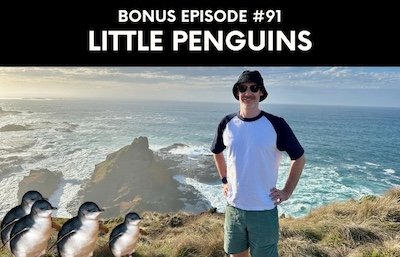
And this is bonus episode 91 of the Culips English podcast. And in this series, what I do is I just tell you some stories from my life as a Canadian living abroad in South Korea. Some of the daily adventures that I get up to.
And I hope that by listening and studying with this series, you'll be able to build your English fluency, to increase your knowledge of the culture of English-speaking people, to grow your vocabulary, and ultimately to become a better and clearer communicator.
So, what I'm going to do in this episode, everyone, is just tell you a little bit about the time I spent in Melbourne and tell you just a few things of some of the many, many things that we got up to in that amazing city. To put the summary first, to put the conclusion first, I should say, to put the conclusion first. Melbourne was awesome.
We had a fantastic time there. I would say 10 out of 10. Couldn't really have been any better. And we were there for several weeks. So, I can't tell you about every little thing we did. That would take a long, long time. But I will try and give you a few of the highlights and share about some of the adventures that my wife and I got up to while we were there.
I should say though, before I get started, that there is an interactive transcript and a vocabulary glossary available for free for everybody to accompany this episode. And I'll put the link in the episode description. Just follow the link and you can grab the transcript and grab the glossary and study with them.
And I also want to encourage you to sign up and become a Culips member, if you haven't become a member yet. We rely on the support of our members. If we didn't have members supporting Culips, Culips wouldn't exist. Now, as a member, you'll get a lot of benefits and bonuses, including study guides and interactive transcripts for all of our episodes.
There is the member-only series, the Fluency Files that you'll have access to as well. We have a member-only Discord channel where our member community can communicate with each other. There are monthly live streams for Culips members as well.
So many, many benefits and bonuses that are designed to help you improve your English communication skills better and faster than ever. So, if you're interested in supporting the work that we do here at Culips and leveling up your English at the same time, just follow the link that we'll put in the description for this episode.
And you can sign up and join our member community today. And final announcement is if you haven't joined our Discord yet, please come on over and join us. Of course, we do have the member-only channel, but we have many other channels that everybody can participate in for free. Discord is the place where our community connects together and communicates together.
We practice our English together. You can make new friends. Already, just by joining the server, you'll have a couple of things, at least, in common with everybody else. One, you're learning English, just like all of the other thousands of members who are on our Discord server. And two, you listen to Culips. You're a fan of Culips.
So right off the start, you'll have some common ground with all of the other people who are a part of our server. And like I said, it's free to join and it's really fun. So, I'd encourage you to download the Discord app on your phone or your computer, make a Discord account, and then join the Culips English Podcast server so we can communicate and improve our English together over on the server.
Again, where's the link to do that? It's in the description. You got it. OK. So now that all of those announcements are out of the way, it's time to get started in earnest with this episode. And I made a few notes here about my time in Melbourne. And I'm just going to go through the notes and share my recollections, my memories of what I can recall based on those notes and share those stories with you.
So let me check my notes here. Well, first of all, I wrote that I stayed in South Melbourne. Now, Melbourne is a big city. Australia's got two big cities. They've got Sydney and Melbourne and they're both competing for the title of Australia's biggest city. At least that's what I heard from one of my tour guides. I'm not sure if this is fact or fiction.
I trust her, though. I think she was telling the truth, but according to one of the tour guides that we had for a tour that we took in Melbourne. And I'll talk more about that in a bit. I took two organized tours, actually, while we were there in Australia. But according to one of the tour guides, Sydney and Melbourne are always competing for the title of biggest city in Australia.
They're growing at the same time, neck and neck. And "neck and neck", if you compete with somebody and your neck and neck, it means that you're almost like at the same level. If you are in a race, for example, think of an Olympic sprinting race. You know, you have the runners, the sprinters, maybe they're sprinting 100 meters.
And often, if you're watching the event, like on TV and you're not an expert, you'll think, "Oh, all of the racers are neck and neck." Because they all seem to be very, very close together. But often at the very end of the race, one of the sprinters is able to stick out his neck, stick out his body or her body or whoever's body a little bit more and cross the finish line first, right?
But we use this expression "neck and neck" to talk about two competitors that are pretty much at the same level. So, yeah, Sydney and Melbourne are neck and neck in terms of their growth. But my tour guide did tell me that at the present moment, Melbourne is a slightly bigger city. So, it's the biggest city in Australia then.
And because of that, there are many different neighborhoods that you can stay in. Since my wife and I were spending several weeks in the city, we really wanted to experience what it's like to live there as a local, not necessarily as a tourist, but we wanted to get as much as possible — of course, it's pretty much impossible in only a few weeks — but as much as possible, we wouldn't- we wanted to have the experience of knowing what is it like to be someone who lives in Melbourne.
What is that experience like? So, because of that, we didn't want to stay in the central touristy area of the city. You know, most big cities have an area that's very touristy, maybe where some of the top attractions are. It's maybe where some of the top hotels are and that kind of thing.
We wanted as much as possible to try to avoid that because often you're not getting the real experience when you do that. So, when we stayed in Sydney, that's exactly what we did. We stayed in a hotel in the downtown CBD, as Australian people call it. That was a new expression to me as a Canadian. What in the heck is the CBD? Why do they call their downtown areas in Australia?
The CBD, but I learned that that stands for Central Business District. So, in Sydney, we were in the downtown CBD area. However, we wanted to avoid that when we were in Melbourne. So instead, we stayed in, I guess it's a suburb, an area of the city, not too far away from the CBD.
To be honest with you, we could walk there in about 20 minutes, but it was an area of the city called South Melbourne. And I'm really glad that we made the decision to stay there. It was a wonderful place, really quiet, really laid back, almost too quiet to be honest with you. In South Melbourne, things closed very early in the evening.
So, my wife and I, we had a little bit of trouble sometimes with that because my wife was still working while she was there. So, she often had to, you know, do Zoom meetings or something. And of course, she's based, her office is based out of Seoul. And with the two-hour time difference between Australia and Korea, it often meant that at dinner time, which let's say usually we eat dinner around 6 p.m. or 7 p.m.
Dinner time in Australia was still working hours in Korea. My wife would still have to work at that time doing meetings and different things that she does. So that means that we had to eat later. Usually, we'd be eating dinner around 8 or 9 p.m. in Australia. But often when it was time for us to go and find some food, we had a really difficult time in South Melbourne because all of the restaurants would be closing.
Last order would be like 7 or 7:30. And sometimes even the supermarkets were closed, so we couldn't even go to a supermarket and get any food or anything to eat. And we were like, "This is wild! This is insane!" Because we're coming from Korea, we're so used to having restaurants and stores and pretty much everything open until late into the night.
So, that was an adjustment for us. And so, in that regard, it was very quiet and very sleepy. Another thing that made it seem even more ridiculous is because it's summer in Australia. They have longer days right now. The sun wouldn't set until probably around 9 p.m. So, we'd be outside looking for something to eat. It's still bright outside, but all the shops and restaurants are closed.
So that was a little bit of an adjustment for us and we had to plan in advance to go to the grocery store so that we could have some food to eat once we were able and free to eat dinner. South Melbourne, then, yeah, a nice place. We really enjoyed staying there. I think we chose the right neighborhood. It was a little bit funny.
There was a funny story that happened to us just on the very first day that we arrived in South Melbourne. We took a flight from Sydney. We got to Melbourne and then we had to take a bus and a tram. Melbourne's got this amazing streetcar/tram network. And it's really fascinating to see. I learned it was the biggest network of its kind in the world.
So instead of taking a subway or taking a bus, usually when you want to go from one area of the city to the other area of the city, taking public transit in Melbourne, you take a streetcar. So, we had to take the bus from the airport and then take a streetcar.
One thing that's very difficult about taking a streetcar — although I do really like them and I think it's a really interesting and cool kind of public transportation — they're not so good when you have to take a suitcase with you because in order to get into the streetcar, you have to walk up several steps.
And because they're in the middle of the road, you also have to kind of walk into the road to enter the streetcar. So, when we were taking that streetcar to get to our accommodation, it was a little bit uncomfortable, a little bit difficult, because my wife, you know, I pack pretty light, so I had a small bag and a small suitcase, but my wife had a big suitcase.
And so, I was in charge of carrying that big suitcase for her, but I had to really put all of my muscles into action to lug that suitcase up the two or three steps into the streetcar. But I did it. It was OK in the end, just a little moment of panic for me, like, "Oh, my God, am I going to get stuck in the streetcar door or something?" But it all worked out. We arrived at our accommodation.
We met the host of the accommodation. He was this nice guy, and he came out and gave us a little tour of the place that we were staying in. We rented this small little apartment for a short term stay there. So, the owner of the apartment came and met with us and, you know, gave us a little rundown about the rules of the place and how it works and all of that boring stuff.
But then he was very kind to offer us a tour of the neighborhood. So, he said, "I'll give you a tour around the neighborhood. I'll point out some cafes, some restaurants, some supermarkets, different things that you'll need, different amenities that you'll need during your stay in this neighborhood." So, we said, "OK, that sounds great!" So, he gave us a few moments to settle in.
He said, "I'll be back in 30 minutes and then we could go for a tour." So, awesome. Let's do it. So, we settle in. 30 minutes later, he comes by and we're just chatting and he's telling me some information about the neighborhood. He's got a connection to Canada as well. His wife's Canadian.
So, we're chatting about the time that he spent in Canada and some of the similarities and differences between Australia and Canada and just getting to know each other a little bit. He was mentioning how we chose a really good neighborhood to stay in just because of its close proximity to the downtown area and to other great areas of the city, but also that it's really calm and quiet.
He's like, "You guys are going to love your stay here. Like nothing ever happens in this neighborhood. It's very safe. It's very quiet" etc. etc. Kind of singing the praises of the neighborhood. And that's a great expression to add to your vocabulary, if you don't know that one yet, "to sing the praises of something" or "to sing the praises of someone."
If you are saying a lot of good things about someone or something, then you are singing the praises of it. So, he was singing the praises of Melbourne, South Melbourne in particular, the neighborhood where we were staying. And then we decided, "OK, it's time to do the tour. So, let's go." We went out onto the street to have the tour. And when was this?
This was like Saturday morning. K? This was a Saturday morning. A quiet Saturday morning, maybe around late morning, maybe 11:30 or probably close to lunchtime. OK, so we get out on the street, and we are walking just a few meters away from his home. We're just a few meters away from his home.
Me and the host were talking and suddenly a few steps behind us, we hear my wife say, "Oh, my god!" One of those kind of shocked, oh my god moments. And we turned around to see like, what's up? Are you OK? Like, did you see a snake or something? That's what I thought in my mind. Like maybe she saw and at one of those famous Australian dangerous animals.
So, we turn around to check out and see how my wife is doing. And then the host and I, we also went, "Oh my god!" Because there was 100 percent or not 100 percent. I would say as close to 100 percent as possible. Naked man, just walking down the street right in front of our accommodation and he had a great tan. I'll give him that.
He was very tanned and actually looked pretty good, but he was totally naked. And he was just strolling around, you know, not a care in the world, living his best life. He was just free and wild. And it wasn't like he was, or at least he didn't seem to be like a mentally-troubled individual or something. It wasn't like a homeless individual or anything like that.
Maybe that's the first thing that you would think of. But no, this was like an older middle-aged guy that just seemed to be enjoying the sunshine, walking around in the neighborhood completely naked. So, I was joking with the host like, "Oh, yeah, this is a quiet and comfortable neighborhood indeed, like very comfortable. It would be very comfortable in South Melbourne."
But actually, the host was rather taken aback and rather shocked. He's like, "Oh my gosh, I've lived in this neighborhood for years and years, and I've never seen anything like this. I'm not sure what's going on." So yeah, it was a little bit of a funny way to be introduced to South Melbourne by seeing a naked man walking down the street.
Anyways, yeah, it ended up being a wonderful place to stay. It's this really fascinating and terrific market in South Melbourne, aptly called the South Melbourne Market. It's not open every day, but it was open four days a week. And my wife and I went there several times to look at the fresh produce and buy some fruit and eat at some of the food stalls they had there.
Really great market and a lot of nice cafes and little restaurants around there as well. One thing that I didn't realize about South Melbourne until I got there, but just had me tickled pink. It really was- like worked out for the best. This was amazing. Once we arrived in Melbourne, I, of course, am a runner. It's one of my hobbies and I'm training for a marathon right now that I'm going to be running next month here in Seoul, the Seoul Marathon.
So, I'm trying to do a lot of running these days. And so, after settling in, I, of course, pulled out my phone and did a search on my phone for the best runs in Melbourne, top runs in Melbourne. And the number one run across many different lists that I researched was this park called Albert Park. Albert Park. So, I opened up my Google Maps and I tried to find where is Albert Park.
And it turned out to be less than a kilometer away from where I was staying. So, I couldn't believe the good luck I had. Albert Park turns out to be just this amazing, beautiful park. I love it. I loved Australia for their fantastic parks. I can't emphasize enough how much I really think having large, fantastic green spaces and parks in cities is. It's just essential for me.
I really, really love it. So, I was happy that Melbourne had amazing, amazing parks and this perfect running park, just less than a kilometer away from where I was staying. Albert Park is really large, and it's got this terrific lake in the middle of it. And there are black swans who live in the lake. So, it's cool when you're running around on the path that goes around the lake.
You'll see all of these black swans swimming and there's a lot of other interesting waterfowl, ducks, and different kinds of birds swimming in the lake. And there are palm trees all around it and there are parrots flying in the palm trees.
And when you're running on the track that goes around the lake, I think it's about almost a five-kilometer loop around this lake on a dirt track, which is also great running on. A little bit slippery because you don't have the traction, the grip that you do on a paved road, but it's nice as a runner because it's softer on your knees.
So, I appreciated running on the dirt track around the lake, even though it was a little bit of an adjustment for me at first. But in the background behind Albert Park, you can see the Melbourne skyline and all of the skyscrapers of the Central Business District downtown area.
So, I'll post some photos on our Instagram so you guys can see what the view looks like, but it was just so picturesque and so scenic of the lake and the wildlife and then the city in the background. I was in runners heaven.
I wanted to do a lot of different runs in Melbourne and check out different areas of the city, but the Albert Park was so good that I just pretty much went there almost every time I went running and I think I only did a few other runs in different areas because it was so good. So yeah, I was in runners heaven. It turned out to be a really great place that we chose to stay in and south Melbourne in more ways than one.
So, what else should I tell you here? What else did I write in my notes? Aha, I'll tell you one last story here before I wrap things up and I'll tell you one of those two tours that we went on. As I mentioned, we went on two organized tours. One was to a place called Phillips Island and the other one was to a place called the Great Ocean Road.
So, the first tour we took is the one I'll talk about, and it was the Phillips Island tour. So, Phillips Island is an island not too far away from Melbourne. I think it took us about an hour and a half to travel there by bus. And one of the reasons why it's a famous tourist attraction is because it is a place where penguins nest.
So, I think I don't know if you're like me, when you think of a penguin, you probably think of Antarctica, right? That's what I would think of, but I was surprised to learn that there are penguins who live in Australia. I guess half of the year they spent in Australia and the other half, they do go farther south towards the cooler Arctic area.
But for half the year, the summertime, they spend in Australia. And they have burrows on land and during the day, they fish and swim in the ocean. And then at night, they come back out of the ocean and go to their burrows, and they spend the night there.
So, Phillips Island is a famous attraction because you can go, and they have these areas set up on the beach where you can actually watch the penguins come out of the water and waddle. They walk up the beach and they go to their burrows. So, that's why we wanted to go to Phillips Island. I'm a wildlife lover. My wife is a wildlife lover.
And when we heard about the opportunity to see these penguins, we got really excited and wanted to do it. I was a little bit hesitant and on the fence to go on an organized tour. It's something I've never really done before. And I'm kind of one of those people who likes to do my own thing. I don't like having to, you know, follow a strict schedule without any freedom to do what I want.
So, because of that, I was like, "I don't know if I'm going to really enjoy this organized tour or not." But when I looked into traveling to Phillips Island on my own, it's not so easy to get there and to tour around by yourself. You either need a car, which I didn't have, or you need to go on an organized tour. So, we're like, "Let's just do the organized tour.
It'll be way easier, and it'll probably be good enough." And to tell you the truth, it was great. It was fine. We had a wonderful time on the tour. We had a really funny tour guide who I felt bad for. It seems like a really stressful job to be a tour guide operator.
I have a newfound respect for that profession because this guy, he was, you know, tracking down all of the guests and paying attention to all of the guests all the time. He was driving the bus. He was telling us stories. He was giving us information about the area, and it seemed like a really stressful job. I was happy that I was enjoying the tour and not giving the tour.
So mad respect to tour guide operators out there. If you are listening and you're a tour guide, you have my respect. It seems like a difficult job. But anyways, we are picked up by the tour bus in the late afternoon. So interestingly enough, this tour starts late in the afternoon around 3 or 4 p.m. Usually you would think that that's when a tour is kind of wrapping up for the day, right?
But because the main focus of the tour was watching the penguins as they come in from the ocean, that means we start late, and the tour actually ended really late. We didn't get home till after 1 a.m. in the morning. But yeah, we got picked up by the tour bus. We drove out to Phillips Island, which took us about an hour and a half.
And the first thing that we did once we arrived was we went to a koala sanctuary. Now, as I mentioned, my wife and I do love animals and especially we love seeing wildlife in the wild. I'm not a big fan of zoos. I don't know about you. I get why we have zoos and I think it's probably important for kids to see some of the amazing animals that we have from around the world.
So, I understand why we have zoos as a concept. But personally, if I go to a zoo, I always just end up feeling really bad. And so, I wanted to see Australian wildlife, but I didn't really want to go to a zoo as much as possible. So instead, we went to this wildlife sanctuary. It's an area where injured or, you know, mostly injured, sometimes sick, I think, as well koalas were rescued.
And for whatever reason, they couldn't live in the wild anymore and they were somewhat dependent on humans. However, the sanctuary gives them a huge area where they're just able to be themselves. I don't think they're fed. You know, they just eat on their own. They live on their own. However, they are protected from predators because it is a fenced-off area.
So, we visited this koala sanctuary, and it was amazing. We got to see some koalas. Usually when you see them in the daytime, they're just sleeping. They just sleep all day. I heard that out of 24 hours in a day, koalas usually spend up to 20 hours sleeping, maybe even more than that sometimes. So, most of the time they're sleeping and when you see them, they're just kind of like a ball in a tree.
But one of the koalas that we saw, we were actually my wife, and I were watching it and it was sleeping, but then it decided to wake up and it crawled down the tree and then it crawled like right up to us and was just right in front of our face. So, we got to see the koala way up close.
And at that time, I actually moved back because I don't know, like wildlife, even though koalas are cute and cuddly and they have that reputation as it was coming close to us, you can see the claws that a koala has. Of course, they have pretty intense nails because they got to climb up the trees, right? And so, yeah, a wild animal is a wild animal, even if it looks cute and cuddly, in my opinion, you want to give it some distance.
So, we backed up at that point, but it was really awesome and amazing to see these super cute, cuddly animals just up close and personal. So, the koala sanctuary was a really good time, and it was my first taste of seeing Australian wildlife up close. Unfortunately, the whole time I was in Australia, I wasn't able to see a kangaroo.
I did see a kangaroo dead on the side of the highway, which is not the way you want to see them. But in real life, I didn't see any kangaroos. But I was able to see a wallaby, which in my opinion, I don't know if I can really tell the difference between a kangaroo and a wallaby other than, I guess, the size difference, but they look pretty similar to me, to my untrained eyes.
The next spot that we went to on the tour was this place called the Nobbies. This was just this little area by the ocean. An amazing view at the Nobbies. You could see these rock formations off the coast. The sun was setting at the time. So, we had just this gorgeous view of the ocean in the background and these cool rock formations off the coast and there were these fields as well.
So, all of the penguins have their burrows in that area. And also, there are many wallabies and these other big birds. I believe they're called gray geese, these huge geese. So, it was like a wildlife spectacle. You had tons of wallabies, not just one or two, but I saw probably close to 50. Lots of wallabies. Wallabies hopping around.
You have this beautiful ocean view with the sun setting in the background. There were these majestic gray geese walking around and you could see the penguin burrows as well. Of course, the penguins were out fishing for the day. They still hadn't returned yet from the ocean, but there were penguin babies in the burrow.
So, if you kind of put your head down and looked into the ground, you could see that there were some little baby penguins in some of the burrows, not in all of them, but in some of the burrows. They were waiting for their parents to come back and feed them with their fresh, freshly caught fish.
So, we really enjoyed that part of the tour as well, checking out the Nobbies and snapping some photos. Of course, I'll put some photos of everything I'm mentioning today on our Instagram so you guys can put a visual. Because really no matter how poetic you are, how good of a speaker you are, there's zero way that you can communicate how beautiful this was with words.
It's really something that you have to see for yourself. So, after we went to the Nobbies, it was dinner time. We stopped at a little local village for food. And my wife, and I decided to eat fish and chips. It's one of my favorite foods. So, I was happy in Australia to eat fish and chips often because it's easy to find in Australia and not so easy to find in South Korea.
So, we had fish and chips probably three times, I think, during the trip in Australia. And one of the times was there when we were on that tour. So, we had a nice little fish and chips dinner meal beside the ocean. And then it was time to hop on the bus and go to the main event for the tour, which was watching the penguins come in from the ocean.
Now, the species of penguin that we watched were called little penguins. Little penguins. And they are the world's smallest penguin species. And here's another little fact, a little tidbit that our tour guide told us.
And again, I don't know if this is true or not, but he told us that in New Zealand, these penguins are called blue penguins and that is because their back is blue and their backs are blue, not black, blue, so that they match the color of the ocean so that predators can't see them from above.
So, if there's a predator swimming above or flying above, when they look down at the penguin, they'll just see the penguins blue back and they won't be noticed. They'll be able to avoid the predator without being harmed. Now, little penguins in Australia, apparently, this is according to the tour guide operator, they weren't always called little penguins.
Originally, they were called fairy penguins. Fairy penguins. I don't know if you guys know this or not, though, but the word "fairy" can actually, in certain contexts, be a slur towards gay men.
And because of that and because some people were making jokes about the name of fairy penguins and comparing them to gay men and making, you know, off-colored jokes and that kind of thing, they decided to change the name of the fairy penguin.
So according to the tour guide, they had a convention and some scientists got together and apparently, they even had like a vote, and they decided, they polled the public, "What should we- what should we rename the fairy penguin?" And the winner of this vote was "little penguin." So, it's like not a very original name, you know?
Like, oh, it's the smallest penguin species in the world, let's just call it the little penguin. So, I thought that was cute and that's a cute name to call them. I don't know why it's like very literal, right? They're small penguins, call them the little penguin, but it's cute. So, we went to the penguin viewing area and it's almost like watching a sports game.
They have bleachers set up on the beach and you can sit in the bleachers and there are special lights that come on. Apparently, the penguins have very sensitive eyes, and they don't have any eyelids.
So, you have to project a special light on the beach so that their eyes aren't harmed and also, they were very, very strict about no photography at all, no photos at all, no flashes at all because the penguins eyes are so sensitive. So, I don't have any pictures of the little penguins for that reason.
I can find some on the internet and share them with you, but I didn't take any photos myself because I wanted to respect the rules of the place where we were at.
I can't remember the exact name of the penguin viewing area, but I wanted to respect their rules and I also wanted to make sure that the penguins weren't harmed in the process. But yeah, it was amazing! As soon as the sun set and it became dark, little by little, you could see these penguins pop out of the water and they just swim out of the surf.
I have to say the ocean was quite rough in this area. So, the waves were big, but these little penguins are amazing, and they just sort of pop out of the ocean, and they'd gather into groups and then slowly but surely, they'd waddle up the beach. This is another fact that I learned about penguins during this tour was that penguins don't have any knees.
So, their leg bones are completely straight and that's why they have to waddle. They can't bend their knees like humans can when we walk. So, penguins, they have these straight legs with no knees, which is why they do that famous penguin waddle from one leg to the other leg as they would walk up the beach and make their way to their burrows that were further up the coast.
And actually, they have to walk, you know, each penguin has their own burrow, and they find their burrow by smell. I guess they have some kind of scent that they leave that they can follow later to find exactly where they live. And some of the burrows were quite far away from the beach. So, I was surprised these little penguins have lots of energy.
They're out all-day swimming in the ocean, catching fish, and then they come back with full bellies, and they have to waddle all across Phillips Island in order to find their burrow. But yeah, it was really amazing.
You can see them come out of the water and then you can walk a little bit farther up the coast and up the beach and you can see the path that they take, and they just walk right by you and there's tons of them. There's like hundreds of penguins and they're all like in a line marching around and we saw them really up close.
They were, you know, I don't know, less than a meter away from us. So, that was just a really cool experience. We also saw a bandicoot, this endangered bandicoot that was reintroduced to Phillips Island. Apparently, once European settlers came to Australia, they brought with them cats and they brought with them foxes. And cats and foxes just went crazy in Australia.
The native wildlife had no idea how to deal with these new predators. And so, cats and foxes just… it was like a buffet. They just ate all the Australian wildlife. And unfortunately, they pretty much almost endangered this one kind of bandicoot. Wildlife conservation officials were able to eradicate the fox on Phillips Island. "Eradicate" means eliminate or get rid of.
So, they were able to eradicate the fox on Phillips Island. There were no more foxes on Phillips Island anymore. And they were able to reintroduce this endangered bandicoot onto Phillips Island. And now it's back and thriving in its original natural habitat. And we saw one of these bandicoots run across the beach at the same time the penguins were coming out of the ocean.
We saw it really up close as well. And we also saw a possum, which was pretty cool on Phillips Island as we're heading back towards the bus, actually my wife and I were just on this little path. And then suddenly there was this big possum right in front of us. So, we saw a lot of wildlife that day during the Phillips Island tour.
And in the end, even though it was a long day, and we didn't get home until after 1am, in the end, I think it was an awesome decision to do the organized tour. I was a skeptic at first. I didn't know how it was going to go, but we ended up having just a wonderful time. And definitely I would recommend if you ever visit Australia, check out the Phillips Island tour.
It's pretty affordable and it's a good way to see some Australian wildlife and to see some beautiful sites as well. Well, everyone, I've been blabbing on here a long time. I think I should probably wrap things up and I'll leave it here for today. So, if you made it all the way to the end of this episode, amazing.
You did a wonderful job and what I would like you to do now, if you did make it all the way to the end is go on to our Discord server and please leave the word "penguin" on our Discord. Just type a message and type the word "penguin." And if you do that, that is like the special code.
Everybody who's listened all the way to the end, and me as well, I will know, "Ah, penguin, that means you made it all the way to the end!" So, that could just be a fun little experiment for us to try. I've noticed some other YouTube channels and other podcasts do that. So, I thought, let's give it a try.
Let's see who makes it all the way to the end. So, if you did that, type "penguin" somewhere in one of our Discord channels on our server and I will know, and our community members who are real Culips listeners who make it all the way to the end, they'll also know that you did it. That you finished the episode.
So, I'm going to leave it here for now. Thanks for listening. Take care and I will catch you next time. Bye bye.
