

And this might sound like a lie, but honestly, it’s not. I’m telling the truth. I’m always happy when one of our Culips members doesn’t renew their Culips membership, because they say that Culips is too easy for them now. From a business perspective, that sounds crazy, right? That I’m happy to lose a customer. But I’m not really a businessman, guys, I’m a teacher. And the teacher in me is ecstatic because that means that we achieved our goal here at Culips, which is giving you the tools that you need to hit the next level in your English learning journey. And to graduate from studying with Culips and studying with me, to learning and listening to the same thing that English native speakers do. One of these tools is the bonus episodes, which we release here every Monday to kick off the week. And in them, I share some stories about what’s new with me, I update you about what’s going on behind the scenes here at Culips, and I teach you a useful English expression. There’s a free transcript that accompanies each bonus episode. And you can download the transcripts as PDF files, which is what I recommend if you want to print out the transcript and study with it. Or you can use the interactive transcript, which is a great new feature that we’ve recently added to our website. And it makes it really easy to study with the transcript if you’re using a computer or a tablet or your phone. The transcript is totally clickable, so you can click on any word in it and hear the audio again from that point. It’s a cool tool, I recommend checking it out if you haven’t yet. And to get the transcript, which once again is totally 100% free, then you just have to visit our website Culips.com or click the link in the description for this episode.
So, happy Monday, I hope you’ve been doing well since the last time we spoke. Last week went really well for me, and I hope it did for you too. I was hoping that something interesting would happen to me last week that would provide for a great story that I could tell you today. But nothing out of the ordinary happened. It was just another one of those wake up, go to work, come home, go to bed kind of weeks. With one small twist thrown in I guess and that is that my wife and I have been working on our house remodeling project during every spare second that we have.
In case you missed it, I mentioned this a few weeks ago, but my wife and I, we bought a little house here in Seoul, South Korea, where we live, and that house is old. It’s not in great shape and before we can move into it, we need to fix it and remodel it. It’s a big job and we’ve been meeting with different builders and designers to come up with a game plan. It’s fun and stressful at the same time. But thankfully, my wife works in the design field, and she has just a ton of great ideas, and really knows how to communicate those ideas clearly, both to me and the people that we’re working with. So, we’re off to a great start with the project so far. But apart from all the work on the house, I didn’t really do any activities worth talking about with you this week.
So instead, I wanted to talk about something that’s all over the news and all over social media lately, at least in the English-speaking world, I’m not sure about in your country, but here on English social media, and in the English-speaking world, everybody is talking about this story, and it is, the purchase of Twitter by Elon Musk. Have you been following this story at all? I have to say it’s almost more entertaining than any movie or TV show out there. And I’ve been loving every minute of watching the story unfold. I’m not a big Twitter user, actually. Of course, we have our Culips Twitter, but I prefer using Instagram over Twitter personally. But I do see how Twitter can have an appeal for some people. And I do log in and check it from time to time.
As you probably know, Elon Musk is a billionaire businessman, and engineer, and he’s most famous for his companies, Tesla, and SpaceX, and he has some other companies as well. And he’s a Twitter power user. He loves Twitter, he uses it all the time. And recently, he bought Twitter, he bought the company for an incredible price, he paid $44 billion to buy Twitter. Could you imagine having that much money? I can’t even conceive, I can’t even think of how big that number is. It’s just a huge amount of money. And he bought the company he bought Twitter. Now apparently, he bought Twitter because he wanted to clean it up. He wanted to get rid of the bots and the spam accounts and remove some of the censorship that he felt was getting in the way of making Twitter a place for free speech. Twitter has this reputation of being a digital town square.
Traditionally, a town square is what we call an open area in the middle of a traditional town. And it’s a place where the citizens of that town would gather. They would meet and they would buy and sell and trade goods and communicate information with each other. Now probably our listeners in Europe will know exactly what kind of place this is, a town square, because, in fact, when I think of a traditional town square, I think of like a small European town where there’s a place in the middle of the town where everyone can interact with each other and do their daily business. Well, Twitter aims to be the digital version of this, the place on the internet, where the world can meet to exchange ideas freely. But Elon Musk felt that it wasn’t doing this very well, because some people’s accounts were censored or banned. Think about Donald Trump, the former president of America, he was banned from Twitter, for example. And Musk was also concerned that bots and spam were ruining Twitter. So, he stepped in to buy it and run it according to his own vision.
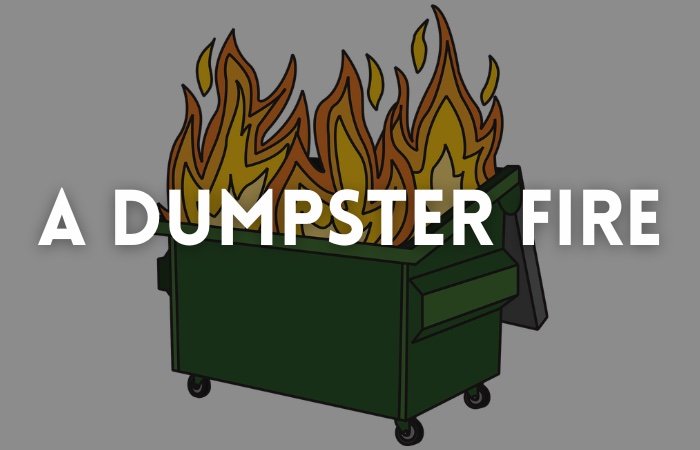
Well, ever since he decided to buy it, it’s been an absolute dumpster fire. Have you heard that expression before, to be a dumpster fire? It’s a funny one. And if something is a dumpster fire, it means that it is a chaotic mess or a very, very mishandled and poorly managed situation. So yes, Twitter is a dumpster fire right now. And in fact, just buying the company proved to be fairly difficult for Musk. He made his offer and then tried to withdraw his offer but was ultimately forced to follow through and complete the purchase. There was some legal obligation that he had, where he had to actually follow through and purchase the company after making an offer for it. And then finally, around two weeks ago or so, he took control of the company. And from that point on, it seems like he’s almost trying to destroy it rather than save it. As I said, it’s a dumpster fire.
These days, a lot of people hate Elon Musk, and I won’t go into all the details why, because we’d be here forever. But I think most of it has to do with the fact that he’s ultra-rich. And for some reason, people tend to hate billionaires and billionaires are not popular people generally. And personally speaking, I don’t hate Elon Musk. I’m not exactly his number one fan either. But I do think he’s an interesting guy, and he’s a dreamer, and he’s also a doer. He gets things done for the most part. And I like all of those things. I think the world could use more dreamers and more doers and more interesting people. And because he’s a dreamer, and a doer, I’d like to give him the benefit of the doubt and see him turn Twitter around and make it into this great digital town square. I think the world could use a place like that. But at the moment, it looks like he’s failing miserably, unfortunately.
So, after taking control of Twitter, again, this was just about two weeks ago, the first thing that he did was clean house, clean house. I don’t mean like he cleaned the office building. He didn’t bring a mop and a vacuum cleaner and some rags and actually clean the office building. No, no, no. Clean house is a great business idiom to know. And it means to remove people or policies or practices that are stopping you from achieving your goals. So, Elon Musk as the new boss of Twitter, he cleaned house by firing about 50% of the staff. Now, this alone has created a ton of drama online. And I’ve read so many debates and articles, and all around just negative Musk-bashing comments on social media about this. And I get it no one likes to lose their job, right? That’s terrible that 50% of the staff are now looking for a new job. I really feel for those people. But anyways, that was Musk’s first step is that he fired 50% of the staff.
And then the next major change that Musk made was to remove Twitter’s verified accounts. So, before Musk’s takeover, if you were a popular or a famous Twitter user, then you used to be able to get this little blue checkmark icon beside your name or on your profile to prove that you were indeed the real person operating that account. So for example, maybe on the Culips Twitter account, we would want to have one of those blue checkmarks so that if you visited, you would know that you are interacting on Twitter, with the real Culips English Podcast, not somebody who is pretending to be us, but it would really be me behind the computer operating the account. So, there was this kind of system, your blue checkmark proves that you are indeed the real person operating the accounts. However, Musk’s new idea was that users should have to pay for this privilege. And he started charging $8 a month so that you could get a blue checkmark on your profile. And OK, that’s fine, right? You have to pay for the service if you want to use it. There was some debate about that online, a lot of debate. But ultimately, that’s not something that I think would break Twitter. However, it seems like this idea wasn’t really thought through well enough because this ended up backfiring miserably. Back firing. So, you have a plan, you think it’s going to unfold one way, but it actually unfolds a totally different way. This is backfiring.
And Musk’s plan here, it backfired miserably, because what happened was that a bunch of internet trolls started signing up for fake Twitter accounts and getting a blue checkmark beside their name. And mostly they did this for big brands and companies and celebrities. And then these trolls started making fake tweets, some of which were actually really hilarious. And people believed them, because they had this blue checkmark, they looked like legitimate real accounts, right? You see, if you just paid the $8 price, you didn’t actually have to submit any documents to verify your identity and prove that you are who you say you are. So, just anybody could randomly sign up for an account and pretend that they were a celebrity or running the Twitter of a big company, for example. And as you can imagine, this just created a chaotic situation on Twitter.
One tweet in particular was made by a troll who signed up for a fake account pretending to be a big pharmaceutical drug company. And this person tweeted that insulin, insulin you know that drug that you need to take if you have diabetes, was now going to be provided for free by the company. The tweet stayed online for almost a day before it was removed. And many people thought that the tweet was real. And they thought, “Oh, what a wonderful company. Now they’re giving away free medicine. This is fantastic!” But later when people learned that it wasn’t real, and it was indeed fake, it caused just a huge problem for everyone. Twitter’s reputation was ruined as being a source of information that you could trust, the drug company looked bad, because they had to come out and say, “Hey, you know that good thing, we’re not actually doing that we’re not actually giving away free medicine, sorry, you still have to pay for it!” So, that was a bad look. And as a result, that drug company’s stock dropped dramatically. And this is just one of many similar examples. So, Twitter realized that they had a big problem on their hand, and they ended up shelving this new pay-to-verify feature after just a day or two. Actually, that’s a great expression to shelve something, to show something means to quit or give up or remove or delete something, because it’s not working. So, Twitter shelved the new feature just because it was a huge and embarrassing failure. So, it’s seemingly chaos over there at Twitter.
And this has affected Twitter’s bottom line, the revenue and the money that they make. There have been reports of advertisers pulling their ads. And on top of this, Elon Musk himself said that Twitter was losing up to $4 million each day. However, at the same time, he says that Twitter use has never been higher, and the site has been seeing a huge uptick in traffic. So, traffic is going up and up more people than ever are apparently using and looking at Twitter. I’m wondering though, if there could be a lot of people out there, like me, who have just been logging into Twitter to watch the drama unfold. And maybe that could account for the increased traffic. And one last comment here about Twitter, everyone, and that is on your Twitter profile, you’re able to share your location so that your followers know where you are in the world. And last time I checked Elon Musk’s profile, his location was set to hell. So, I had a good laugh about that. And I can’t imagine that his life is easy right now. But at least he’s still joking around, I suppose. But I’ve been enjoying the drama. It’s like watching a train wreck in slow motion. It’s one of those things that’s horrible. But at the same time, you can’t look away from it. And I’m rooting for Musk. I hope he succeeds. But right now, things don’t look very good.
There’s a lot of things going on behind the scenes here at Culips, and I want to give you a few updates about what’s happening. Many of you have been asking about our interactive transcripts. And when they’ll be ready for all of our series, not just bonus episodes, well over the weekend, we did a bunch of testing and tweaking, and it looks like they’re almost working perfectly. So Culips members, I promise they’re coming soon, and we should be able to launch the interactive transcripts for all of our new episodes, no matter what series it is real, real soon.
And recently, we’ve also added three great English teachers to our study guide writing team, their names are Alina, Austin, and Indiana. And I’m going to introduce them to you all officially really soon, maybe in a newsletter update, or perhaps I can even get them to come on to the podcast to talk with me in an interview. But for now, I’ll just say that they’re really great English teachers and passionate language learners. And here at Culips, we try to make the best possible learning materials for you to improve your English with, so we really picked these teachers carefully. And they’re great. And I know they’re going to do an awesome job at making super helpful study guides for all of our Culips members to learn with. And I’m happy to be working with them, and to have them on our team. It’s a very exciting time here at Culips.
And now it’s time for this week’s vocabulary lesson. This episode was jam packed with great idiomatic English expressions. But there’s one in particular that I want to focus in on because it’s a fun one. And I hear it used all the time, so I think it’s a good one to know. It is a dumpster fire, a dumpster fire. As I mentioned earlier, we use this expression, a dumpster fire to describe horrible and catastrophic failures or bad situations due to just terrible performance or poor planning. And when I was talking about Twitter earlier, I called Twitter a dumpster fire. Did you hear when I said that? If not, it’s okay, we’re gonna rewind right now and go back to that part of the episode again, and we’ll listen to it a couple more times. So, let’s go.
Ever since he decided to buy it, it’s been an absolute dumpster fire. Ever since he decided to buy it, it’s been an absolute dumpster fire.
So, I called Twitter a dumpster fire because it looks like it’s dying right in front of our eyes for everyone to see. And of course, a dumpster is just a huge metal garbage container. You know, maybe you’ll have a dumpster outside of a grocery store in the back of the grocery store where the grocery store throws all their garbage away, or you’ll have a dumpster in the garbage and recycling area of an apartment building where all of the residents can just toss their garbage into. That big metal container is called a dumpster. And you can imagine if there were a fire in a dumpster, and there was just a lot of garbage burning, then it would be a really horrible and smelly and terrible situation to have to deal with. And that’s kind of the imagery behind this expression, a dumpster fire, which again just means that something is a failure, or is being horribly, horribly mismanaged. So, as always, I’ve prepared some example sentences to help us learn about this expression in more detail. So, let’s take a listen to those example sentences now. Here we go.
Example sentence number one.
My favorite hockey team is a dumpster fire this season. They just keep losing. My favorite hockey team is a dumpster fire this season. They just keep losing.
Let’s break this example sentence down. Unfortunately, this sentence is true. My favorite hockey team, the Vancouver Canucks, as you guys know, I’m a big hockey fan. My favorite hockey team, they are terrible this season. They are a dumpster fire, they just can’t win at all. They keep losing game after game. In fact, yesterday, I watched the game and they lost. So, because they’re just performing very, very poorly. And it looks like the team is being mismanaged as well, they’re not playing as a team, they’re just a mess. We can call the team a dumpster fire.
Example sentence number two.
I had big expectations for the concert, but the band was a total dumpster fire. The singer kept singing out of tune, and the guitar player had this look on his face like he didn’t even want to be in the band anymore. It was a major disappointment. I had big expectations for the concert, but the band was a total dumpster fire. The singer kept singing out of tune, and the guitar player had this look on his face like he didn’t even want to be in the band anymore. It was a major disappointment.
Let’s break that example sentence down. In that example sentence, we heard about a band who is a dumpster fire. The band is terrible. During their last concert, the singer kept singing out of tune, so he sounded terrible, and the guitar player had no passion or enthusiasm. So, because of the band’s terrible performance and just lack of passion and skill, we can call them a dumpster fire.
Example sentence number three.
The project I’m working on right now is turning out to be a dumpster fire. My client just keeps asking me to make more and more and more changes and doesn’t trust me to make any decisions. I don’t even know what to do anymore. The project I’m working on right now is turning out to be a dumpster fire. My client just keeps asking me to make more and more and more changes and doesn’t trust me to make any decisions. I don’t even know what to do anymore.
Let’s break this final example sentence down. In that example we hear from a guy who’s complaining about this project that he’s working on. And he’s complaining because of his client who keeps asking him to make more and more changes. And as a result, it seems like the project is falling apart. It’s not really going according to plan. And because of that, because it’s not going according to plan, and it’s becoming more and more chaotic and disorganized. And instead of working towards the goal, the goal is being lost. Well, that is why the speaker called his project, a dumpster fire.
That’s it for today. Congrats on making it to the end of the lesson. And thank you so much for studying English with me today. I hope you learned something new. If you enjoyed this episode, and you’re like what we do here at Culips, please consider supporting us by becoming a Culips member. You can find all of the details and learn about some of the great bonuses that we give our members just by visiting our website Culips.com. So, take care and I’ll be back soon, and I’ll talk to you then. Goodbye.
