
Join a Culips speaking class!
Practice real English conversations with our teachers and students from around the world. Build fluency fast through live speaking practice.
See Class ScheduleHappy National Grammar Day!

Did you know that today’s a special holiday? Of course you did! It’s National Grammar Day! What’s that you say? You DIDN’T know that March 4th is National Grammar Day?
Well that’s okay. Actually I only found out about it a couple of days ago myself.
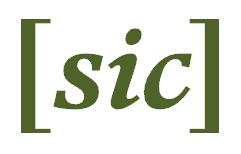
The first National Grammar Day was celebrated in the United States on March 4th last year. The “holiday” was founded by an organization called the Society for the Promotion of Good Grammar (SPOGG), that prides itself on being a group for people who love good English. They’ve even published a book about funny grammar mistakes, called “Things That Make Us [sic],” the word “[sic]” in the book’s title is a pun on the word sick.
I thought that was a pretty good name for a book about grammar, so to celebrate National Grammar Day, let’s talk about the word “sic” !
Have you ever seen “[sic]” in a magazine or newspaper article? The word “sic” is actually latin word that means something like “as such” or “like that”. Writers use it when they’re quoting someone who made a mistake — like a grammatical error or a spelling mistake — to show that it was the person being quoted who made the mistake and not the writer.
For instance, in a newspaper article you might see something like the following:
Last week we published a story about bad spelling and many of you wrote us to complain. Mike from Canada wrote, “I don’t think bad spelling is a problem. Reading your article was a waist [sic] of my time!”
In the above example, the word “[sic]” was added by the author of the article to show that it was Mike, and not the author, who made the spelling mistake. (By the way, can you figure out what Mike should have written instead of “waist”?)
So now that you know a little more about English grammar, I hope your National Grammar Day celebration will be even better!
Do you think my boss would mind if I took the day off work? It’s a very important holiday today, after all! Happy National Grammar Day everyone!
Happy National Grammar Day!
Did you know that today's a special holiday? Of course you did! It's National Grammar Day! What's that you say? You DIDN'T know that March 4th is National Grammar Day?
Well that's okay. Actually I only found out about it a couple of days ago myself.
The first National Grammar Day was celebrated in the United States on March 4th last year. The "holiday" was founded by an organization called the Society for the Promotion of Good Grammar (SPOGG), that prides itself on being a group for people who love good English. They've even published a book about funny grammar mistakes, called "Things That Make Us [sic]," the word "[sic]" in the book's title is a pun on the word sick.
I thought that was a pretty good name for a book about grammar, so to celebrate National Grammar Day, let's talk about the word "sic" !
Have you ever seen "[sic]" in a magazine or newspaper article? The word "sic" is actually latin word that means something like "as such" or "like that". Writers use it when they're quoting someone who made a mistake -- like a grammatical error or a spelling mistake -- to show that it was the person being quoted who made the mistake and not the writer.
For instance, in a newspaper article you might see something like the following:
Last week we published a story about bad spelling and many of you wrote us to complain. Mike from Canada wrote, "I don't think bad spelling is a problem. Reading your article was a waist [sic] of my time!"In the above example, the word "[sic]" was added by the author of the article to show that it was Mike, and not the author, who made the spelling mistake. (By the way, can you figure out what Mike should have written instead of "waist"?) So now that you know a little more about English grammar, I hope your National Grammar Day celebration will be even better! Do you think my boss would mind if I took the day off work? It's a very important holiday today, after all! Happy National Grammar Day everyone!
Popular Podcasts
Frequently Asked Questions
Find answers to common questions about our English learning platform.
- They are Canadian and American
- Have master’s degrees and work in professions related to English education (Andrew is a university English professor, Suzanne is a pronunciation coach and voice actor, and Morag is a writer).
- Actively study second languages as adults. Our team understands the ups and downs of studying foreign languages as adults who live busy lives.
