
Join a Culips speaking class!
Practice real English conversations with our teachers and students from around the world. Build fluency fast through live speaking practice.
See Class Schedule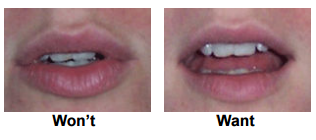
Curious Question #6 – Want vs. Won’t
The question this time is a pronunciation question. How can we hear the difference between “want” and “won’t”. It is true that they are very similar, but there are some differences and here we explain them for you. The best advice given in this episode was about syllables. Here is what we meant, in case it was unclear. Won’t has one syllable, or beat, and want has two syllables. Another thing is the to. Won’t is never followed by a to, but want is often followed by a to. So if you listen for the to then you will be able to tell them apart. In this episode, we explain a number of other contractions that native English speakers often use.

Expressions included in the study guide
- Won’t
- Want
- Wanna
- Do you wanna dance?
- She won’t
- I’d
- It’s
- Should’ve (Should have)
- Would’ve (Would have)
- Could’ve (Could have)
- Shoulda
- Woulda
- Coulda
Copyright: Audio/Study Guide: Culips
Podcast: Play in new window | Download
Curious Question #6 – Want vs. Won’t
The question this time is a pronunciation question. How can we hear the difference between “want” and “won’t”. It is true that they are very similar, but there are some differences and here we explain them for you. The best advice given in this episode was about syllables. Here is what we meant, in case it was unclear. Won’t has one syllable, or beat, and want has two syllables. Another thing is the to. Won’t is never followed by a to, but want is often followed by a to. So if you listen for the to then you will be able to tell them apart. In this episode, we explain a number of other contractions that native English speakers often use.
Expressions included in the study guide
- Won't
- Want
- Wanna
- Do you wanna dance?
- She won't
- I'd
- It's
- Should’ve (Should have)
- Would’ve (Would have)
- Could’ve (Could have)
- Shoulda
- Woulda
- Coulda
Copyright: Audio/Study Guide: Culips
Popular Podcasts
Frequently Asked Questions
Find answers to common questions about our English learning platform.
- They are Canadian and American
- Have master’s degrees and work in professions related to English education (Andrew is a university English professor, Suzanne is a pronunciation coach and voice actor, and Morag is a writer).
- Actively study second languages as adults. Our team understands the ups and downs of studying foreign languages as adults who live busy lives.
